Asked to get your passport notarized?
Korean passports can't get a standard copy-certification at a notary office (they're already an official document) — here are the 3 real alternatives, and the one only a 행정사 is legally authorized to issue.
The Right Method for What 'Notarization' Actually Means HereWhen studying, working, or immigrating abroad, "get your passport notarized" is a common instruction — but the request doesn't mean what most people assume.
Why a Korean passport can't get standard copy-certification
Many people picture a copy of their passport being certified as "identical to the original" at a notary office. But a Korean passport is already a government-issued official document — a notary office (also a government-authorized function) certifying a copy of another government document isn't how the system works. Korean notary offices don't perform standard copy-certification (원본대조공증) on passports.
So what actually happens when a receiving institution asks for a "notarized passport"? There are three real methods to choose from, based on what's actually being requested.
Method 1: Declaration notarization (signature notarization)
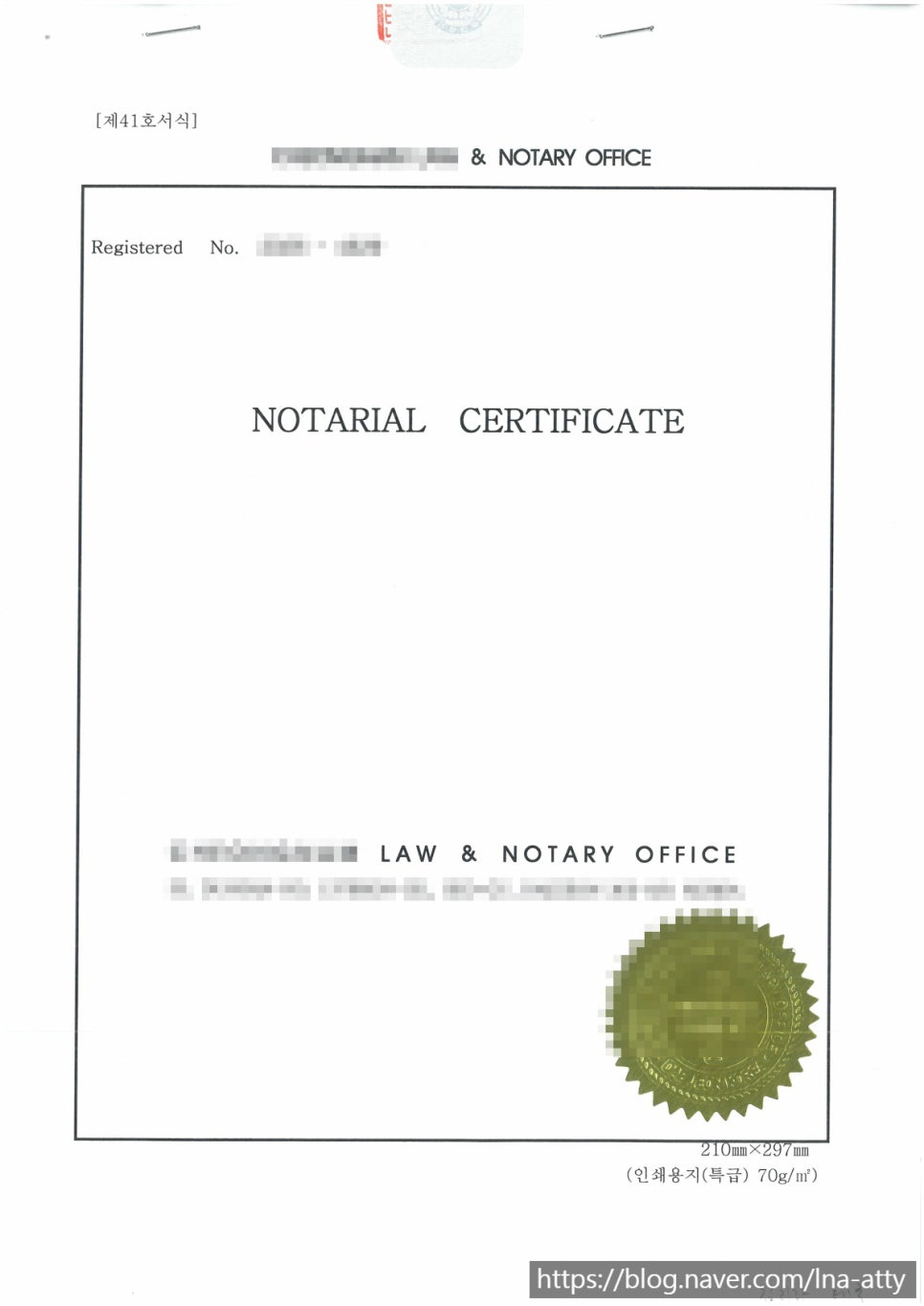
The passport holder signs a Declaration stating "this passport copy is identical to the original," attaches the passport copy, and signs it in front of a notary — who then certifies that the signature was made by that person.
This does not certify that the copy matches the original as a fact — it certifies the fact that the person signed that statement. Still, it's a valid option when a receiving institution specifically asks for "Notarization."
Method 2: Translation notarization
This covers translating the passport (Korean to a foreign language, a foreign passport into Korean, or even converting a Korean passport's bilingual format to English-only) and notarizing the translation itself. A qualified translator (e.g. a 외국어번역행정사) translates per the Ministry of Justice's translation certification guidelines, and the translation (a private document) — with the passport copy attached — is what gets notarized, not the passport copy alone.
This is the right choice when the receiving institution specifically asks for the passport to be "translated and notarized."
Method 3: A 행정사's fact-verification certificate (원본대조필)
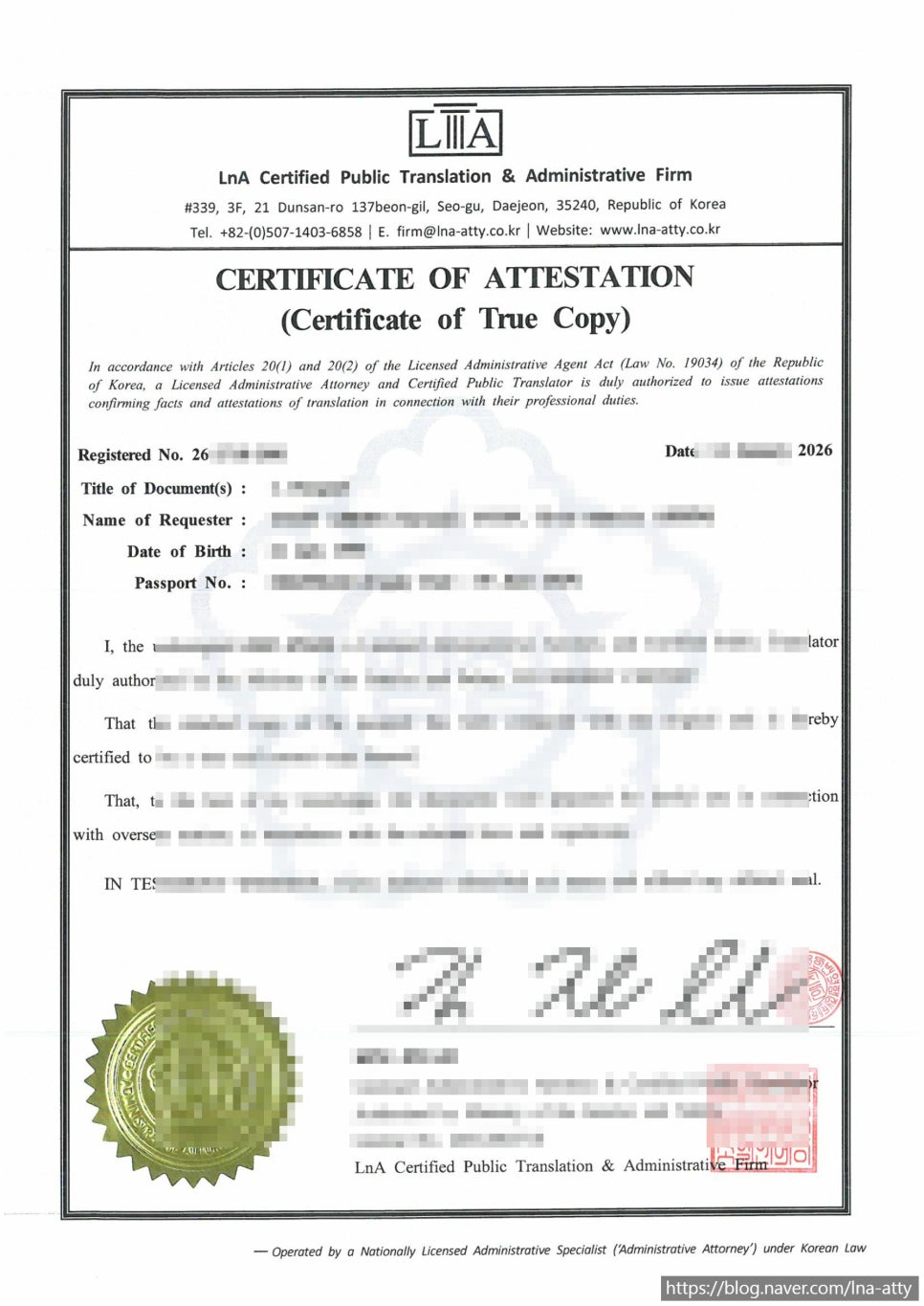
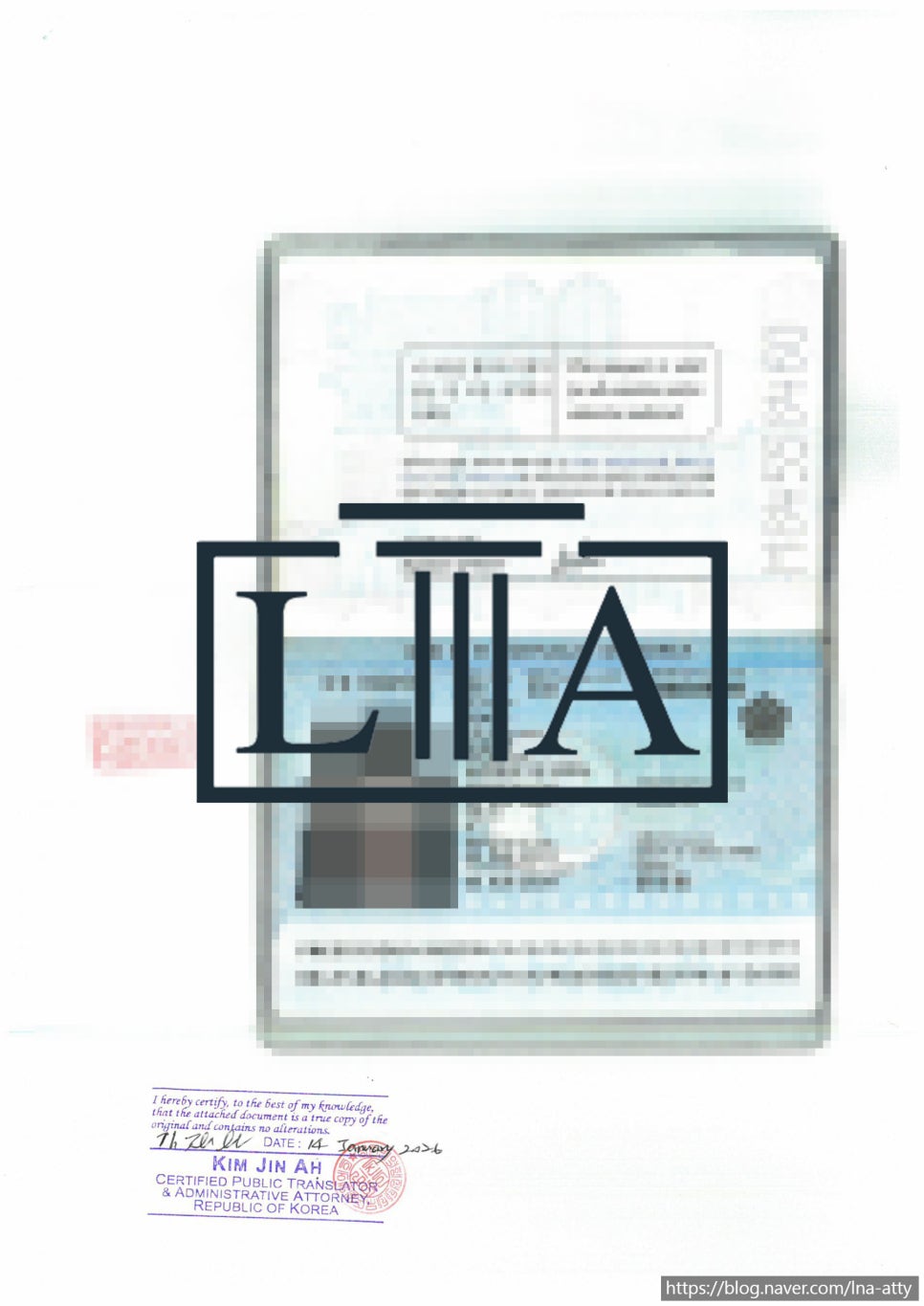
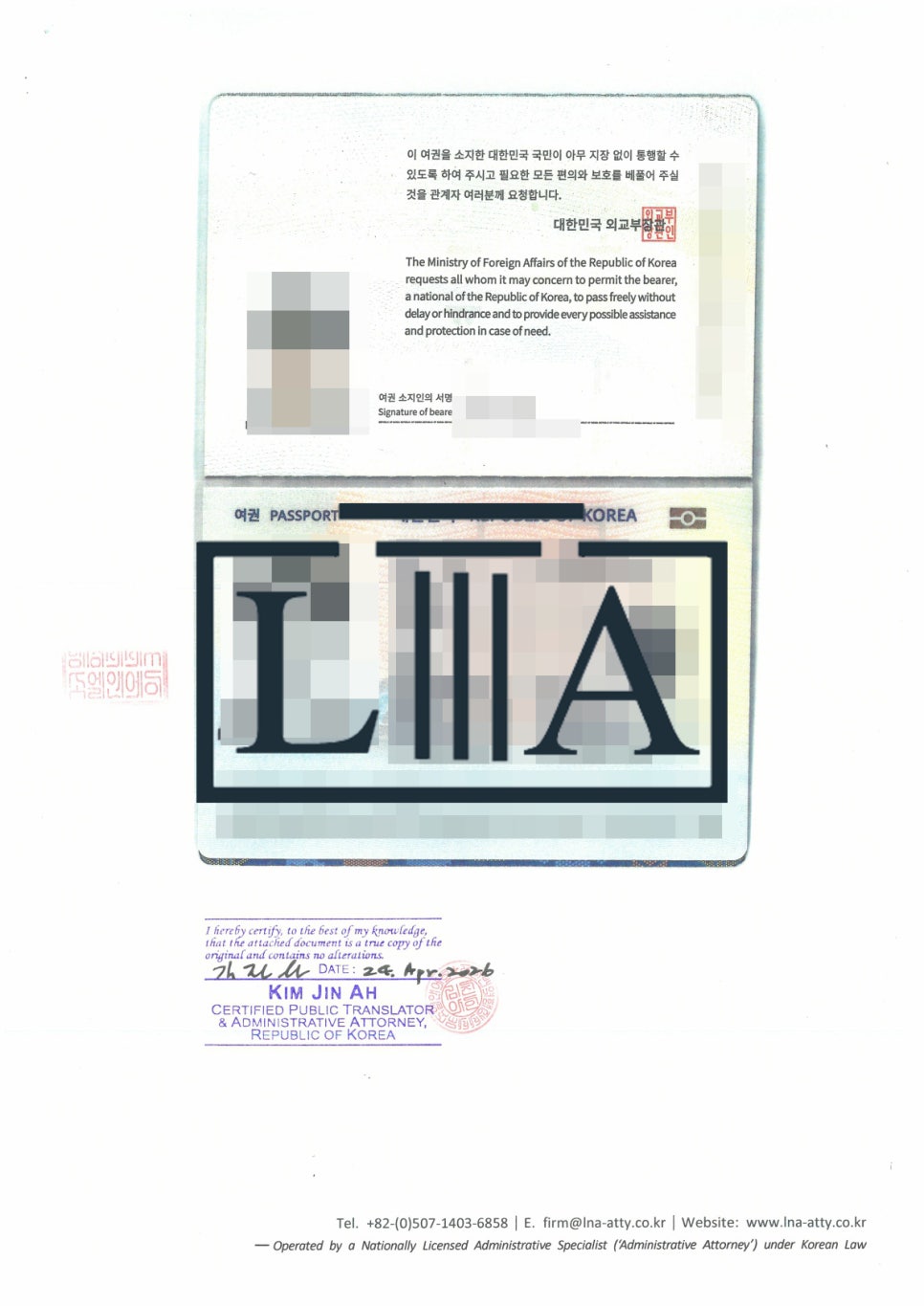
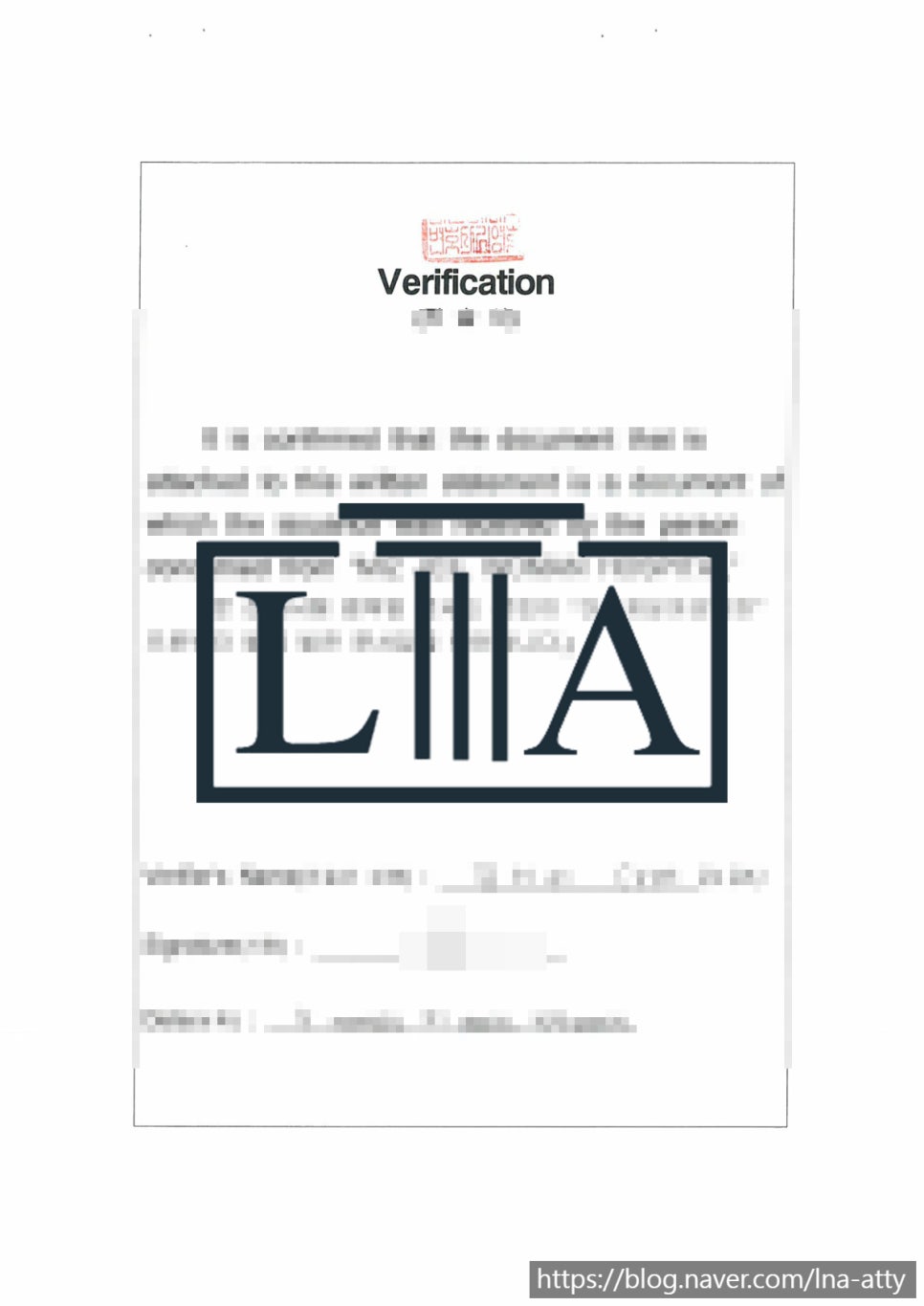
Methods 1 and 2 don't directly certify that the passport copy itself is a genuine match to the original. When a receiving institution wants both the copy's authenticity AND the translation's accuracy confirmed together, a 외국어번역행정사 can — under 행정사법 제20조 — examine the original passport directly, stamp/sign the copy as 원본대조필 (verified against original), and issue that as a fact-verification certificate or alongside a 번역확인증명서.
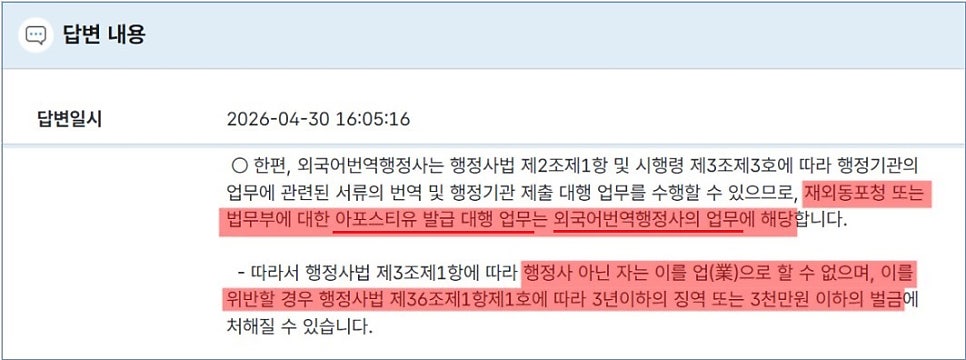
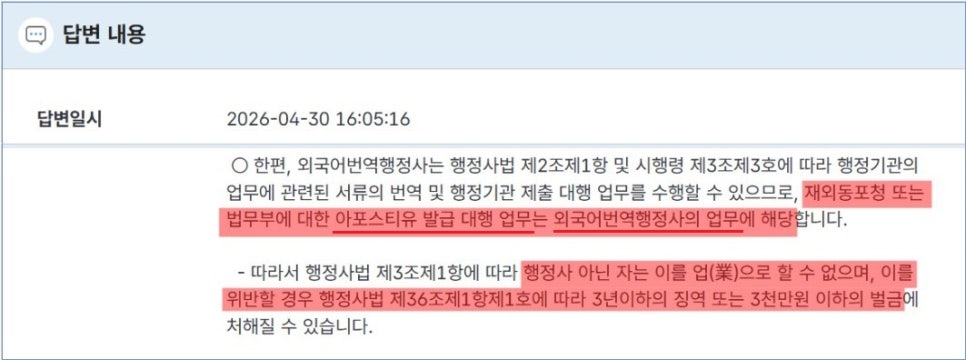
Under current law, a 행정사 is the only party authorized to issue this "copy verified against original" certification for a passport.
Case study: an Australian Superannuation refund rejected twice over passport-copy certification
Anyone who's worked, studied, or done a working holiday in Australia may have paid into Superannuation (Super) — Australia's mandatory employer-managed retirement fund. After returning to Korea, that Super balance can be claimed back as a Departing Australia Superannuation Payment. Pension funds have been tightening document requirements, though, and copy-certification rejections have become common. A recent client had two separate submission attempts rejected before this office's fact-verification certificate finally cleared the pension company's review and released payment.
Why the earlier attempts were rejected
The pension company's rejections came down to three recurring problems: (1) a notary declaration notarization — the passport holder's own signed statement that "this copy matches the original" — was rejected because it isn't certification by a qualified authority, and lacked wording confirming the certifier personally compared the copy against the original, plus a certifier license number; (2) a plain administrative certificate wasn't accepted, since it lacked the specific authorized-certifier wording the pension fund requires; (3) a translation notarization was rejected outright — the pension company wasn't asking for a translation at all, since a passport isn't a translation-target document for their purposes.
AustralianSuper's own published requirements
Australia's largest pension fund, AustralianSuper, publishes an explicit list of who's authorized to certify an overseas document copy: a Notary Public Officer, a Court Registrar or Deputy Registrar, a Justice of the Peace (JP), an Australian consul or diplomat, or a Court judge. The certification itself must state that the authorized certifier personally compared the original and the copy, include the exact wording "This is a true and correct copy of the original," and include the certifier's signature, name, license/registration number, and date. If the certification is on a separate page, it must also state the applicant's name, date of birth, passport number, and passport expiry date — and the certification must be dated within the last 6 months.
Why a Korean notary's copy-certification (등본인증) doesn't fit here
This is the same underlying legal structure covered above: a notary's copy-certification (등본인증, i.e. 원본대조필공증) only applies to private documents (사문서). A passport is already a government-issued public document — having a notary re-certify a document the government itself already authenticated doesn't fit Korea's notarization framework, which is exactly why a standard notary copy-certification doesn't (and structurally can't) exist for a passport in Korea. A 외국어번역행정사, by contrast, is authorized under 행정사법 제20조 to issue a fact-verification certificate covering both private and public documents — including a passport — making it the legally correct fit for exactly this situation.
How this office met AustralianSuper's requirements exactly
- In-person verification: the client visited this office directly and the original passport was compared against the copy on the spot.
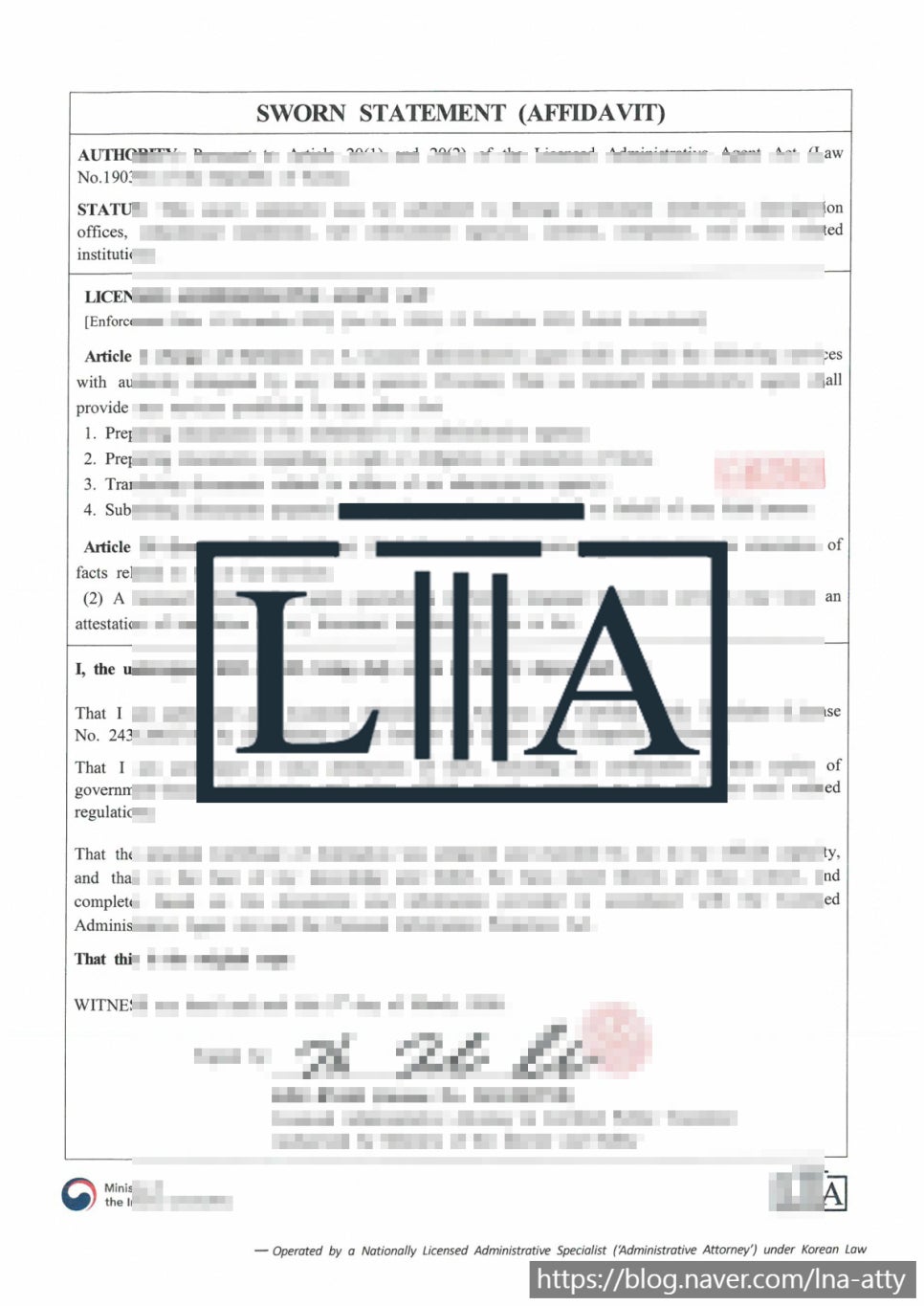
- Supporting explanation: an attached note explaining a 행정사's legal authority and qualification, so the pension fund's reviewer wasn't left to guess.
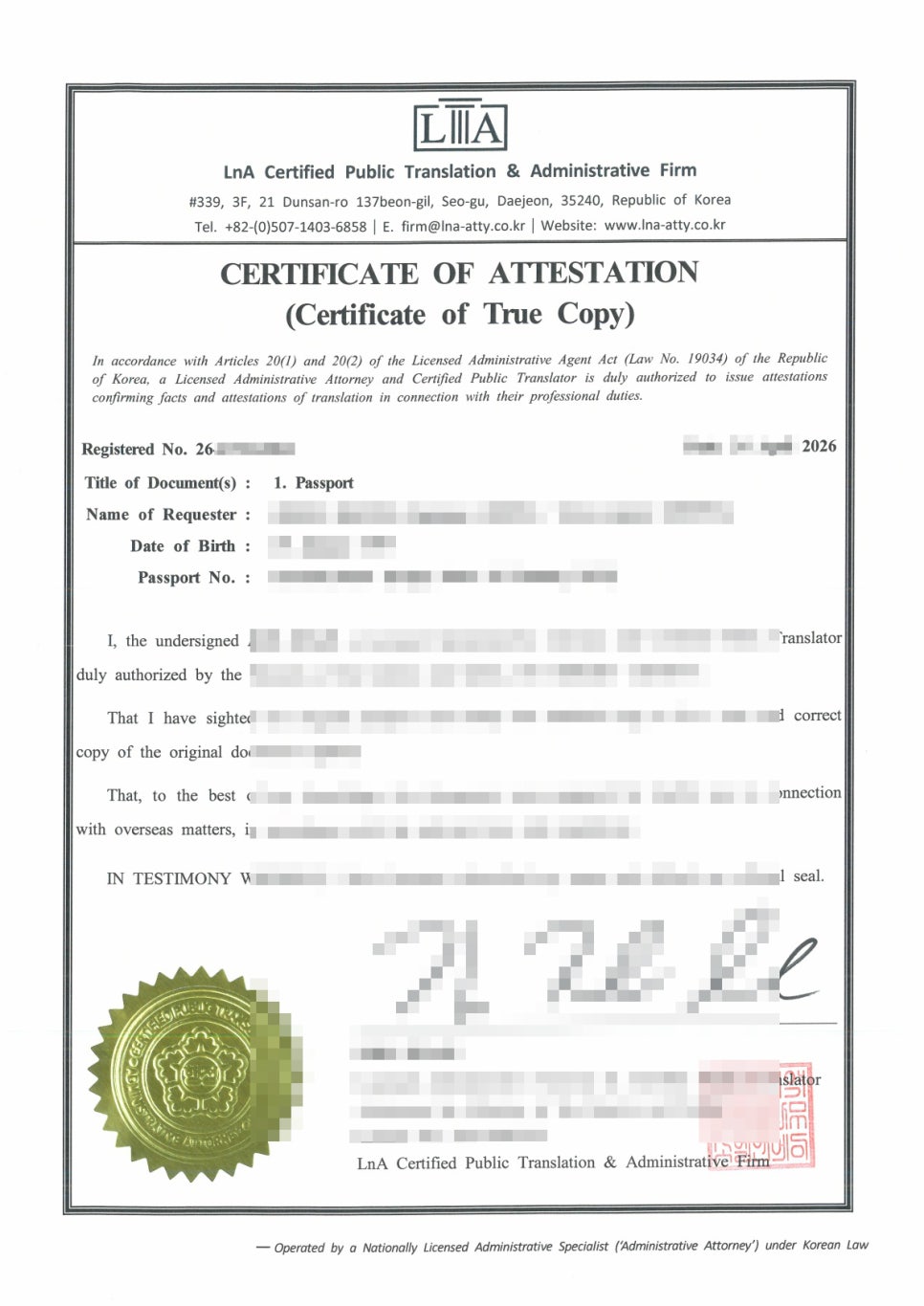
- Precise certificate content: the certificate stated the applicant's date of birth, passport number, the required original-comparison wording, and this office's own License No.
With the certificate prepared to meet every specific AustralianSuper requirement, the client's Super refund was approved and paid — confirming, once again, that a 외국어번역행정사's fact-verification certificate carries real institutional credibility with Australian pension funds, even though requirements vary company to company. One added note: some pension companies instead require original-comparison notarization done directly through the Australian Embassy in Korea (by appointment or by mail, roughly AUD 90 and 5-7 business days) — worth checking which path a specific fund actually wants before starting.

A cautionary case: paying for notarization first, then getting rejected anyway
A client changing an Australian company's shareholder to a Korean corporation needed certified copies of a director's ID documents (passport, driver's license). The client had already visited a notary office, paid for a declaration notarization, and had it done — only to have it rejected by the receiving side in Australia, and came to this office afterward.
Why this happens — a structural gap, not a mistake by anyone
Korea's Notarial Act doesn't provide for direct comparison-based copy-certification of an ID document — so when a foreign receiving institution asks a Korean national for "notarization" of an ID copy, Korean notary offices typically use a declaration notarization: the ID holder writes a statement declaring "this copy is identical to the original," and the notary certifies that signature — a valid method within Korea's own legal system. But what the receiving institution actually wants isn't the ID holder's own subjective statement — it's a direct comparison certification, where a third-party certifier personally viewed the original and confirms the copy matches it. That formal gap between Korea's notarization system and the Anglo-administrative requirement is exactly why a client can pay for and receive a valid Korean notarization, only to have it rejected on the other end.
The exact wording Australia (and Anglo countries generally) require
Australia and similar English-speaking countries require very specific language for ID-copy certification. In this case, the client's Australian accountant specified:
"An authorised certifier in the presence of the applicant should certify that each copy is a true and correct copy of the original document, by stamping, signing and annotating the copy of the identity document to state 'certified true copy,' initialling each page, and listing their name, date of certification, telephone number and position."
In short: (1) stamp, sign, and annotate the ID copy stating it's a certified true copy, and (2) initial each page while listing the certifier's name, certification date, phone number, and position/qualification.
Why a 외국어번역행정사 is the legally correct fit
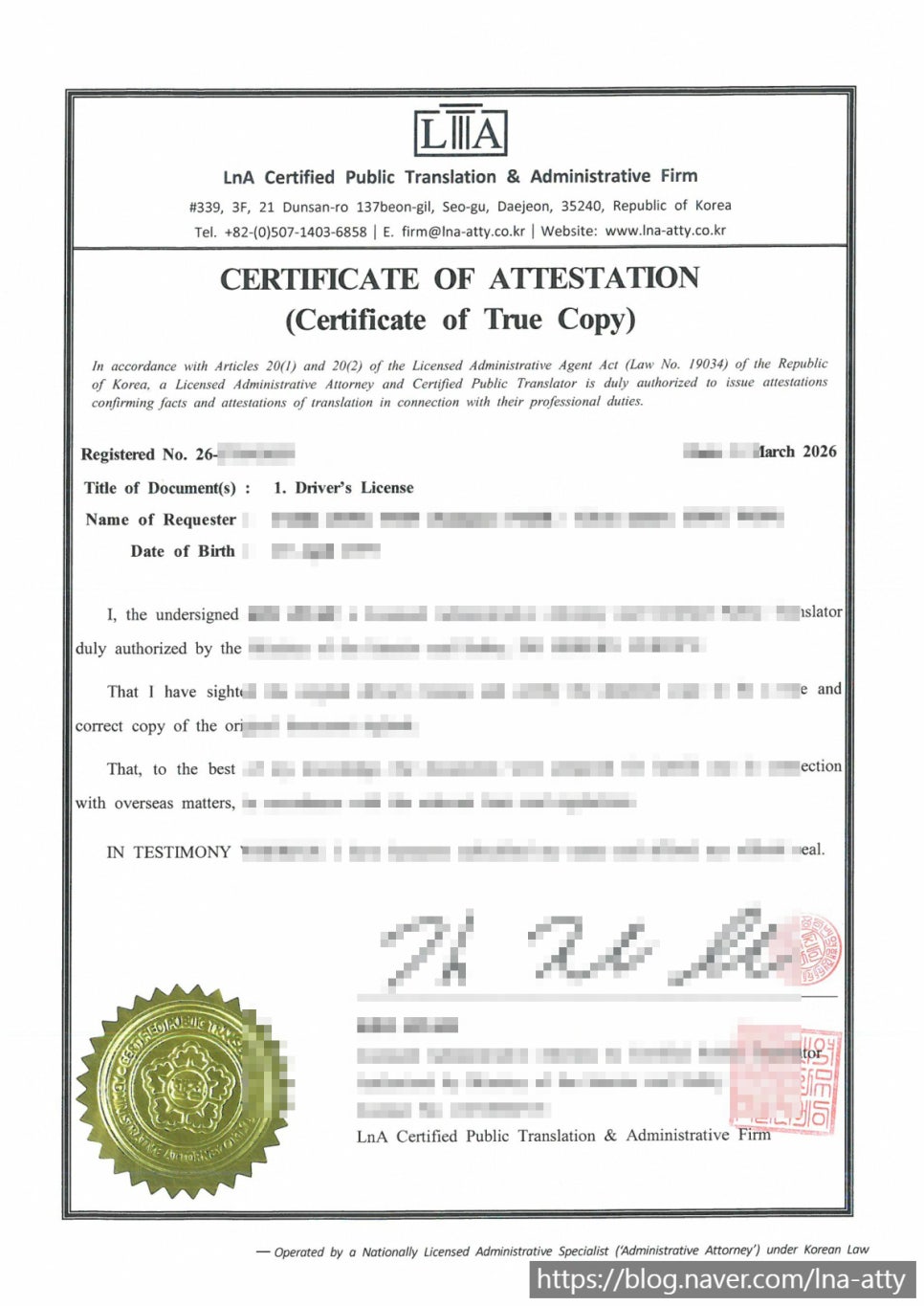
Bridging this exact legal/administrative gap is what a 외국어번역행정사 does. Under Australia's own relevant legislation, a copy certified overseas is accepted when certified by "a person who is authorized under the law of that place to administer an oath" — and under 행정사법 제20조 and its enforcement decree, a 외국어번역행정사 is a legally licensed professional authorized to issue a 사실확인증명서 confirming that a specific fact or a document's copy matches its original. A certificate this office issues therefore satisfies the direct-comparison requirement Australia and other Anglo countries actually ask for — a credible document by Korean law's own authorization.
How this office prepared the documents
The client visited the office in person; after verifying the IDs, this office made color copies and completed the certification, structured for the Australian reviewer to check at a glance — matching the exact wording the receiving institution required, exactly. For a newer-format driver's license carrying English information, the front and back were copied together in a single 2-in-1 color layout to improve readability, with the Korean and English information matched one-to-one.

Confirming a second Australian pension fund's own requirement before committing
A client based in Korea needed a passport-copy "certified true copy" for an Australian pension refund claim, this time with a different fund (Superhero). This office laid out three real options: obtaining a Certificate of Passport Copy from a city/district office and having it apostilled, notarization through the Australian Embassy in Korea, or this office's own fact-verification certificate — the embassy route is the most conservative and certain, but also the least convenient in practice.
Before recommending the fact-verification route, this office directly reviewed the fund's own published Identification Requirement Factsheet. Superhero's guideline names, as an acceptable certifier, anyone "authorized under the law of the relevant jurisdiction to administer oaths/affirmations or certify documents" — this office cross-checked that language directly against the scope of 사실확인증명 authority under 행정사법 제20조 and confirmed the fit before proceeding, rather than assuming the same approach that worked for one fund would automatically work for another.
This office doesn't push a single method on every client — each option's tradeoffs and risks are explained transparently, and the client decides. This client chose to skip the embassy visit and mailed the physical passport to this office by registered mail instead. The certificate was prepared to match every element Superhero's factsheet specified (the exact required stamp wording, the certifier's qualification title, full address, and signature), and the client was also briefed on the residual risk that acceptance still depends on the receiving reviewer's own discretion.
The client later confirmed the pension fund accepted the certificate and the refund proceeded — a second, independently confirmed case (a different fund from the one above) demonstrating that a 외국어번역행정사's passport-copy fact-verification certificate holds up in practice, not just once. A 원본대조필 for a foreign financial institution or government agency isn't simply stamping a photocopy — it requires understanding the specific receiving institution's actual requirement and matching it to the correct legal authority.


Returning a Hilton timeshare — why a "Warranty Deed" needs translation before it can even be notarized
Rising annual maintenance fees have driven steady inquiries about canceling a Hilton timeshare and returning membership rights to Hilton's US headquarters. The document set typically required includes a Warranty Deed, a Mutual Release and Settlement Agreement, a Conveyance Tax Certificate, a credit card authorization form, and any additional documents Hilton's headquarters specifies — the exact set varies by membership type and contract.
What a Warranty Deed actually is
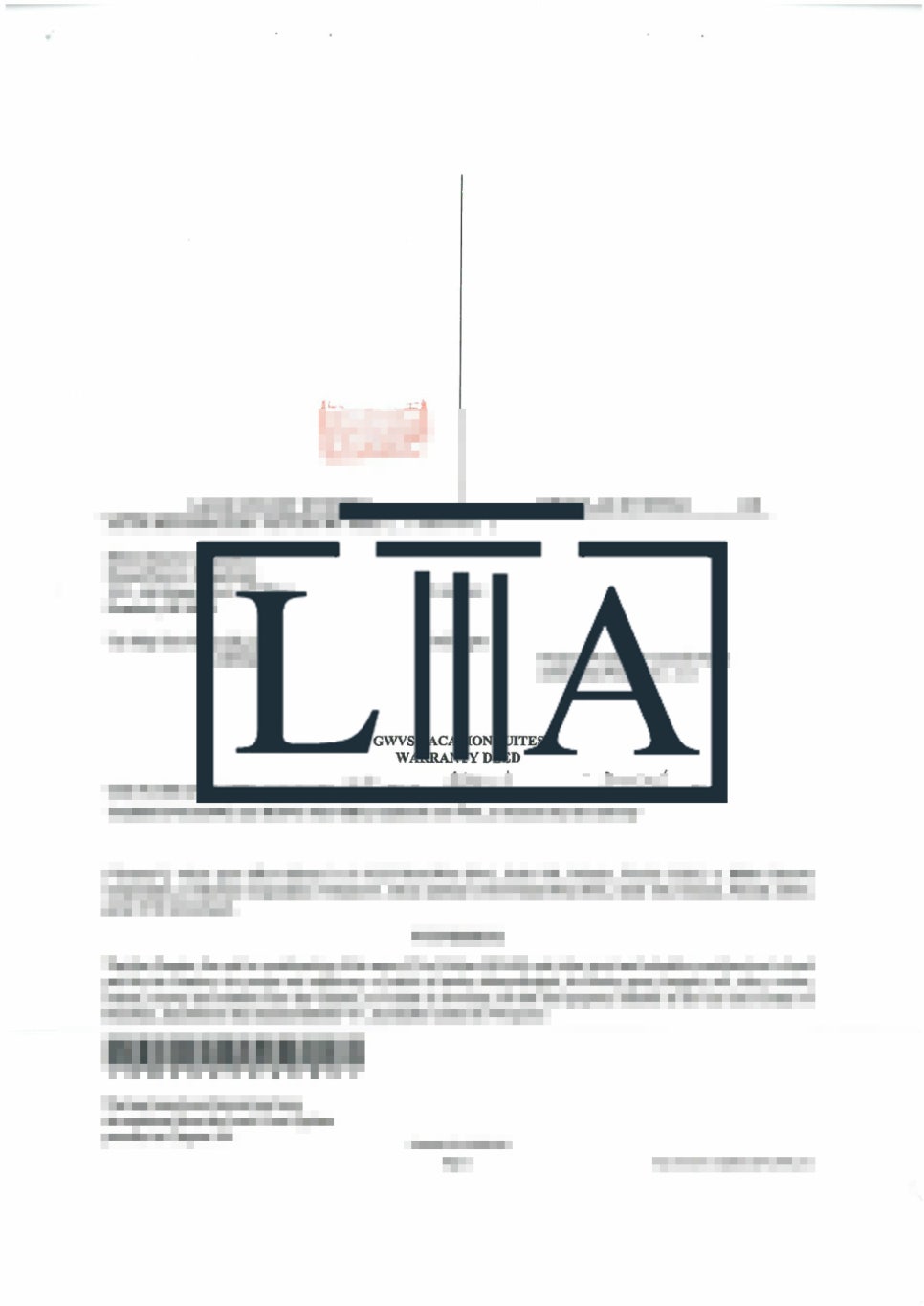
It's the ownership-transfer document a member uses to return their timeshare rights — in plain terms, "I'm giving up my rights to this timeshare." It's one of the most important documents in the Hilton return process, and it requires both notarization and apostille certification (through Korea's Overseas Koreans Agency).
Why you can't just sign the US document and go straight to apostille
A common misconception: sign the document sent from the US, then go straight for an apostille. In reality, a Warranty Deed issued by Hilton headquarters is legally a private document (사문서) — a government agency won't apply an apostille directly to a privately signed document. It first needs signature notarization at a notary office. And under Korea's Notarial Act, a foreign-language document can only get signature notarization at a Korean notary office once a complete Korean translation is attached — the notary needs to be able to verify the content before they can notarize it. The correct sequence is: ① translate the Warranty Deed → ② signature notarization → ③ apostille certification → ④ submit to Hilton's US headquarters. This is exactly why a qualified 외국어번역행정사 who can fully understand the US document and translate it with zero legal defect is essential to the process. Apostille processing itself typically takes about 2-3 or 3-4 business days from intake to the client receiving the certified document — worth budgeting extra time for.

Registering a birth with the Thai Embassy — a Korean hospital's birth certificate needs one more step than people expect
A Korean-Thai multicultural family whose child was born at a hospital in Korea needed the Overseas Koreans Agency's consular confirmation (영사확인) handled on their behalf as a required document for registering the birth with the Thai Embassy in Korea. The client lived outside the capital area, making it genuinely difficult to handle document preparation and certification on their own — this office processed it quickly and accurately from start to finish.
What the Thai Embassy generally requires for a birth registration
Typically: the parents' ID and passports, a marriage certificate (both Korean and Thai versions), the birth certificate application form (distributed after the embassy reviews the documents on intake), and — the real crux of the process — the Korean hospital-issued birth certificate, properly certified.
Two paths, depending on what the hospital actually issued
Hospital-issued birth certificates come in one of two forms in practice:
- Hospital issued an English birth certificate: take the English original directly to a notary office for a declaration notarization (진술서 공증).
- Hospital issued only a Korean-language birth certificate: a 외국어번역행정사 completes a proper certified translation first, then it goes through translation notarization (번역공증).
The step many people miss: consular confirmation isn't optional
Whichever notarization path applies, the notarized document — together with the other required documents — still needs a final consular confirmation from the Overseas Koreans Agency before the Thai Embassy in Korea will accept it for filing. In this case, this office guided the client through the declaration-notarization portion so they could handle it directly, then had them visit the office to review the notarized documents, finalize the remaining materials, and completed the Overseas Koreans Agency consular confirmation on the client's behalf. For a client living outside the capital who would otherwise have had to visit both a notary office and the Overseas Koreans Agency in person, this saved a real amount of time and travel cost.
A standing nationwide service: consular confirmation and apostille by mail
For clients based outside the capital, a single round trip to Seoul's Overseas Koreans Agency just for a consular confirmation or apostille often costs more in time and money than the certification itself. This office accepts documents by registered mail, completes the certification, and mails the finished documents safely back — handling the entire diplomatic/consular certification process on the client's behalf.
Key takeaways
- A Korean passport cannot get standard copy-certification notarization — it's already an official document
- Three alternatives exist: signature (declaration) notarization, translation notarization, and a 행정사's fact-verification certificate (원본대조필)
- Always confirm the receiving institution's actual requirement first — some countries use "Notarization" broadly enough to cover any of the three
One more option worth knowing: the Ministry of Foreign Affairs issues a Certificate of Passport Copy (여권사본증명서), which can work as an alternative in some cases — but in practice, some foreign receiving institutions don't accept it, so confirm with the receiving side before relying on it.
The Right Method for What 'Notarization' Actually Means Here
Get in touch about thisFrequently Asked Questions
Why won't a Korean notary office certify my passport copy as identical to the original?
A Korean passport is already a government-issued official document — having a notary office (a government-authorized function) certify a copy of another government document doesn't fit the system, so standard copy-certification (원본대조공증) isn't performed on passports in Korea.
What's the difference between the three notarization methods?
Declaration notarization certifies that you signed a statement claiming the copy matches the original (not the match itself). Translation notarization certifies the translation document, not the passport copy. A 행정사's fact-verification certificate directly confirms the copy matches the original after examining the passport itself.
Which method should I choose?
It depends entirely on what the receiving institution is actually asking for — some accept simple signature notarization, some want the passport translated and notarized, and some want both the copy's authenticity and translation accuracy confirmed together. Confirm the actual requirement before choosing.
Who can legally certify that a passport copy matches the original?
Under current Korean law, a 행정사 is the only party authorized to issue a 원본대조필 (verified against original) certification for a passport, under 행정사법 제20조.