Wondering who's legally authorized to certify a translation?
A statutory administrative-scrivener qualification under Korea's 행정사법 (Administrative Agent Act) — with the legal authority to issue a 번역확인증명서 (translation verification certificate) and a binding duty of confidentiality.
Statutory Authority, Not Just a Translation ServiceA 외국어번역행정사 (foreign-language translation administrative agent) is a nationally licensed qualification, not just a job title — its authority comes directly from Korea's 행정사법 (Administrative Agent Act), and it's the reason a certified translation from this office carries legal weight with courts and government offices.
The statutory basis (행정사법 제2조)
The Administrative Agent Act authorizes registered 행정사 to perform, on a client's behalf:
- Drafting documents submitted to administrative agencies
- Drafting documents relating to rights, duties, or facts requiring certification
- Translating documents related to administrative agency business
- Filing the documents prepared under items 1–3 on the client's behalf
- Representing applications, petitions, and filings for permits, licenses, and authorizations
- Consultation on administrative law and procedure
What sets this apart from a general translator
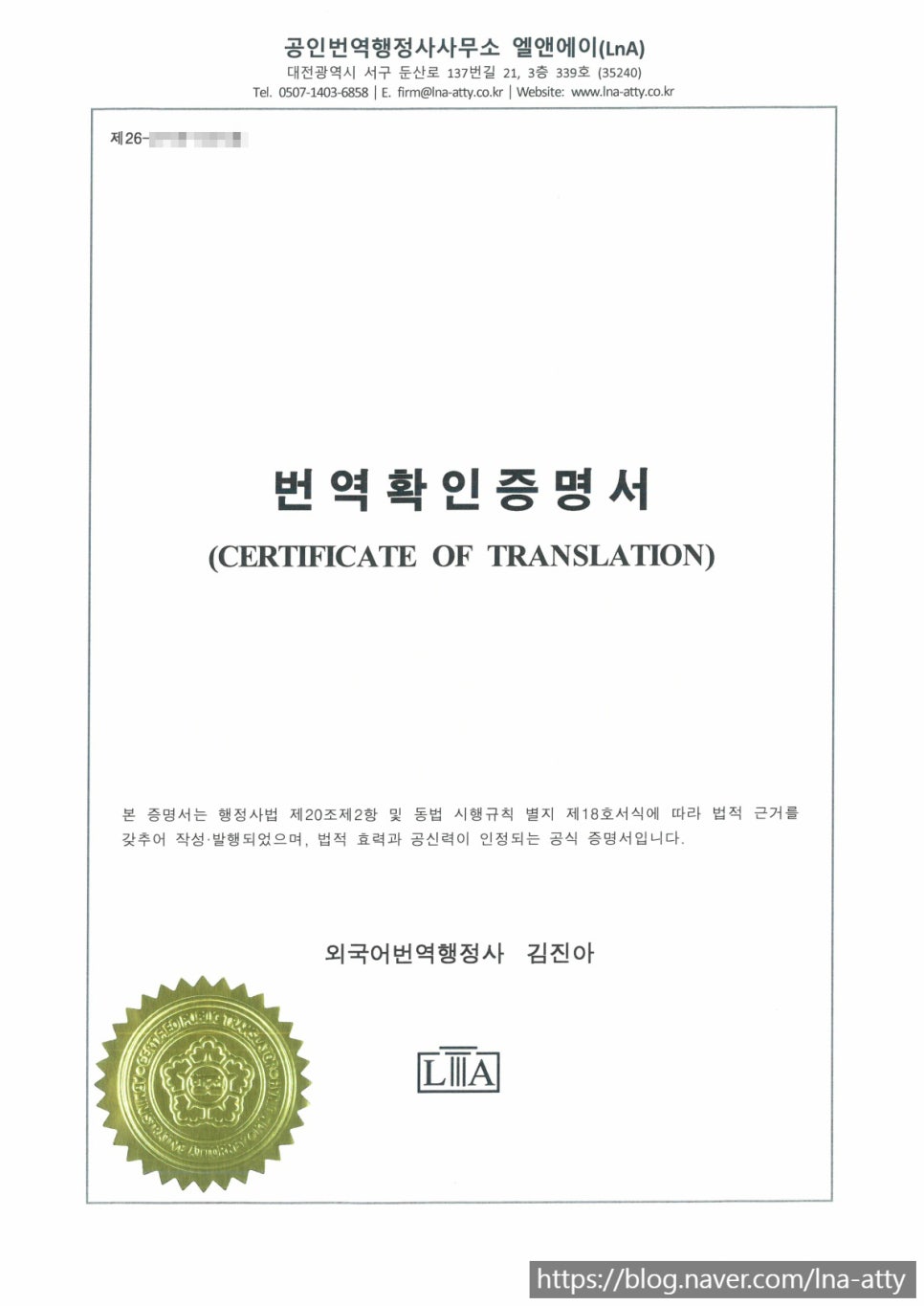
- 번역확인증명서 authority (제20조②) — a 외국어번역행정사 can issue a formal translation verification certificate attached to the translation itself, the format courts and government offices require.
- Statutory confidentiality duty (제23조) — anything learned in the course of the engagement is protected by law, not just office policy, and the duty survives after the engagement ends.
- Licensing enforcement (제3조, 제36조) — practicing as a 행정사 without the license, or using the title without qualifying, is a criminal offense under the Act (up to 3 years imprisonment or a 30 million KRW fine) — which is also why "translation agency" and "행정사" aren't interchangeable.
Why this matters for your document
Courts, embassies, and government offices generally require translations to come with a certification they can trust. A 외국어번역행정사's certification carries statutory backing — not a private company's internal quality claim — which is why it's accepted where a plain translation, even an accurate one, is not.

외국어번역행정사 vs. a general translator
| 외국어번역행정사 | General translator | |
|---|---|---|
| Qualification | Statutory license (행정사법) | No state-recognized qualification |
| Legal basis | 행정사법 제2조, 제3조, 제23조 | None specified by law |
| Certification | Can issue a 번역확인증명서 — no separate notarization needed | Requires separate notarization (added cost + time) |
| Confidentiality | Statutory duty (행정사법 제23조) | Depends on individual ethics, not law |
| Procedural knowledge | Tested on civil law, administrative law, and administrative procedure | Not typically required |
| Typical use | Visas, immigration, international contracts, court and government filings | Corporate documents, research papers, literary translation |
Before this qualification existed, a translation only gained legal effect once a separate notary public notarized the translator's work — an extra step, and an extra cost, since a notary isn't necessarily fluent in the source language either. A 외국어번역행정사's 번역확인증명서 replaces that notarization step for documents headed to Korean administrative agencies and courts, while still carrying government-backed accountability for accuracy.

"Authentication" isn't one thing: 행정사 vs. 공증인
Foreign submissions frequently ask for a document's "Authentication" — but even in English-speaking (especially common-law) legal systems, "Authentication of Facts" and "Authentication of Execution" are legally distinct concepts. The names, the authorized parties, and the legal effect differ by country — but the underlying distinction holds everywhere, including Korea:
| 행정사 (Administrative Agent) | 공증인 (Notary Public) | |
|---|---|---|
| Certifying document | 사실확인증명서 / 번역확인증명서 | Notarization of a privately-authored document (사서증서), etc. |
| What's being certified | That specific facts or content actually exist or are accurate — that a translation matches its original | That the named signer personally signed, and the document was properly executed |
| Type of authentication | Authentication of Facts — truthfulness of content | Authentication of Execution — genuineness of formal execution |
| Legal effect | Administrative/evidentiary support (credible supporting evidence) | Legal evidentiary weight, presumption of genuine execution |
In short: a 행정사 certifies the authenticity of content — that a translation is accurate, that a stated fact is true. A 공증인 certifies the authenticity of form — that a signature is genuine and a document was properly executed. Both serve the shared goal of "authenticity," but rest on different legal bases, serve different purposes, and produce different legal effects — neither is inherently superior to the other. The two systems are complementary, not competing, and which one a specific document needs depends entirely on the document's purpose — the right question is "which fits this situation," not "which is better."
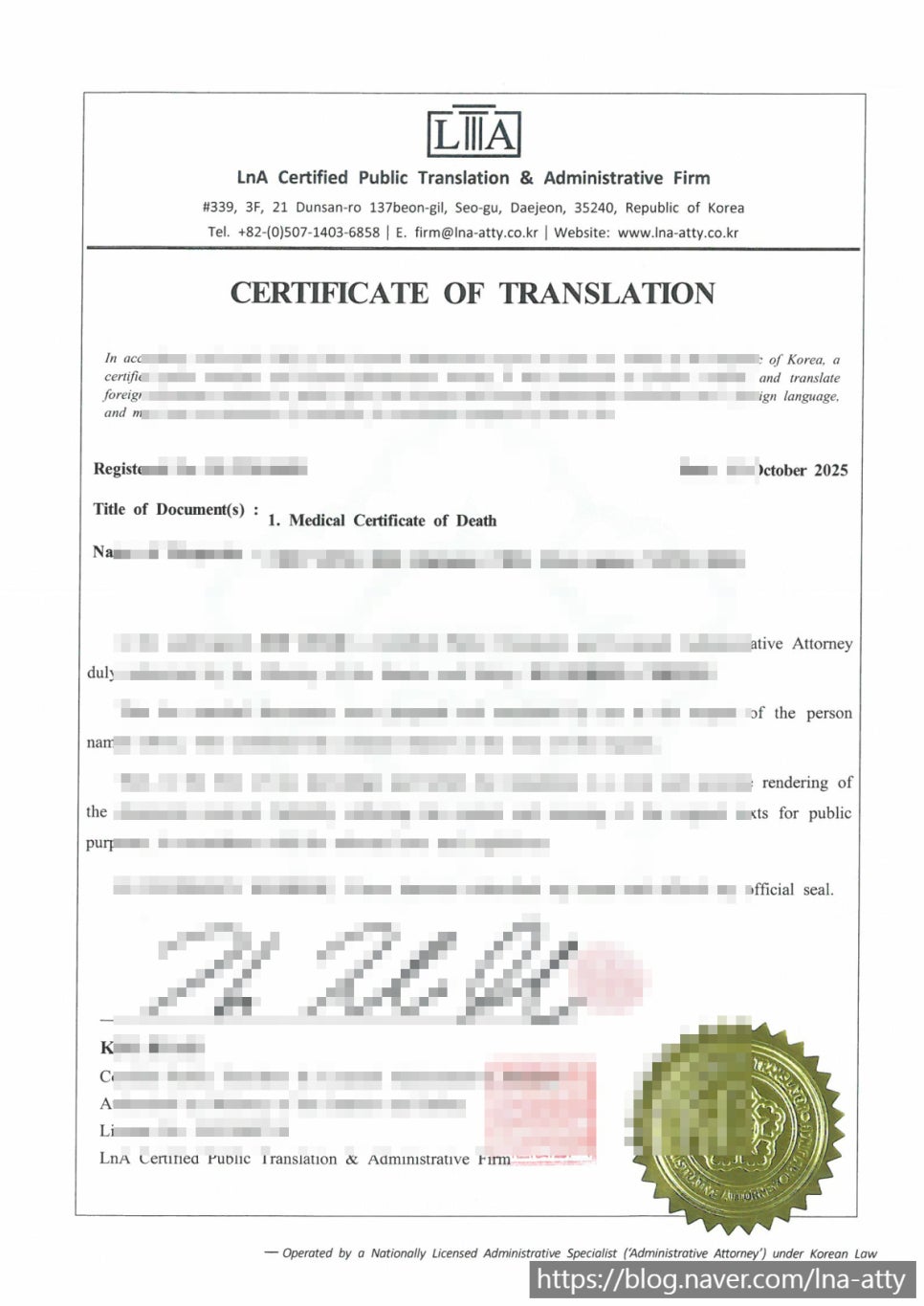
2026 Court Interpreter/Translator selection
LnA's KIM JINAH has been selected as a 2026 Court Interpreter/Translator (법원 통·번역인) by the Seoul Central District Court — added to the court's candidate roster after a document-based screening process, available for appointment when the court needs interpretation or translation support during a trial or case proceeding.
A real signal of growing institutional trust: JLPT certificates now accepted with 번역확인증명서 alone
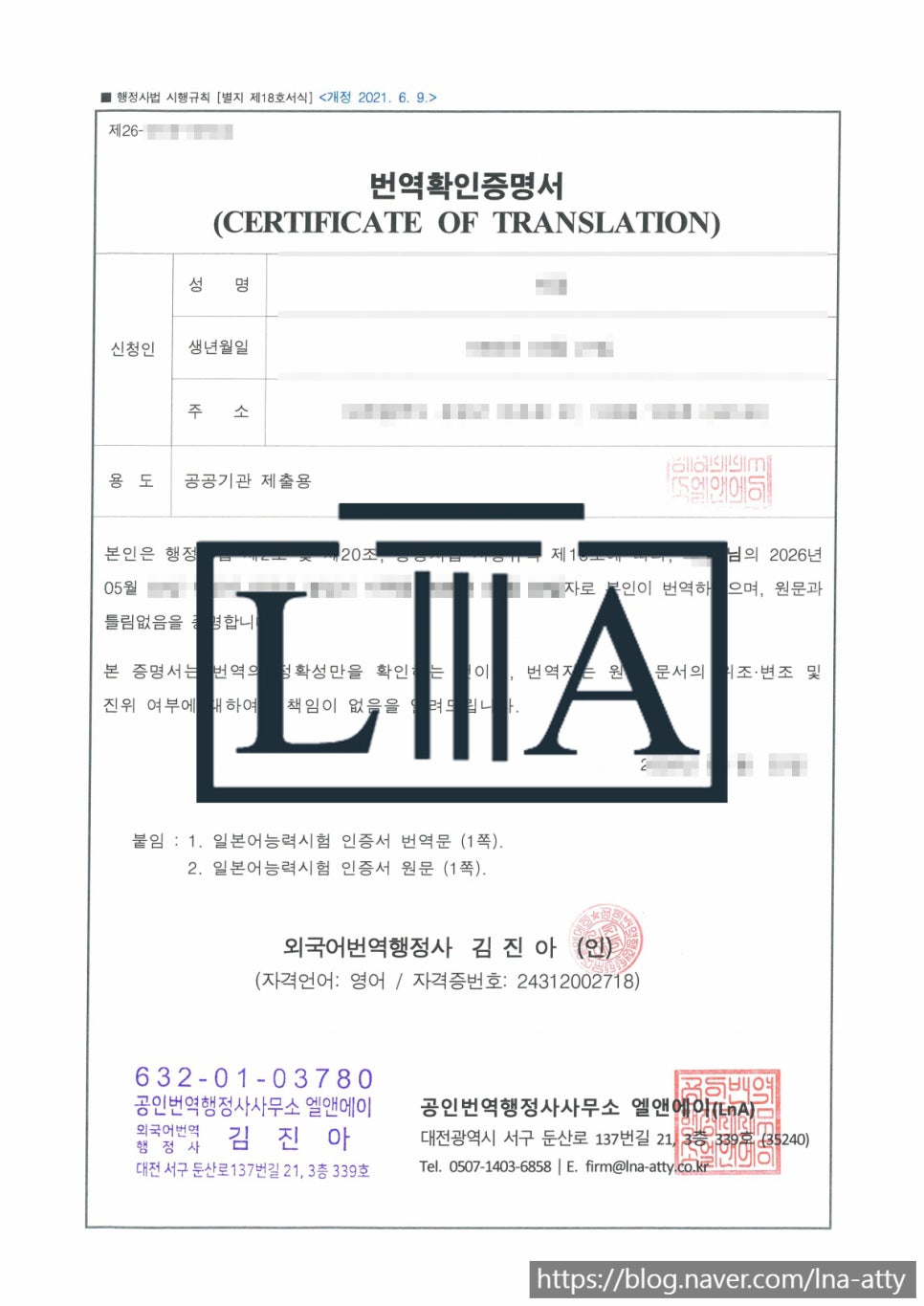
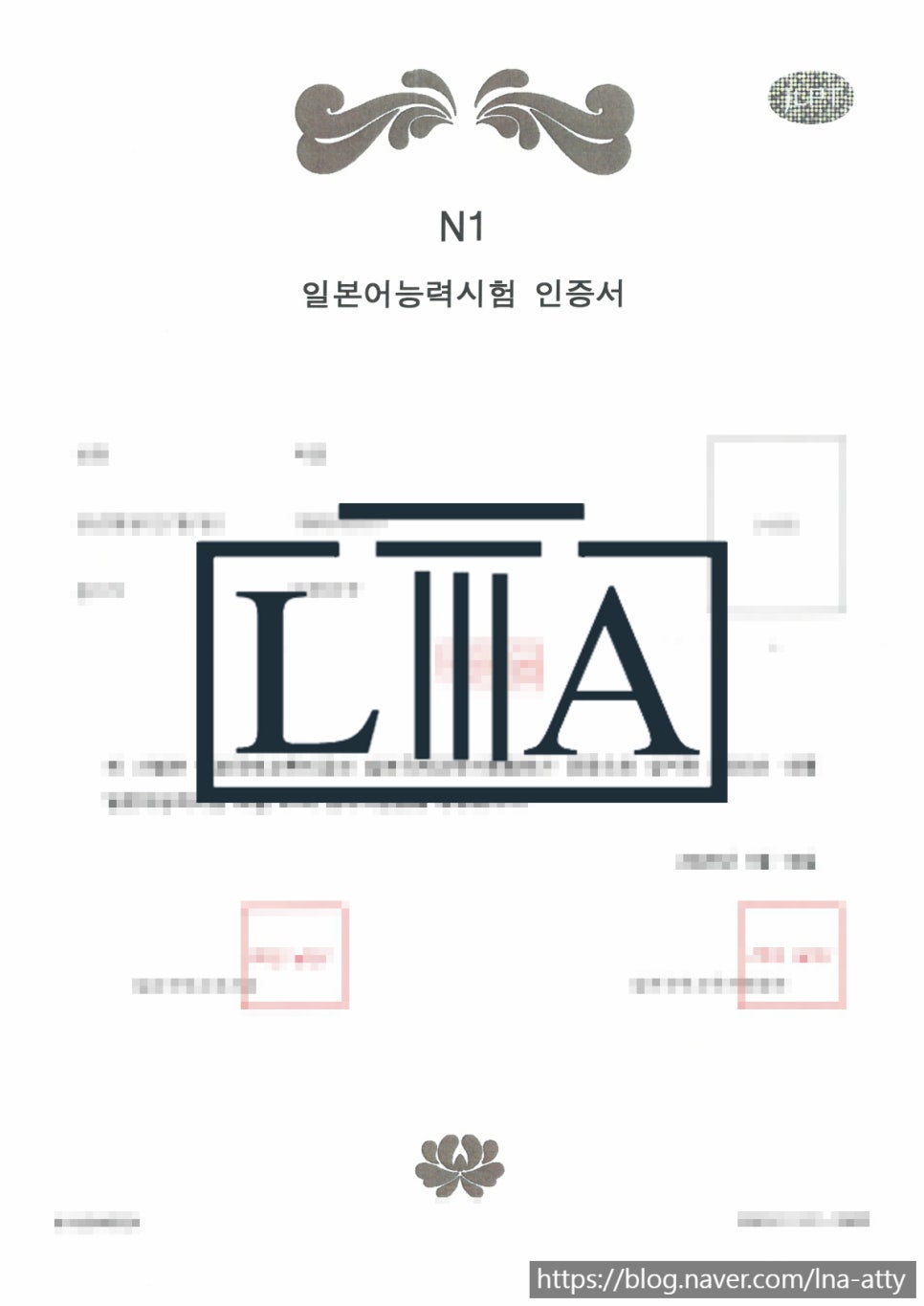
This office regularly receives inquiries for translating language-proficiency test certificates — JLPT (Japanese Language Proficiency Test) results and transcripts, in a recent case — for submission to public institutions or companies as proof of foreign-language ability. In the past, many institutions insisted on notarized translation ("번역공증") no matter what. Increasingly now, public institutions and major companies are willing to accept a Certificate of Translation (번역확인증명서) alone for this kind of submission — and this particular client's institution specifically requested that exact document. This is itself a concrete signal that the institutional trust placed in a 번역확인증명서 — issued under 행정사법 by a nationally licensed 외국어번역행정사 — has grown, cutting out an unnecessary notarization step and its added cost while still allowing prompt, credible acceptance.
How this office handles the process end-to-end, remotely
- Receive a photo or scan of the original document.
- Translate the Japanese/English bilingual source into precisely matched, Korean-standard-format Korean.
- Attach the 원본대조필 fact-verification statement under 행정사법 제20조, with binding stamps (간인/압인) completed.
- After the client's final confirmation, send the scanned copy first, then the physical original by registered mail (or make it available for pickup).
A translation-judgment nuance: JLPT documents are bilingual, and the two versions aren't identical
The JLPT documents in this case carried both Japanese and English text. That raises a real judgment call: should the translation be based on the Japanese original, or the bundled English rendering? Subtle differences in phrasing exist between the Japanese source and its English counterpart on the same document — deciding which to anchor the Korean translation to, and organizing it naturally around the submission's actual purpose, is a substantive part of the work, not a mechanical copy-paste.