Visa or travel authorization asking for criminal record documents?
Certified translation for the exact document a visa authority needs — knowing when Korea's bilingual criminal record certificate is enough, when a 형사재판확정증명서 needs translation, and when a full judgment is genuinely required, rather than defaulting to the most paperwork.
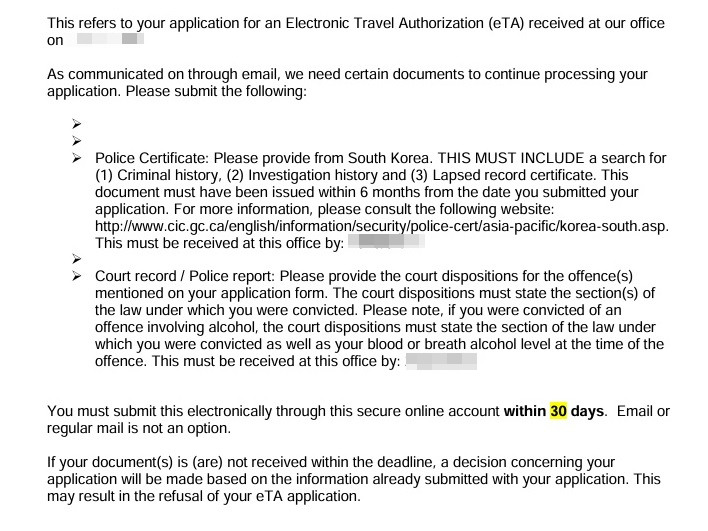
The Right Document, Not the Most PaperworkTravel authorizations like Canada's eTA are usually approved within minutes online — but if a past criminal record surfaces during the check, the receiving immigration authority (Canada's IRCC, in this case) can pause the application and request supporting documents, and getting the wrong ones translated wastes time and money.
What IRCC (and similar authorities) typically ask for
- Police Certificate — covering criminal record, investigation record, and any spent convictions, issued within 6 months of the application
- Court record / police report — the court's disposition of the specific offense, including the exact legal provision the conviction was under, and (for DUI-type offenses) details like blood alcohol level at the time
Korea's three relevant documents — and which one you actually need
- 범죄·수사경력회보서 (police/investigation record certificate) — issued bilingually (Korean/English) by Korean police, so it can be submitted directly with no translation needed. Satisfies the "Police Certificate" requirement on its own.
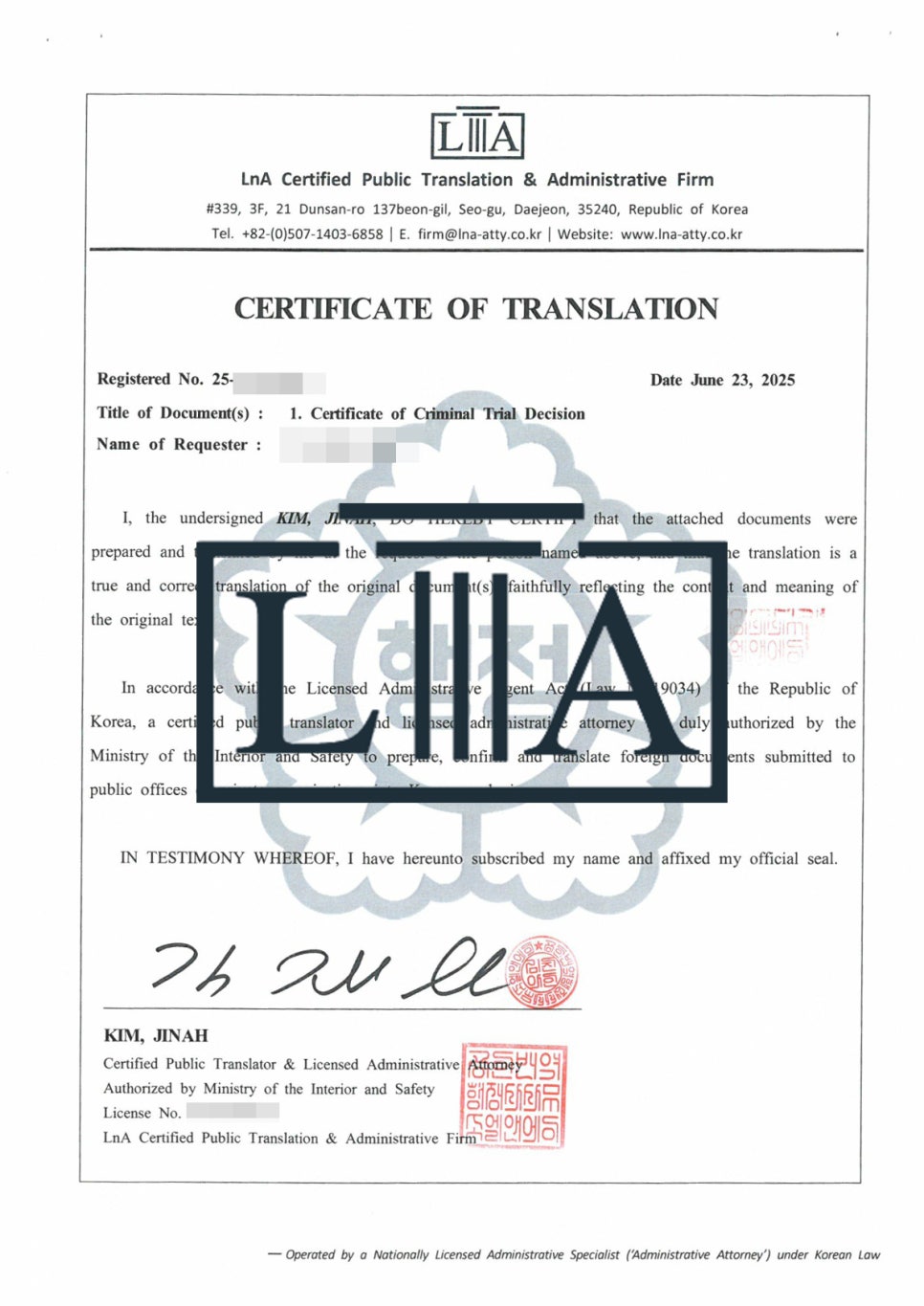
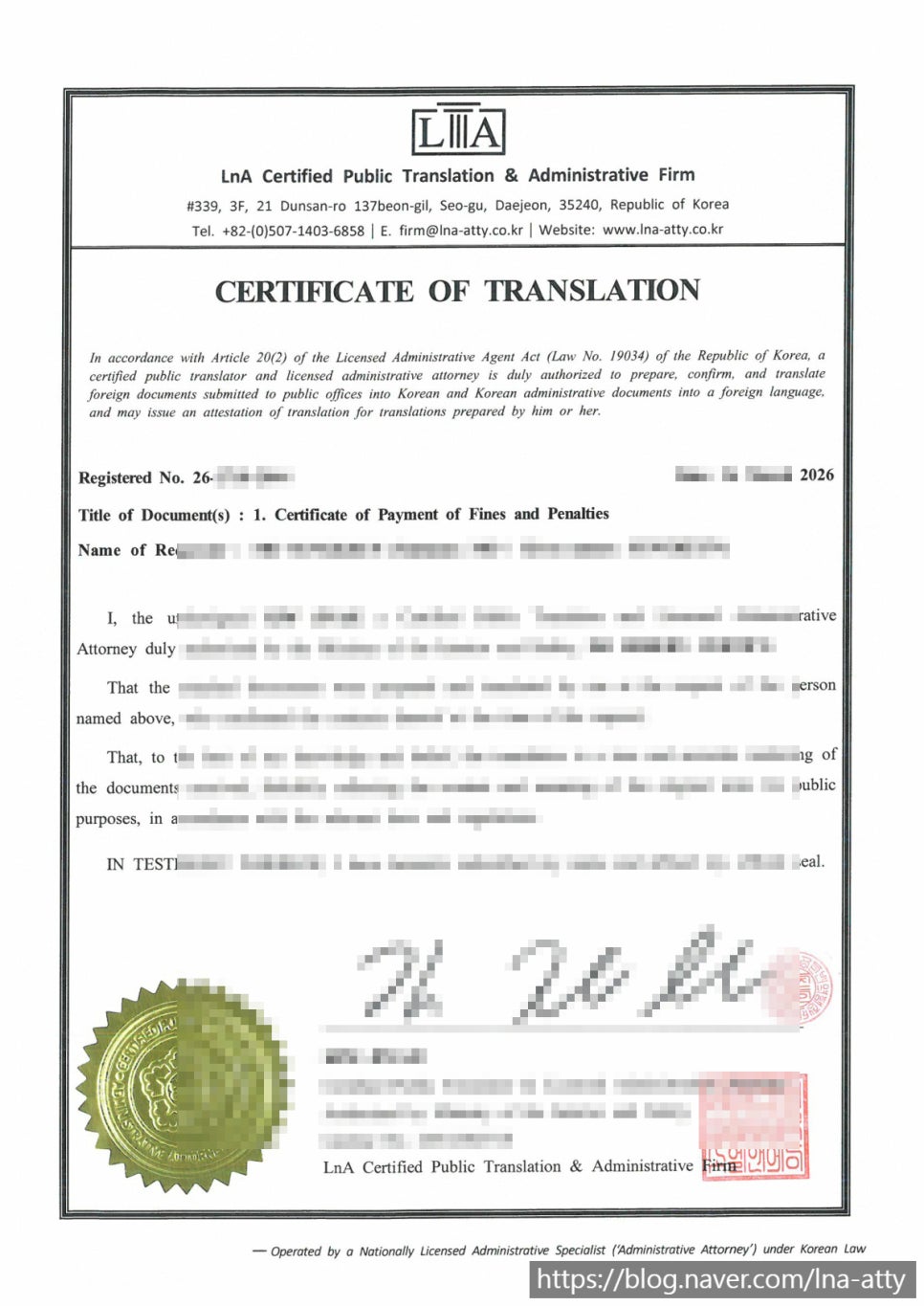
- 형사재판확정증명서 (certificate of final criminal judgment) — states the charge, sentence type (e.g. fine, imprisonment), and sentence length in detail, but is issued in Korean only — a certified translation with a 번역확인증명서 is required before submission.
- 판결문 (the full judgment) — needed only when the certificate above doesn't capture enough detail (e.g. a suspended sentence's probation terms, the exact fine amount) — contains the full case record: charges, applicable law, facts, and sentencing rationale.
Case study: Canada eTA, criminal record follow-up
A client's Canada eTA application was flagged over a past conviction. IRCC requested the documents above. The 범죄·수사경력회보서 was already usable as-is (bilingual). For the court disposition requirement, rather than immediately translating the client's 70+ page full judgment, this office first translated and certified the shorter 형사재판확정증명서 — which already listed the charge, sentence type, and sentence length — as a faster, lower-cost first submission, with the option to follow up with the full judgment if IRCC required more detail.
Why document choice matters as much as translation accuracy
Submitting more paperwork than necessary isn't safer — it adds cost and translation time for information the receiving authority may not need. Submitting too little risks delay or rejection. Getting this right up front means correctly reading what the specific visa/travel-authorization authority is actually asking for, not just translating everything available.
Two more documents that come up: 약식명령 and 벌과금납부증명서
Beyond the eTA case above, visa and immigration applications (e.g. a Canadian research-leave visa) commonly ask for two related documents when a minor offense is on record:
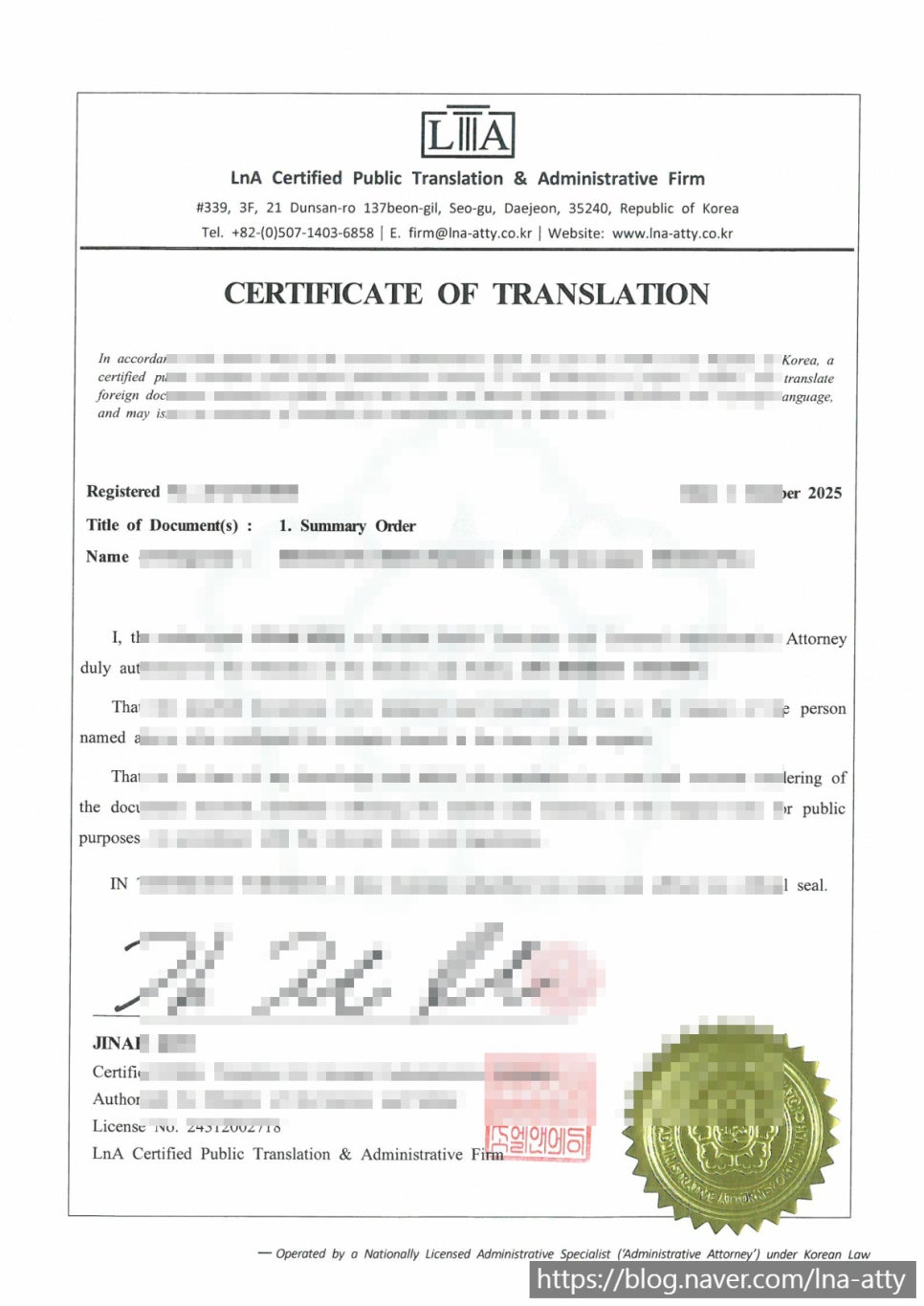
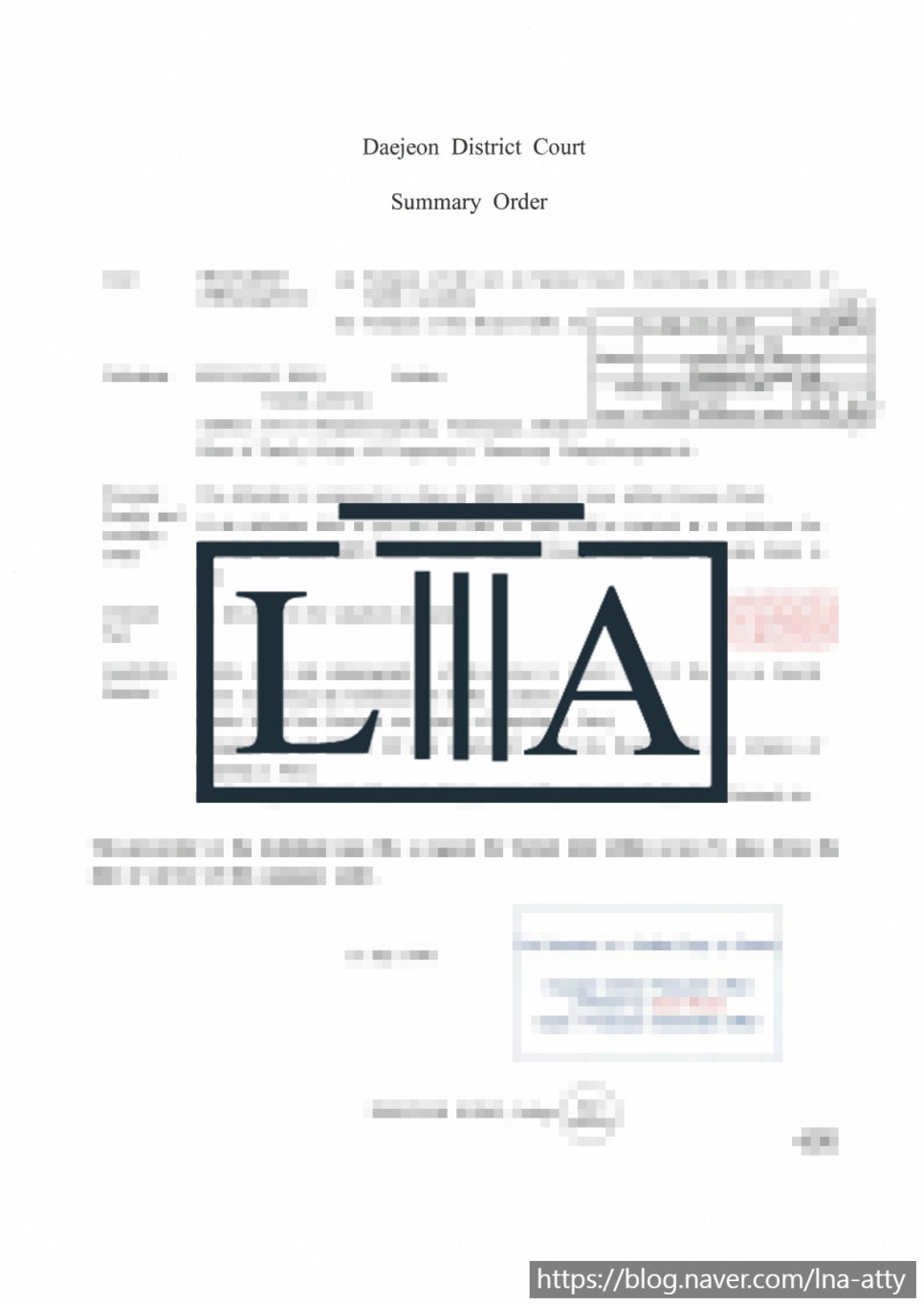
- 약식명령 (Summary Order) — a ruling issued by a district court (or its branch) at a prosecutor's request, imposing a fine, minor fine, or forfeiture through a summary procedure without a full trial. It's a fast-track process for relatively minor offenses, but foreign immigration/visa authorities generally classify it as a criminal disposition requiring certified English translation.
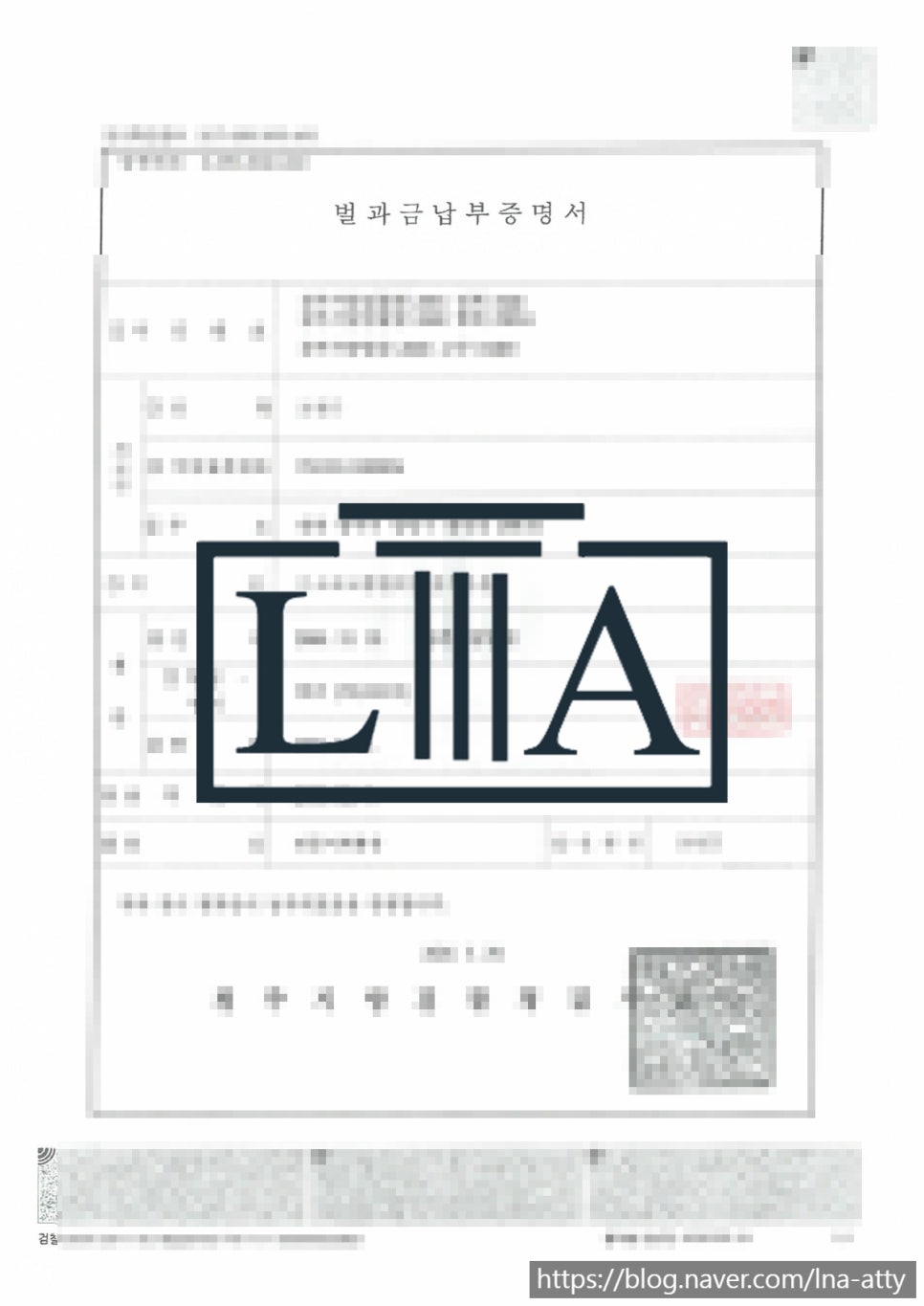
- 벌과금납부증명서 (Certificate of Payment of Penalty) — proves the fine ordered by the 약식명령 was actually paid, an important reference point for confirming the criminal matter is fully closed.
Translation precision checklist for these documents
Legal and administrative documents live or die on accuracy. This office applies the following specifically to 약식명령/벌과금납부증명서 translations:
- Item-by-item translation matching the Korean original 1:1, no restructuring
- No omission of core details — case number, defendant's identifying information, disposition, fine amount
- Precise rendering of legal terminology like "노역장 유치" (labor detention in lieu of payment) and "가납명령" (provisional payment order)
- Translation bound together with the original document as one set
- Consistent English formatting of the judgment date and judge's name throughout
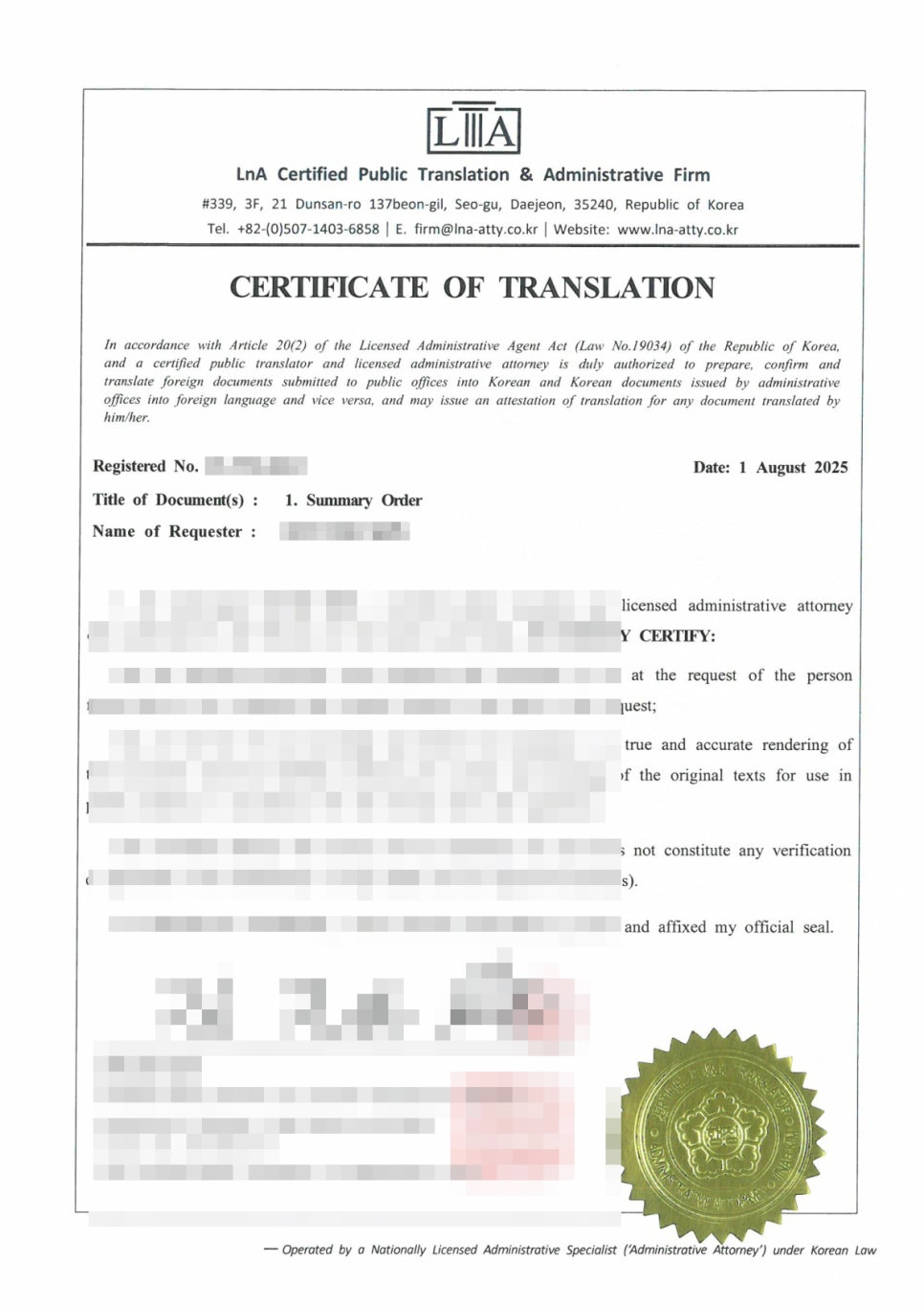
Most foreign government agencies require a translation backed by a formal certification, not a plain translation — which is why this class of document goes through a licensed 외국어번역행정사 under 행정사법 rather than a general translation service.

When Korean law and IRCC's requirement directly conflict: the self-declaration solution
Canada's IRCC sometimes asks eTA applicants for a Police Certificate that includes lapsed (spent) convictions. That collides head-on with Korean law: under the Act on the Lapse of Criminal Sentences, Korea's 범죄·수사경력회보서 (for foreign entry/stay purposes) by law cannot include lapsed convictions — and the version that does include them is legally restricted to personal identity-verification use only, not for submission to a third party like a foreign government. Following IRCC's literal instruction would mean requesting a document Korean police cannot lawfully issue for that purpose.
The resolution: IRCC and the Korean Embassy already updated their guidance
This isn't actually a live conflict — both sides updated their official policy to resolve it:
- IRCC confirmed, effective May 31, 2022, that it no longer requires a lapsed-record-inclusive Police Certificate from Korean nationals or applicants who lived in Korea 6+ months.
- The Korean Embassy in Canada confirmed via a June 1, 2022 notice that IRCC's required document changed to the standard 외국 입국·체류 허가용 범죄·수사경력회보서 (the non-lapsed-record version).
Not being asked for the lapsed-record certificate ≠ not disclosing the record
This is the part that trips people up: submitting the standard certificate (without lapsed convictions) does not mean a past lapsed conviction can simply go unmentioned. Per IRCC and Embassy guidance, any conviction not captured on the 범죄·수사경력회보서 needs to be separately covered in a self-declaration, detailing:
- The past offense(s) and sentence(s)
- Dates for the offense, sentencing, investigation, and any pardon
- Proof the sentence was fully served (fine payment or completed imprisonment)
- The full court record (a court clerk's certification alone isn't accepted)
- Investigation records (e.g. non-indictment or non-referral decision notices)
Reviewing a client-drafted self-declaration against IRCC's checklist
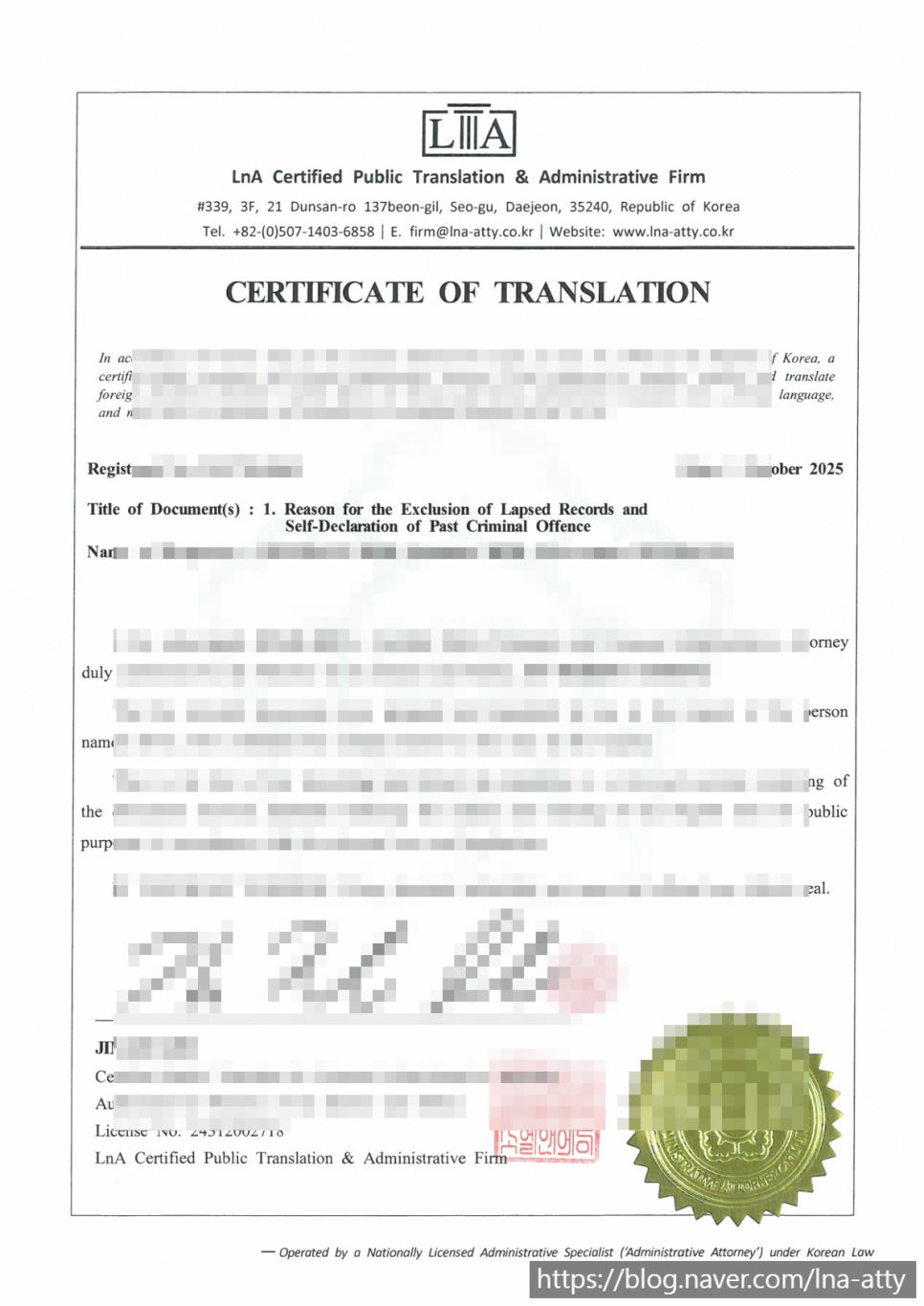
In this case, the client prepared the self-declaration personally, along with supporting documents (약식명령, 벌과금납부증명서). This office's role was to cross-check the client's draft against IRCC's exact requirements for completeness before finalizing the translation and certification — catching any missing element here is worth more than translation accuracy alone, since an incomplete self-declaration can itself trigger a request for more documents.
Ireland's Working Holiday Programme: 약식명령 as a supporting document
A client preparing an Ireland Working Holiday Programme application needed a certified English translation of a 약식명령 (Summary Order) as a required supporting document.
Ireland's Working Holiday Programme runs just twice a year, admitting a fixed 800 applicants annually through a random lottery — application, lottery selection, supporting-document review, and approval-certificate issuance follow in sequence, with waitlisted applicants filling any vacancies that open up.
Ireland's immigration service splits "certified copy" and "certified translation" into two distinct roles
Ireland's immigration authority (ISD — Irish Immigration Service Delivery) requires a credible, certified translation for any foreign-language document submitted to an Irish government body — and treats document authentication ("Certified Copy") and translation certification ("Certified Translation") as two separate certifications, each requiring its own qualified party.
For the "Certified Copy" (verifying a copy matches its original), ISD specifies who's authorized:
- Solicitor
- Notary Public
- Commissioner of Oaths
- Peace Commissioner (an Irish honorary-notary role)
For "Certified Translation," ISD's requirement is different in kind: it asks for certification from someone with an established relationship and professional reputation with official institutions — a standard about the certifier's credibility, not a specific job title.
Why a 외국어번역행정사 fits this requirement precisely
A 외국어번역행정사 issues a 번역확인증명서 — a public confirmation of a translation's accuracy grounded in Korean national law (행정사법) — making this office the only nationally licensed professional in Korea positioned to legally demonstrate exactly the "established relationship and professional reputation with official institutions" ISD's requirement describes.
A late eTA supplement request — why "it's too late anyway" is the wrong call
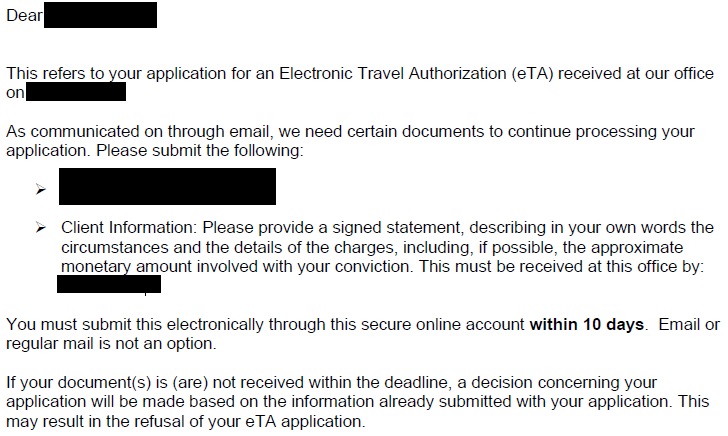
A client's Canada eTA review was delayed past their intended travel date. Mid-review, IRCC requested an additional statement addressing a past prosecution. The instinctive reaction is understandable: "The trip is already gone, and I probably won't visit again — is it even worth preparing this?"
Why responding still matters, even after the travel date has passed
An eTA is technically an authorization, not a visa — but its review process and requirements mirror standard visa review closely enough that the same logic applies. The Five Eyes alliance (US, UK, Canada, Australia, New Zealand) shares more than general security intelligence — through a separate immigration cooperation framework called Migration 5 (M5), member countries systematically share identity and biometric data in real time via the Secure Real Time Platform (SRTP). That shared identity data feeds directly into each country's own immigration, visa, and refugee review processes, with case-by-case approval enabling further sharing of criminal-record and other detail on request. In practice: a record from one country is readily traceable by another.
Leaving a supplemental document request unanswered gets an application logged as incomplete or abandoned in the immigration authority's own system — a record that can affect not just future applications to that same country, but reviews elsewhere too, since it raises an unavoidable question about the applicant's reliability. A clean, if late, response that demonstrates honesty and responsibility becomes a positive precedent an applicant can point to later — a materially better outcome than a formal refusal citing a specific failure to cooperate.
The statement's required content and submission method
IRCC's supplemental statement needed to cover: when and why the prosecution/penalty occurred, the specific circumstances of the conduct, any financial details, an affirmation of remorse and low reoffending risk, and a signature.
Two submission methods are available:
- Drafted directly in English — certified for credibility and authenticity via a 외국어번역행정사's Certificate of Attestation (사실확인증명서).
- Drafted in Korean — translated into English with a 번역확인증명서 issued alongside it.
This client used method 2 — LnA translated the client's own Korean-language statement into English and issued the accompanying certified-translation certificate.
The underlying principle
A delayed review isn't the same as a closed one. Rather than the short-term calculation of "it's already too late, why bother," a genuinely responsive, cooperative record matters — especially given how closely Five Eyes countries share identity and case data with each other. An unresolved record in one country can carry real, hard-to-see consequences for a visa application in a completely different one.
An Indian "Character Certificate" for a Korean government research institute's security clearance
A Korean government-funded research institute requested translation and notarial commission (번역공증촉탁) of an India-issued Character Certificate, intended for submission to the National Police Agency — part of a background-check procedure for hiring a foreign researcher.
Why a government research institute requires this kind of background check
Government-funded research institutes conducting core national technology R&D are designated (or hold equivalent status) as security facilities. Under Korea's Security Work Regulations (보안업무규정), personnel who need access to secured areas or handle classified information at these institutes must undergo a background check. Since domestic records alone can't establish a foreign hire's history, the institute requests a criminal-record-related document issued by the applicant's home country and runs it through an official background-check process via the National Police Agency.
Why the receiving police agency specifically required notarization on top of translation
After confirming the translation, the receiving police agency specifically instructed that it also be routed through notarial commission (공증촉탁) — a step meant to further guarantee both the translator's qualification and the submitted document's formal reliability. It confirms, via a nationally licensed professional, that the source content was translated without legal/administrative distortion, and formally reinforces the document's format requirements and the translator's signature — maximizing the document's institutional credibility.
A naming trap: India issues two different, confusingly similar documents
Indian document names require particular care. A Character Certificate is a document recording, within the scope the local police could confirm, a specific person's identity and whether they have a criminal record. A Police Clearance Certificate (PCC) records the result of an official criminal-record check. The two aren't institutionally identical in character — so whether one can substitute for the other is ultimately a judgment call for the specific receiving institution, not something to assume.
Term choice: not the literal "품행증명서," but "신원증명서"
Some domestic translations render "Character" by its dictionary meaning as "품행증명서" (conduct certificate). But this office considered that the document's actual content is the local police's confirmation of a specific person's identity and whether they have a criminal record — and, given it was being submitted specifically to the Korean National Police Agency, translated it as "신원증명서" (Identity Verification Certificate) to align with Korea's own current administrative terminology system. This lets the receiving officer immediately and clearly grasp the document's actual character, rather than being led astray by a literal dictionary rendering of the English word "Character."
The underlying principle
Translating a document for submission to a government agency requires faithfulness to the source, terminology consistency, understanding the receiving institution's actual requirements, and the translator's own legal accountability — all working together. This office completed the translation and notarial commission for this document holding to that standard throughout.
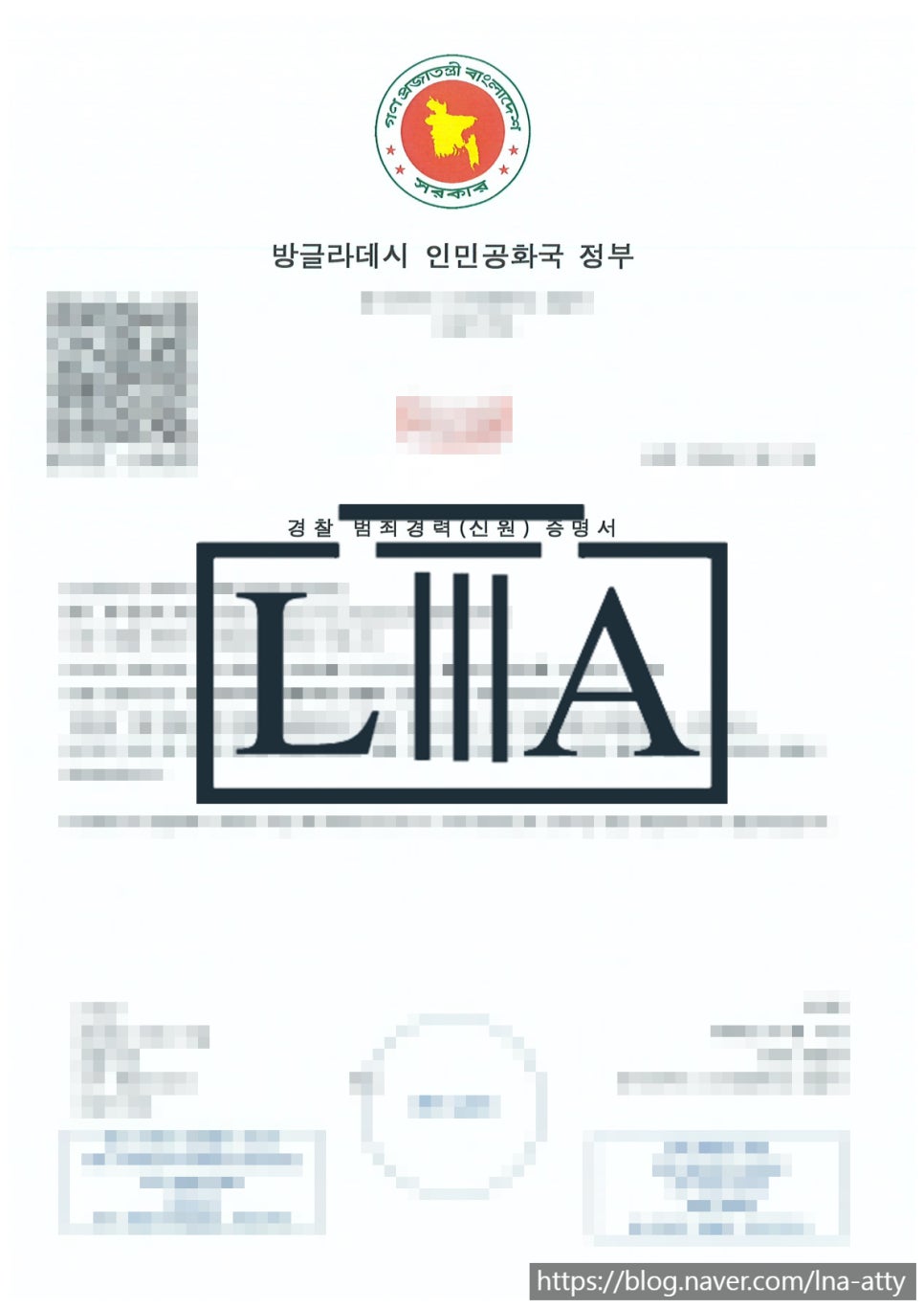
A Bangladeshi Police Clearance Certificate — same research institute, a sibling case
Following the Indian Character Certificate case above, the same government-funded research institute requested translation and notarial commission of a Bangladesh-issued Police Clearance Certificate (PCC) — again as part of a foreign researcher's security-clearance background check.
What a Bangladesh PCC is, and its notable verification system
A PCC is generally understood as an official document confirming the results of a criminal-record check for a specific individual. Bangladesh's PCC has a distinctive feature: it includes a QR code and reference number, enabling instant online verification of the certificate's authenticity.
Why "PCC = 범죄·수사경력회보서" isn't a safe assumption
Functionally, a PCC plays a role similar to Korea's own 범죄·수사경력회보서 — but institutional differences between countries mean the two can't simply be treated as identical documents. Some countries' certificates exclude lapsed convictions; others cover only records within a specific time window. Understanding these systemic differences is essential when translating a foreign police-issued document — which is exactly why a translator handling this kind of document needs professional judgment grounded in real expertise, not just literal language conversion.
A practical checklist for translating a foreign Police Clearance Certificate
- The document's issue date and validity period
- Whether it was e-issued, and its authenticity-verification method (QR code, certificate/reference number, etc.)
- The specific translation and notarization format the receiving institution requires
- Any additional notations beyond the main source-language text
In particular, always confirm the submission window calculated from the issue date — many receiving institutions only accept a PCC issued within a set number of months.
How this case was completed
This Bangladeshi researcher's document was translated faithfully to the source, then routed through a full notarial commission process with a notary (attorney) before being delivered to the client — treated with the level of care warranted by an important hiring procedure.
A US business-trip B1 visa, a 20-year-old DUI record, and tighter 2025 screening
An employee preparing for a US business trip had a single 20-year-old DUI (음주운전) 약식명령 on record, with the fine already fully paid. Because of that history, the company applied for a B1 visa instead of the usual ESTA, and this office translated and certified the relevant documents ahead of the visa interview.
ESTA vs. B1/B2 — why a record changes which path applies
ESTA is a simplified online-approval system, generally granting up to 90 days' stay — but a criminal record often triggers additional review or a redirect to a full visa application rather than automatic approval. A B1/B2 visa instead requires a direct, in-person interview with a US consular officer, with entry generally allowed for up to 6 months — and it's the "proper channel" route where an applicant with a record can explain the situation directly to the officer and still be approved. In short: ESTA is an automatic-approval system, while B1/B2 is an individual-review system — which is why an applicant with a variable like a criminal record typically goes the visa route instead of ESTA.
Screening has tightened since late 2025
Recent (H2 2025 onward) visa screening for alcohol-related offenses has become noticeably stricter — reviewing not just whether a past record exists, but the circumstances of the incident, whether the fine was paid, any reoffending since, and the applicant's current social standing, all together. Even for an old, minor record, thoroughly preparing the 약식명령 (explaining the incident's circumstances) and the 벌과금납부증명서 (proving the disqualifying issue has been resolved) is often what decides the interview.
Why translation quality itself matters at the interview
A consular officer reviews a large volume of documents in a short interview window — the decisive factor for building the applicant's credibility is the certainty and reliability of the documents themselves. For criminal-related documents like a 약식명령 or 벌과금납부증명서 specifically, this matters even more: they need to convey the case's content accurately, prevent unnecessary misunderstanding, and function as explanatory material the officer can reference directly during the interview. A certified translation certificate issued by a nationally licensed 외국어번역행정사 formally attests, by law, that the translation reflects the original's content without legal/administrative distortion — which is exactly what raises the submitted documents' credibility and conveys the facts more clearly during a US visa interview.
The underlying principle
In a US visa process, what each document actually communicates matters enormously — and when a criminal history is involved, an accurate translation and consistently prepared supporting materials become essential. This office translated with every relevant circumstance in mind, and issued the certified translation certificate after the client's own final review.
The Right Document, Not the Most Paperwork
Get in touch about thisFrequently Asked Questions
Do I need to translate my Korean police certificate for a Canada eTA?
No — Korea's 범죄·수사경력회보서 is issued bilingually (Korean/English) and can be submitted as-is, satisfying the Police Certificate requirement without translation.
What's the difference between 형사재판확정증명서 and 판결문?
형사재판확정증명서 is a shorter certificate stating the charge, sentence type, and length — enough detail for many cases. 판결문 is the full judgment with the complete case record, needed only when the shorter certificate doesn't provide enough detail for the receiving authority.
Should I just translate the full judgment to be safe?
Not necessarily — a full judgment can run 70+ pages, adding significant translation cost and time. Starting with the shorter 형사재판확정증명서 when it already contains the required detail (charge, sentence type, sentence length) is often the more efficient first step, with the full judgment available if the authority asks for more.
Is this only relevant for Canada's eTA, or other countries too?
The same document logic applies broadly — most visa and travel-authorization authorities that flag a past criminal record ask for comparable documents, so the same triage (bilingual certificate vs. certified translation vs. full judgment) generally applies.
What happens if I submit the wrong document or a poor translation?
Translation errors or incomplete documentation are a common cause of delayed or denied visa/travel-authorization applications when a criminal record is involved — accuracy and choosing the right document both matter for a clean review.