Filing a patent, utility model, trademark, or design abroad is an administrative procedure governed by that country's own patent office — meeting document requirements, tracking deadlines, and responding to each stage isn't something translation alone covers.
What the role actually covers
- Specialized translation — patent specifications, trademark applications, and design filings translated to the standard foreign patent offices expect
- Document preparation — powers of attorney, declarations, and 번역확인증명서 prepared to each country's filing requirements, plus apostille/embassy legalization and notarization where needed
- Point of contact with foreign firms — direct communication with foreign patent/trademark firms across 44+ countries, so the applicant isn't coordinating each country's local counsel alone
- Office action handling — trademark search, interpreting office actions (OA), docketing, and timing judgment calls across every stage
- Long-term case management — filing through registration is often a 2+ year cycle; consistent point-of-contact continuity across that span matters as much as the initial filing
Countries with an active contact line
United States, China, Japan, Europe (EPO), UK, France, Germany, Russia, Philippines, Vietnam, India, Indonesia, Taiwan, Hong Kong, Thailand, Australia, Singapore, Brazil, Mexico, Malaysia, Canada, Sri Lanka, UAE, Iran, Pakistan, Bangladesh, Colombia, Cambodia, Turkey, Chile, South Africa, Senegal, New Zealand, Peru, Dominican Republic, Ecuador, Egypt, Morocco, Nigeria, Myanmar, Laos, Kazakhstan, Uzbekistan, Saudi Arabia, Kuwait.

Who this fits
- Applicants who want the filing managed end-to-end, not just translated
- Small patent offices with occasional foreign filing needs
- Startups, SMEs, individual inventors
- Foreign law firms coordinating with Korean counterparts
Working alongside Korean patent attorneys
Depending on the case, foreign IP filing may require coordination with a Korean 변리사 (patent attorney) and/or attorney — this office operates strictly within the bounds of Korea's 변리사법 and 변호사법, and will flag when separate retainer of local counsel is needed rather than overstepping that line.
Why patent-specification translation precision matters
A single word choice in a patent specification can change how its claims are interpreted. Korean patent specifications in mechanical and semiconductor fields frequently use '양단' or '양측' (roughly "both ends"/"both sides") — but translating that literally as "both ends" or "both sides" is often wrong.
In patent specifications, '양단'/'양측' usually describes a structural relationship between opposing positions — two ends or sides facing each other — not just "two of something." The more accurate translation is "opposite ends" or "opposite sides."
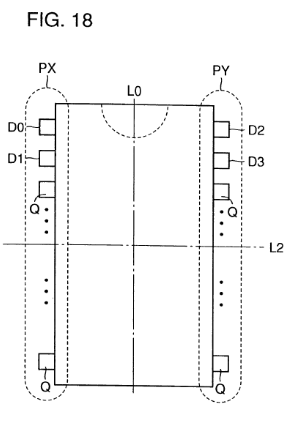
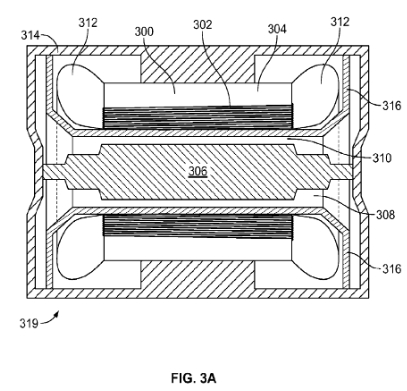
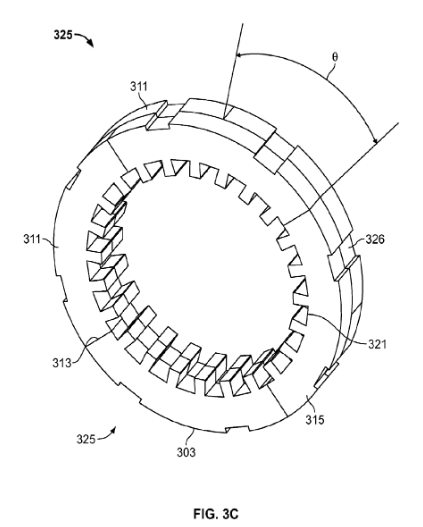
For example, in US Patent 6,594,167 B1, "the plurality of pins are divided into two rows for arrangement on the opposite sides of the memory chip" specifically describes pins arranged facing each other on opposing faces of the chip — a structural detail that "both sides" would flatten into ambiguity. The same distinction shows up in stator core assemblies (PCT/US2009/052011), where "opposing end plates" at each end of a stack conveys a load-bearing structural relationship, not just "two ends."
Both ends/sides implies two of something without regard to whether they face each other. Opposite ends/sides specifies the facing relationship — and in patent claim interpretation, that difference can matter to how the invention's structure is understood. This is the level of terminology precision applied to every patent specification translated for a foreign filing.
Getting a foreign-language version of a Korean IP registration certificate
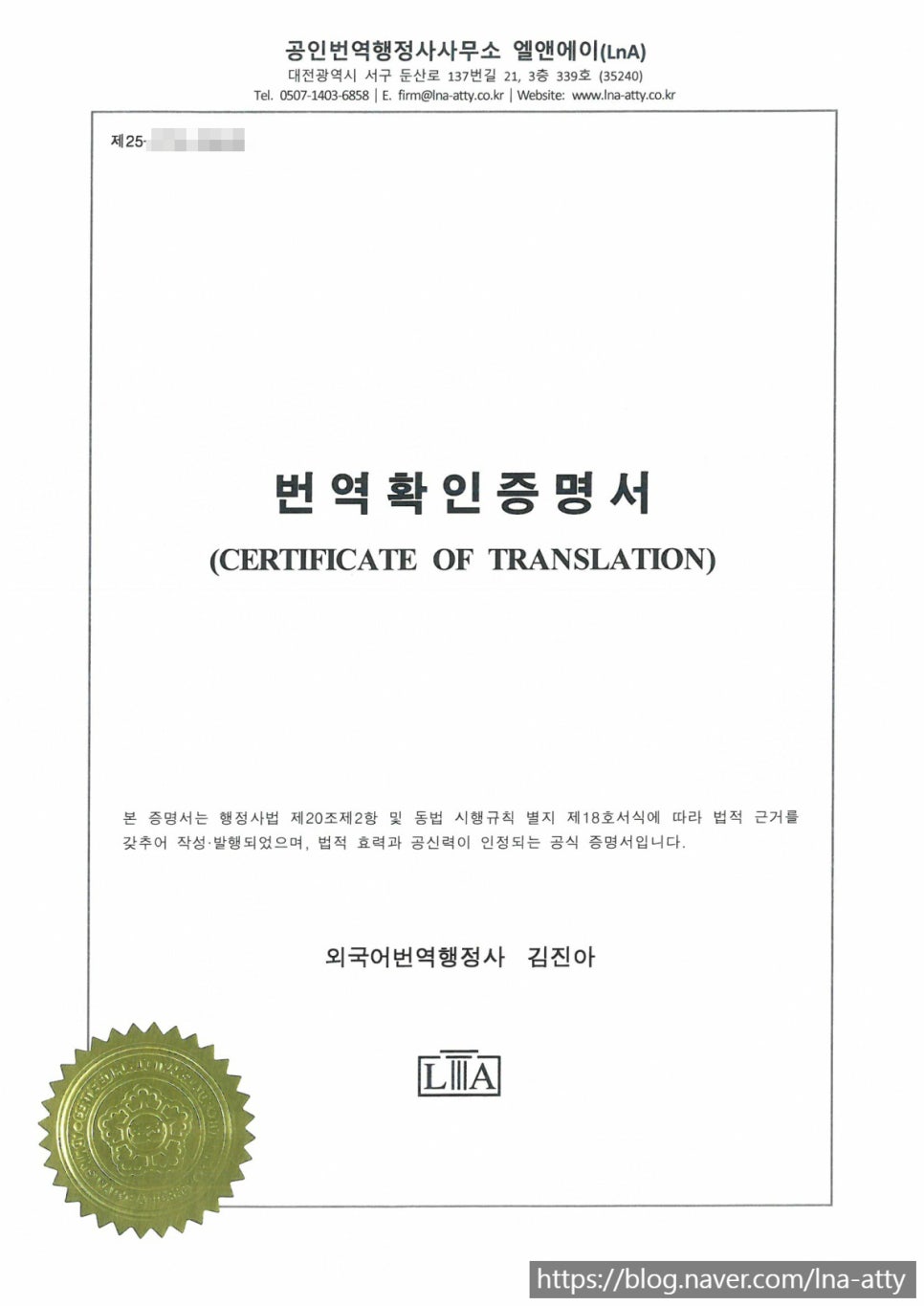
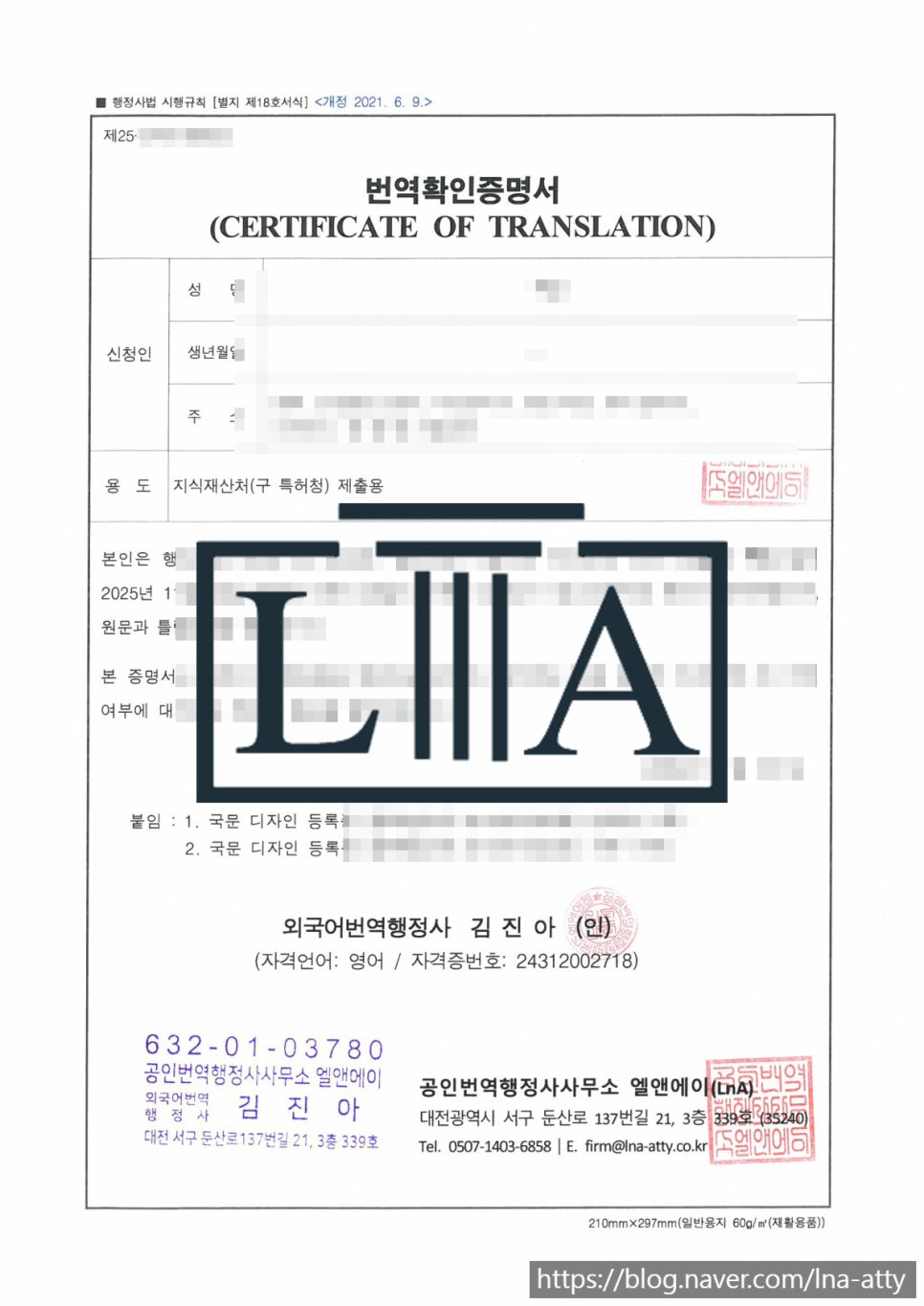
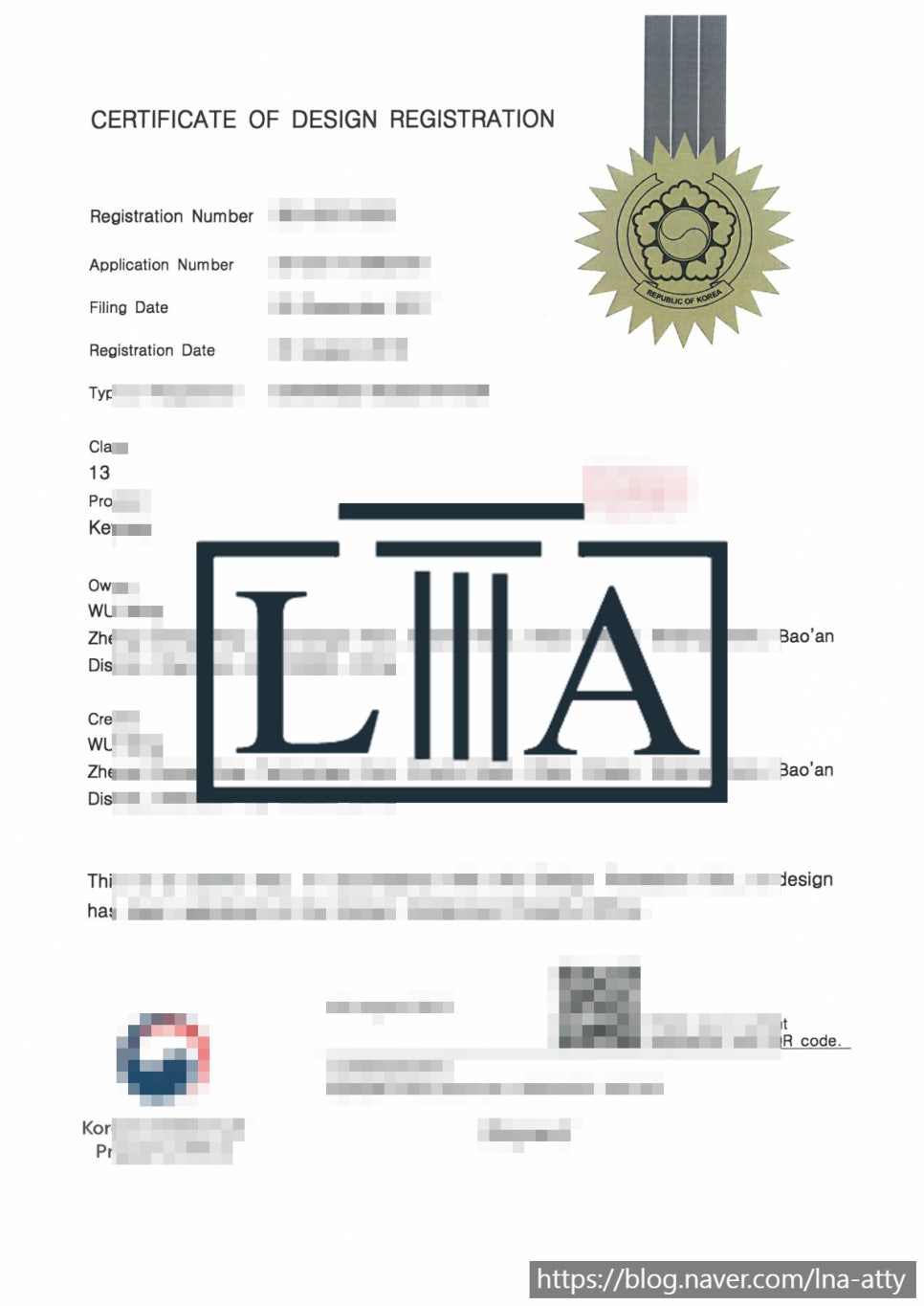
A domestic patent firm requested certified English translation of a client's Korean design registration certificate — needed as supporting documentation for KIPO's own foreign-language registration certificate issuance service.
Design registration basics
A design is a shape, pattern, color, or combination that creates an aesthetic impression through appearance — design registration grants exclusive rights over that creation, subject to three requirements: novelty (unknown domestically or abroad before filing), creativity (clearly distinguishable from existing designs), and industrial applicability (producible by industrial methods). Design rights run for 20 years from the filing date, with annual maintenance fees, and take effect from the registration date.
Before filing, check the novelty-loss exception: publicly disclosing a design before filing normally destroys its novelty — but a person entitled to register a design who disclosed it within 12 months before filing can, through a specific procedure, have that disclosure treated as if it never happened, preserving registrability. Always confirm eligibility for this exception with the handling patent attorney before filing.
Design rights are territorial — plan the foreign-filing timeline accordingly
Like patents, utility models, and trademarks, design rights follow the territoriality principle — protection applies only within the country where the design is registered. Blocking foreign copycats requires separate filing and registration in each country where protection is wanted. Under the Paris Convention, filing abroad within 6 months of the Korean filing date lets the foreign application claim priority back to the Korean filing date; missing that window, filing abroad before the Korean application publishes is the usual fallback.
Foreign-language registration certificates directly from Korea's IP office
For overseas business dealings — technology transactions, foreign partners, institutional submissions — a credible foreign-language version of a Korean IP registration certificate is sometimes required. Korea's IP office issues official foreign-language certificates for patents, utility models, designs, and trademarks:
- Patents, utility models: English, Japanese, German, French, Russian, Spanish, Chinese, Arabic
- Designs, trademarks: English
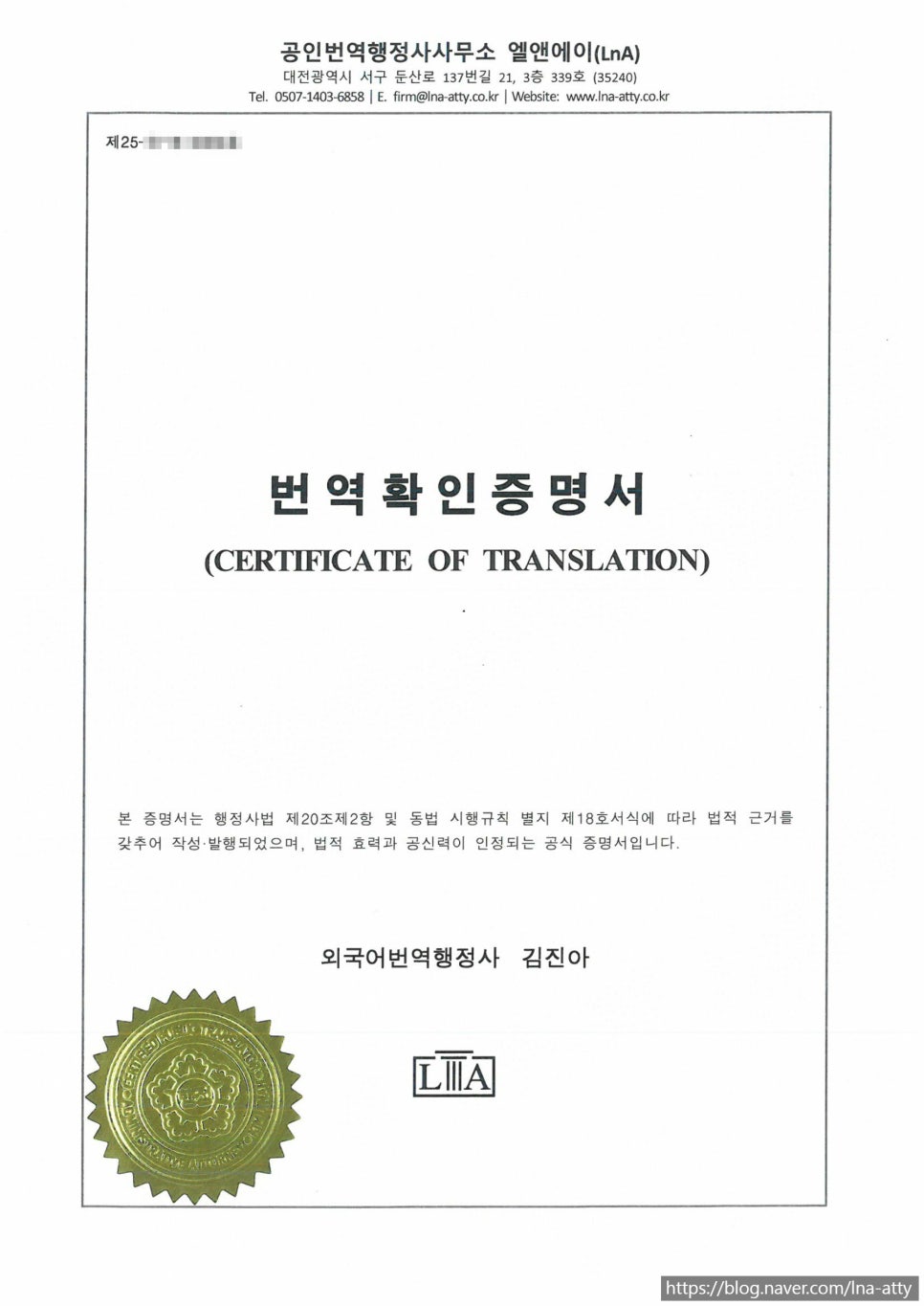
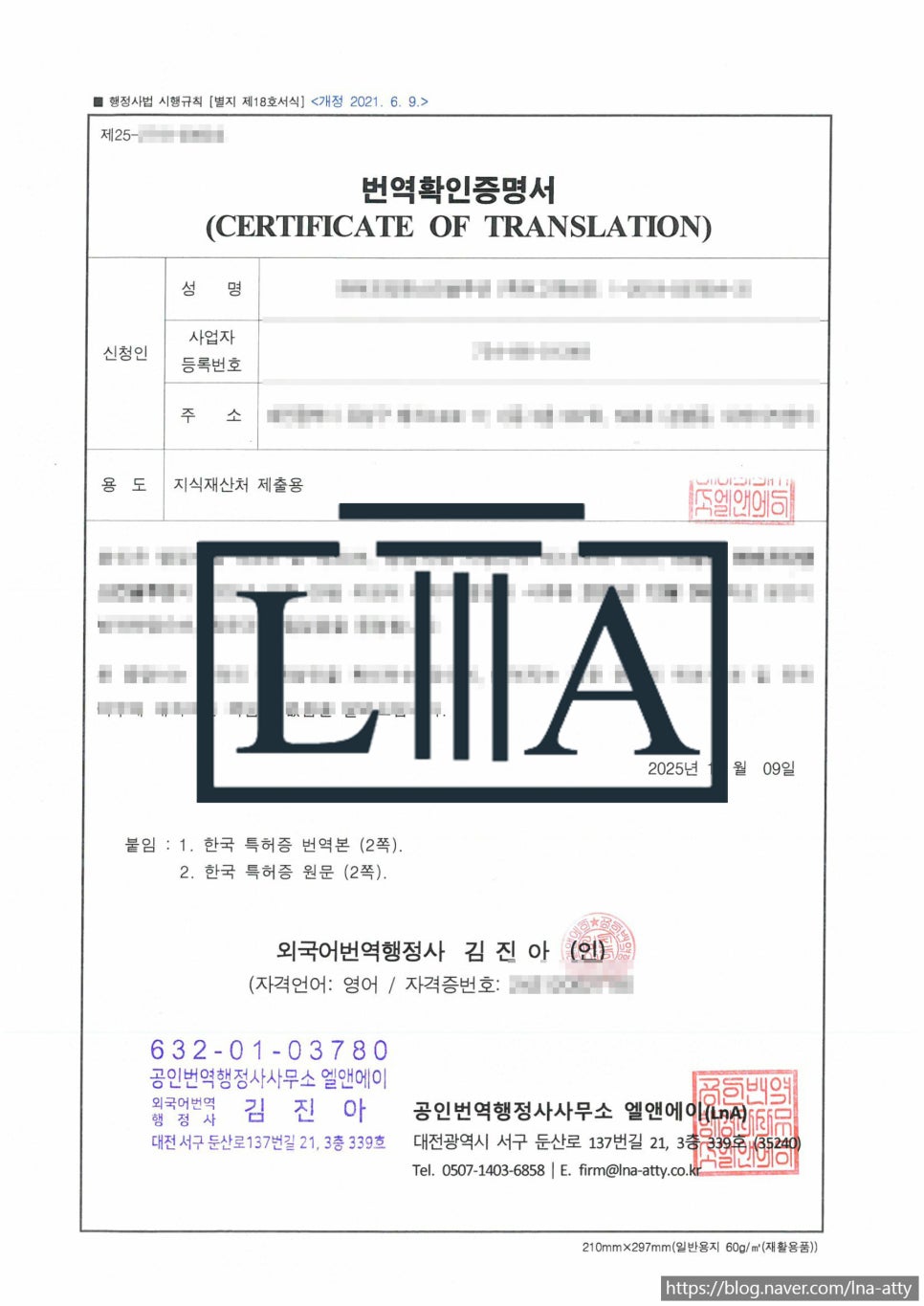
Applying for a foreign-language certificate requires a supporting document certifying that the foreign-language content (the rights holder's name and address, the item name, etc.) was translated accurately — the IP office specifies either a notarization or a 번역확인증명서 to satisfy this.
A naming note: effective October 1, 2025, Korea's Patent Office was elevated to ministry-level status as a Government Organization Act amendment took effect — its Korean name changed from 특허청 to 지식재산처, and its official English name changed from Korean Intellectual Property Office (KIPO) to Ministry of Intellectual Property (MOIP).
Keeping a Philippine trademark alive: the Declaration of Actual Use
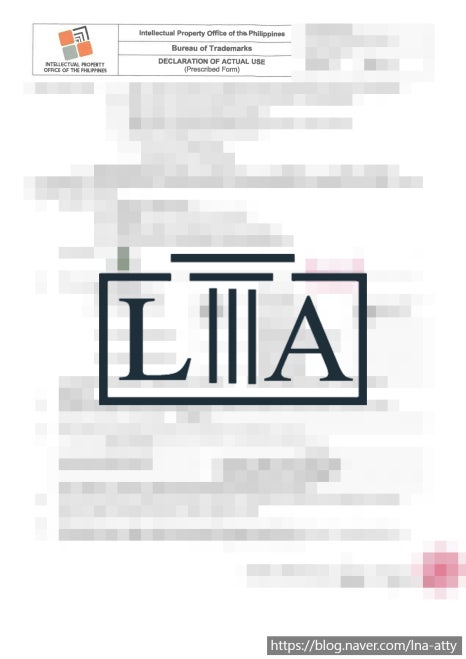
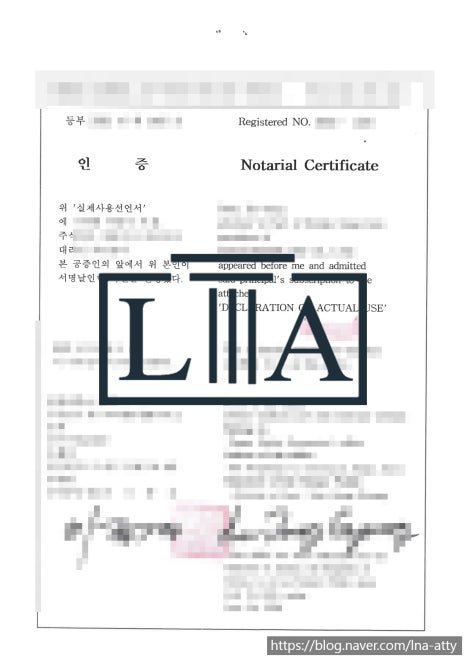
A Korean patent firm engaged this office to notarize a client's Declaration of Actual Use (DAU) — a recurring filing required to maintain a registered trademark in the Philippines.
Philippine trademark examination timeline
Philippine trademarks move through filing → formality examination → substantive examination → publication → 30-day opposition period → registration certificate issuance, typically taking 12–15 months when the process runs smoothly.
The key difference from Korea: actual use is mandatory
Korea lets a trademark be renewed every 10 years indefinitely, regardless of actual use, unless someone specifically files a non-use cancellation action. The Philippines takes the opposite approach — a Philippine trademark registration survives only if the holder proves actual use in the Philippines at set checkpoints, specifically to prevent unused marks from occupying the register. This makes it worth filing a Philippine trademark only when actual use is genuinely planned: use must begin and evidence be filed within 3 years of filing, regardless of whether registration has completed yet — missing this abandons or cancels the application/registration.
The DAU filing schedule
| Round | Trigger date | Filing deadline | Notes |
|---|---|---|---|
| 1st | Filing date | Within 3 years of filing | 6-month extension available |
| 2nd | Registration date | Within 1 year of the registration's 5th anniversary | First post-registration filing, no extension |
| 3rd | Renewal date | Within 1 year of renewal | Filed at every 10-year renewal, no extension |
| 4th | Renewal | Within 1 year of the renewal's 5th anniversary | Mid-cycle check after renewal, no extension |
In short: 3 years after filing, then roughly every 5 years (in practice, alternating 5-year/4-year intervals) after that.
What a corporate trademark holder needs for DAU notarization
Maintaining a Philippine trademark requires actual-use evidence plus a notarized Declaration of Actual Use signed in the trademark holder's name. For a corporate holder, that means:
- The original DAU, signed by the company's representative and stamped with the corporate (use) seal
- A Korean translation of the DAU
- A notarization power of attorney (commission letter), stamped with the corporate seal
- A corporate seal certificate issued within the past 3 months
This office recently handled a client's 2nd DAU (the 5-years-post-registration filing) — notarization and Korean translation completed accurately and on schedule.
Full-cycle Philippine trademark management
Beyond one-off notarization, this office manages a Philippine trademark's entire lifecycle — filing → registration → 5th-year DAU → renewal → subsequent recurring DAUs — as a single coordinated docketing responsibility. DAU deadlines recur every 4–5 years, and missing one is fatal to the registration; deep familiarity with the actual-use system is what keeps that from happening.
Before translating a Korean patent certificate for a foreign-language version: 3 checks that actually matter
A domestic company's team lead requested English translation and certification of a Korean patent certificate — needed to apply for an official English patent certificate from Korea's IP office. It looks like a straightforward translation job on the surface, but the real work happens before translating a single word.
From the filing stage onward, Korea's IP office registers both the Korean and English personal details of the applicant/rights holder and inventor. That means the certificate text alone isn't the actual source of truth — what's already registered in the IP office's own database is.
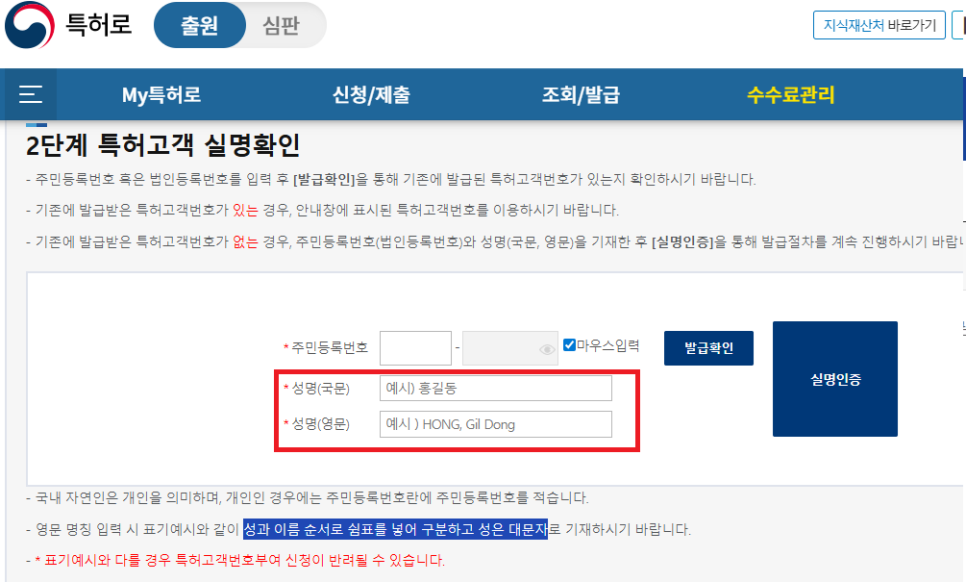
1. Does the rights holder's/inventor's English name match exactly what's registered? A mismatch between the officially registered English name and the name the client provides can get the foreign-language certificate application rejected outright, adding delay. This office checks the exact match against the IP office's registration before translating — and if there's a mismatch, coordinates a name correction through the handling patent firm first.
A genuinely useful fact here: Korea's Ministry of Foreign Affairs romanizes Korean names per the Ministry of Culture, Sports and Tourism's official Romanization notice — e.g. 김진아 → KIM JINAH (no comma, names run together). But Korea's IP office's own registration example uses a different convention — 김진아 → KIM, Jin Ah (comma included, names spaced) — and states that a mismatch with this example format can cause rejection. In practice, patent firms already register names following the IP office's own convention, which is exactly why this office checks against it specifically before translating.
2. Does the rights holder's address match exactly what's registered? The address printed on a Korean patent certificate, the company's actual current address, and the address on file with the IP office can all differ from each other — and it's the registry address that governs a foreign-language certificate application, not what happens to be printed on the certificate. Before translating, this office confirms whether the address on the certificate matches the final address on file in the registry, and recommends correcting the registry address first if it doesn't, before translating and applying.
3. The invention's name isn't just a translation — it's the company's IP asset name An invention's name functions as the company's actual property name — cited repeatedly in technology commercialization materials, IR and licensing documents, investor materials, foreign filing families, and company branding. Treating it as a simple word-for-word rendering is a real mistake. This office's approach:
- Technical term verification: any specialized terminology gets confirmed directly with the client (the applicant side), not guessed from a dictionary
- Family-patent consistency: if the same invention was already filed in an English-speaking country, the translated name is matched to the name already registered with that country's patent office — this matters directly for international credibility
- International naming convention: absent an existing English filing, the name is structured following international patent naming conventions (e.g. "Method for ~," "Apparatus for ~," "Composition for ~") based on information the client provides
Because an invention's name becomes the company's "representative name" across countless future references — company profiles, investor materials, technology transfer agreements — it's the detail this office treats with the most care. This patent-certificate case went through the full pre-check process above before translation began.