Need a license agreement or corporate document translated for USPTO?
Certified translation of exclusive license agreements, corporate registry excerpts, and other commercial IP documents for USPTO filings — scoped to exactly what's required, with the right translation-statement type for each filing.
Right-Sized Translation, Filed Correctly the First TimeCommercial and corporate documents headed to the USPTO come with two problems that pure language ability doesn't solve on its own: translating the document scoped correctly (not more than needed), and attaching the right kind of translation statement for what that specific USPTO filing actually requires.
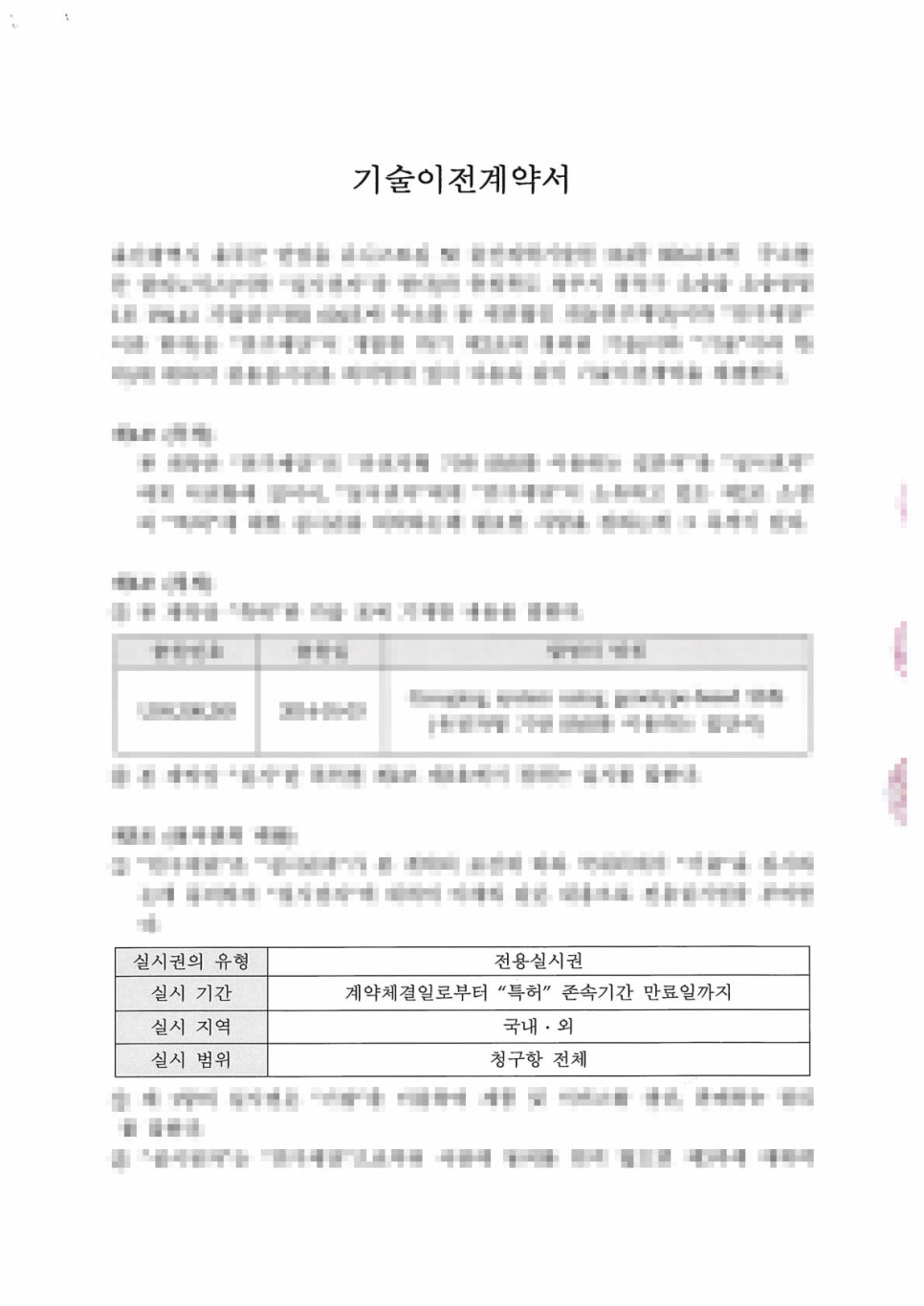
Exclusive license (전용실시권) & technology transfer agreements
A patent holder can grant a license to let someone else make, use, or sell the patented technology. Licenses come in two forms:
- Exclusive license — only the licensee may use the patent, not even the patent holder
- Non-exclusive license — the licensee may use the patent within agreed terms, without exclusivity
Korea requires an exclusive license to be registered with the patent office to take legal effect (등록주의). The US works differently — there's no mandatory registration requirement for an exclusive license, but the underlying agreement can be recorded with the USPTO (similar to a patent assignment), which puts good-faith third parties on notice that the license already exists.
What this requires in translation: consistent technical terminology, cross-review against the receiving country's legal framework, and precise, unambiguous language — a license agreement translation error can blur exactly which party holds which rights.
Corporate registry (등기부등본) excerpts
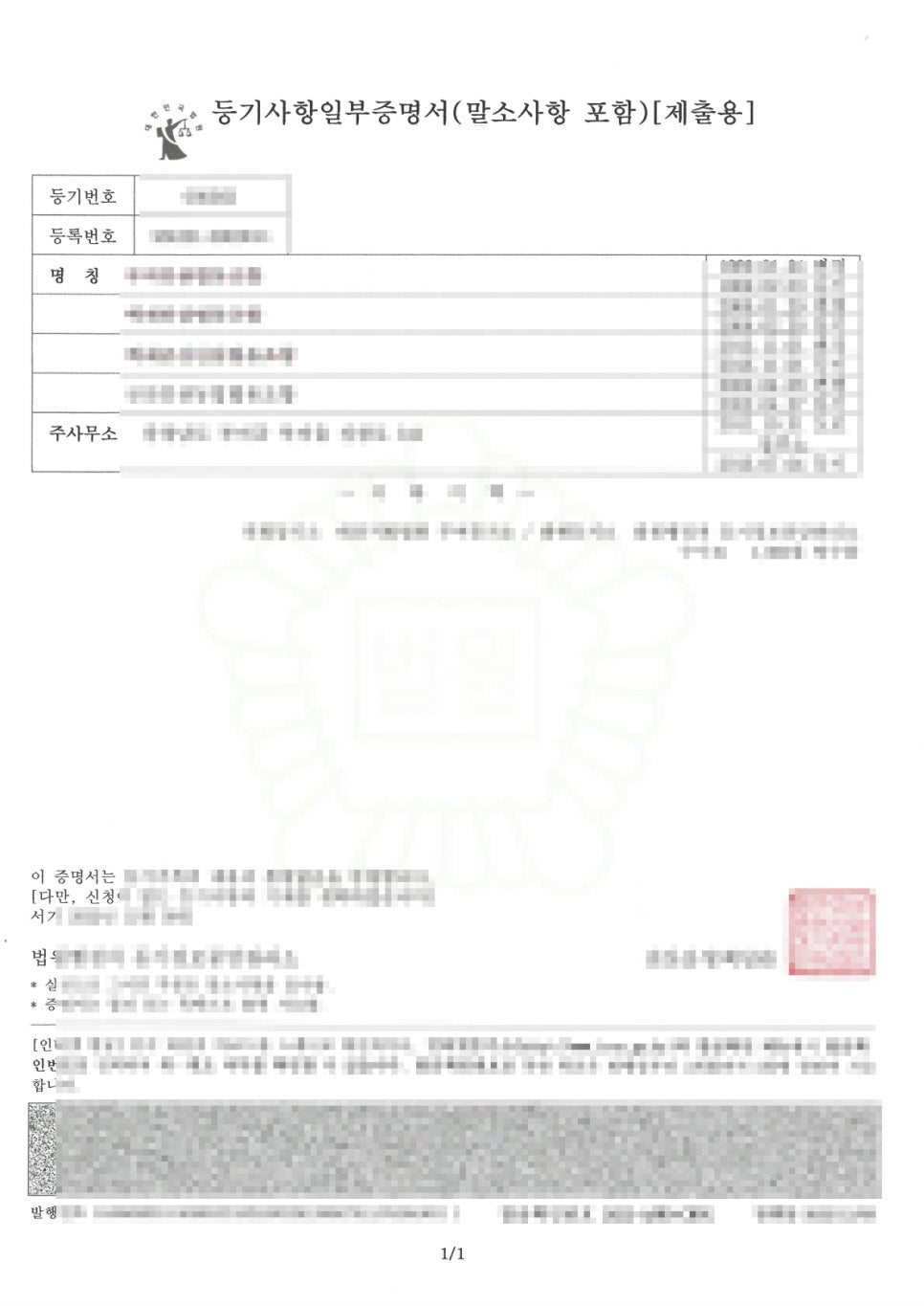
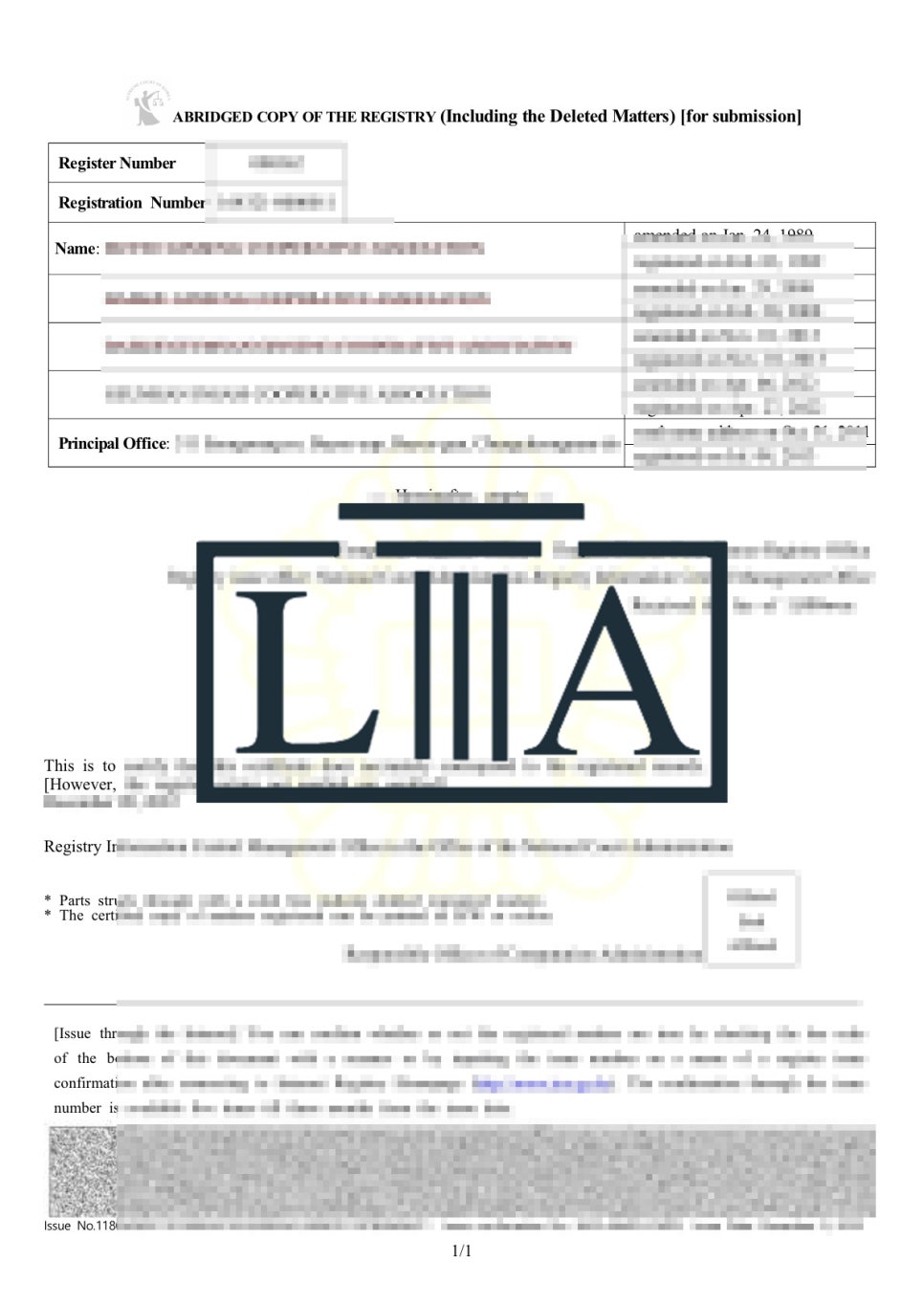
When a Korean company's name changes and that change needs to be reflected on a US-registered trademark, the USPTO doesn't need the full corporate registry document (등기사항전부증명서) translated — usually only the excerpt showing the name change (등기사항일부증명서) is required. Confirming the actual scope with the receiving US firm before translating avoids paying for unnecessary volume.
Certification vs. Verification of Translation
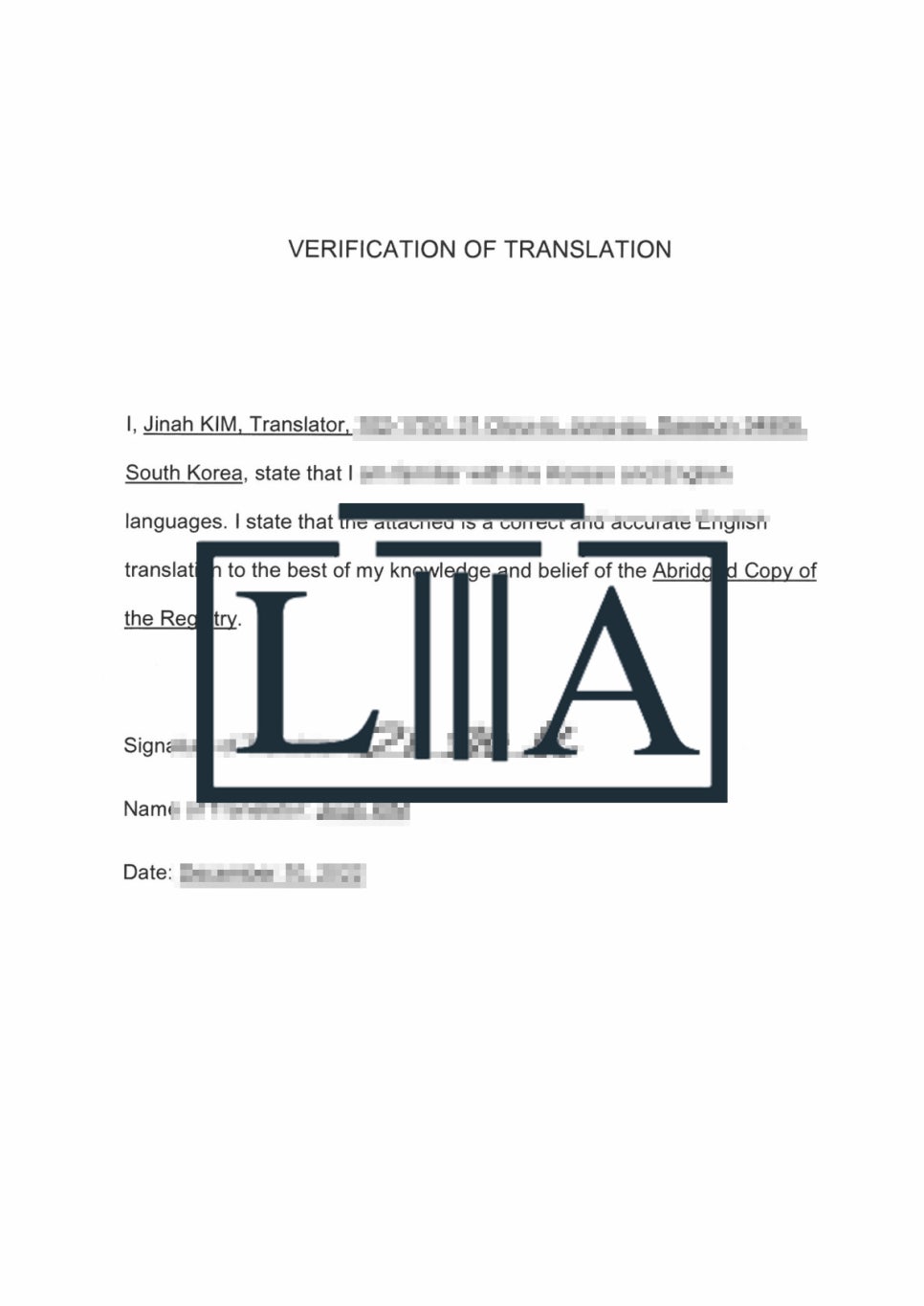
These two are frequently confused, and using the wrong one either fails the filing or wastes money on unnecessary certification:
| Verification of Translation | Certification of Translation | |
|---|---|---|
| What it is | The translator's personal statement | A formally authoritative certification |
| Who can prepare it | Anyone — no qualification required | A certified translator (e.g. a licensed 외국어번역행정사) |
| Where it's accepted | General private submissions | Official filings — embassies, courts, government agencies |
| Liability | Liability for a false statement | Carries formal legal responsibility |
Not every USPTO filing requires a full Certification — some accept a simple Verification of Translation, and using the lighter, correct format avoids unnecessary cost without weakening the filing.
What this office actually does
- Confirms the exact document scope required with the receiving US firm or agency before translating — not the whole registry excerpt when only part is needed.
- Translates with consistent legal and technical terminology appropriate to the document type.
- Attaches the correct translation-statement format (Verification vs. Certification) for that specific filing, confirmed with the receiving side rather than defaulting to the more expensive option.
Articles of Incorporation (법인정관) translation
A company's Articles of Incorporation (정관) — the document governing its founding purpose, organizational structure, and operating rules — comes up for Korean-to-English translation in several business contexts beyond IP filings:
- Foreign investment and contracts — an English Articles of Incorporation is needed to demonstrate the company's governance structure to a foreign investor, joint-venture partner, or business partner
- Overseas subsidiary or branch establishment — a required submission to local authorities when setting up a company or branch abroad
- Foreign bank transactions — foreign banks frequently request the Articles of Incorporation for account opening or loan review
- Overseas stock exchange listing — required during listing review to establish the company's legal basis
Because Articles of Incorporation carry the same weight as a company's constitution, translation demands particular care:
- Precise legal terminology — Korean 상법 (Commercial Act) terms and their equivalents in a foreign legal system frequently don't map 1:1, so choosing the right term requires understanding both legal systems, not just the dictionary definition
- Format and structure preserved — the original's article/clause numbering stays intact, with formatting adjusted only for English-document readability
- Literal translation principle — since a single word's difference can change a clause's legal meaning, this document is translated faithfully to the source rather than loosely paraphrased, with no ambiguity left in the English version
- Confidentiality — Articles of Incorporation contain core company information and are handled under strict confidentiality throughout translation

A representative case: a 32-page Articles of Incorporation from a Seoul law firm, requested on a Thursday evening with a Monday-morning deadline — completed across the holiday weekend as a 60-page English translation, legal accuracy intact despite the compressed timeline.
Foreign investor due diligence: the 3-document DD package
A Daejeon company requested certified translation and notarization of three documents — most likely for a foreign investor's due diligence (DD) review ahead of an investment decision. In practice, foreign investors verifying a company's structure, capital history, and business viability very commonly request exactly this 3-document baseline package.
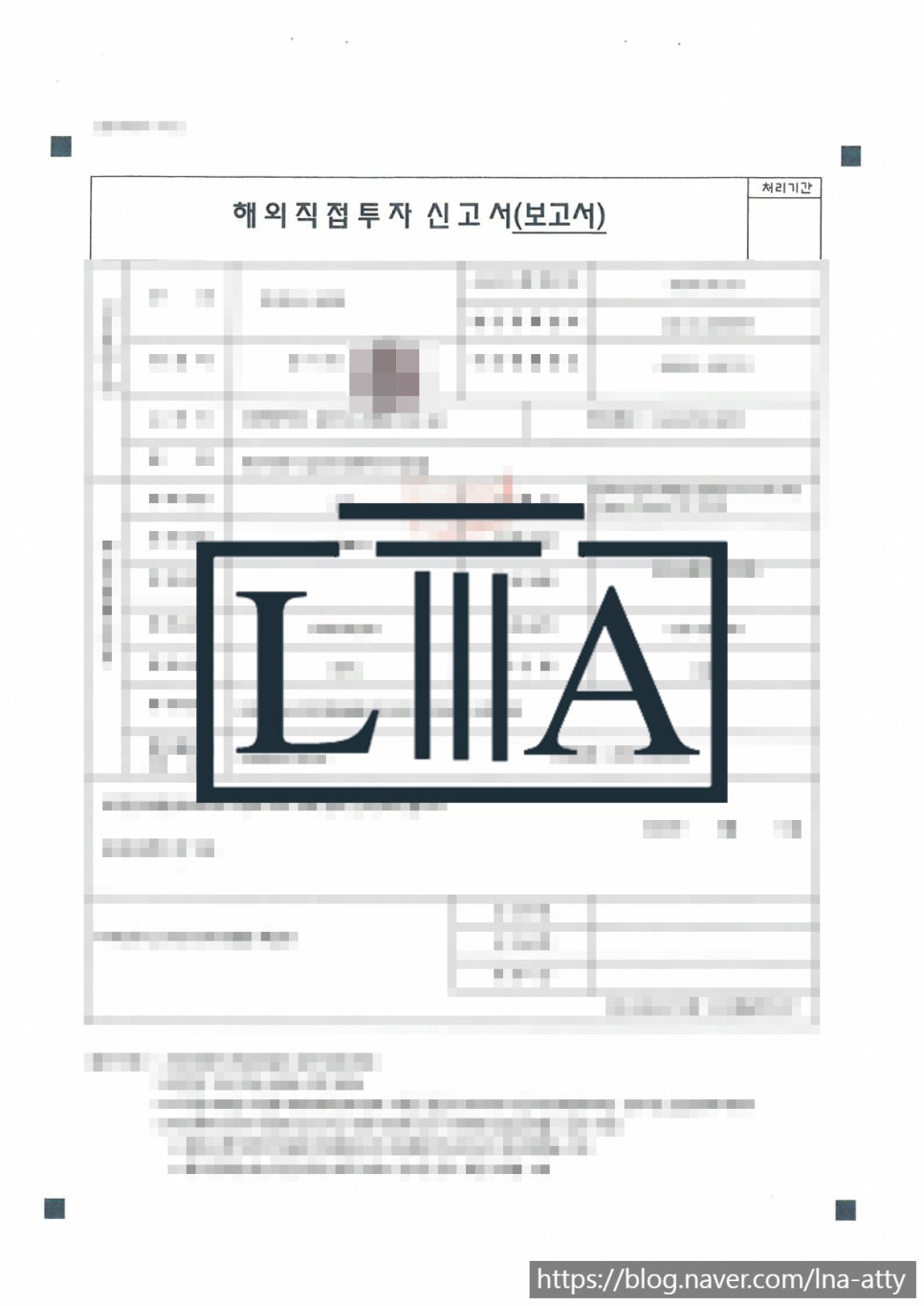
Report on Overseas Direct Investment — proves a Korean parent company properly reported its overseas subsidiary establishment or capital investment to a foreign exchange bank. This is what establishes the legal link between headquarters and the overseas entity, showing the investor that the local subsidiary is a genuine, legally reported overseas investment with a clearly stated investment purpose and equity ratio. Translation note: company name, representative name, address, and investment purpose must match the official English spellings on the Korean corporate registry and parent company documents exactly — statutory citations follow a literal-translation principle.
Remittance (Investment) Report — confirms to the foreign exchange bank that investment funds were actually transferred and the investment completed. This is the single most important financial evidence for verifying the subsidiary's capital came from a legitimate, transparent source — proof it's not a shell company. Translation note: precision on the remittance amount and currency, the transfer date, and the transacting bank's name is critical; cross-check consistency against any attached bank documents, and use the exact official terminology financial institutions and government agencies use.
Business Plan — the document foreign investors scrutinize most closely, since it's the primary basis for the investment decision itself: business purpose and operating model, market analysis, revenue/cost structure, funding plan, use of funds, management capability, and risk factors. Translation note: match the professional, persuasive report style Anglophone investors expect, keep financial/accounting terminology consistent throughout, and preserve the original's structure, figures, and table formatting precisely.
Translation as document reconstruction, not just language conversion
The documents a foreign investor reviews are legal and financial evidence establishing the company's identity and the business's substance — which means the translation has to satisfy all of the following at once: complete transfer of the original meaning, official terminology standard in international investment/finance documents, faithful reproduction of the document's structure, and readability aligned to how an investor actually wants the information to flow. In practice, this makes translating for foreign submission closer to an accurate reconstruction of the document, not a language conversion. For this case, the document structure, number formatting, and official terminology were all rigorously checked against the investor's expectations before the translation and notarization were completed in a form suited for foreign submission.
PPS Innovation Product Overseas Demonstration: the trial-use completion report
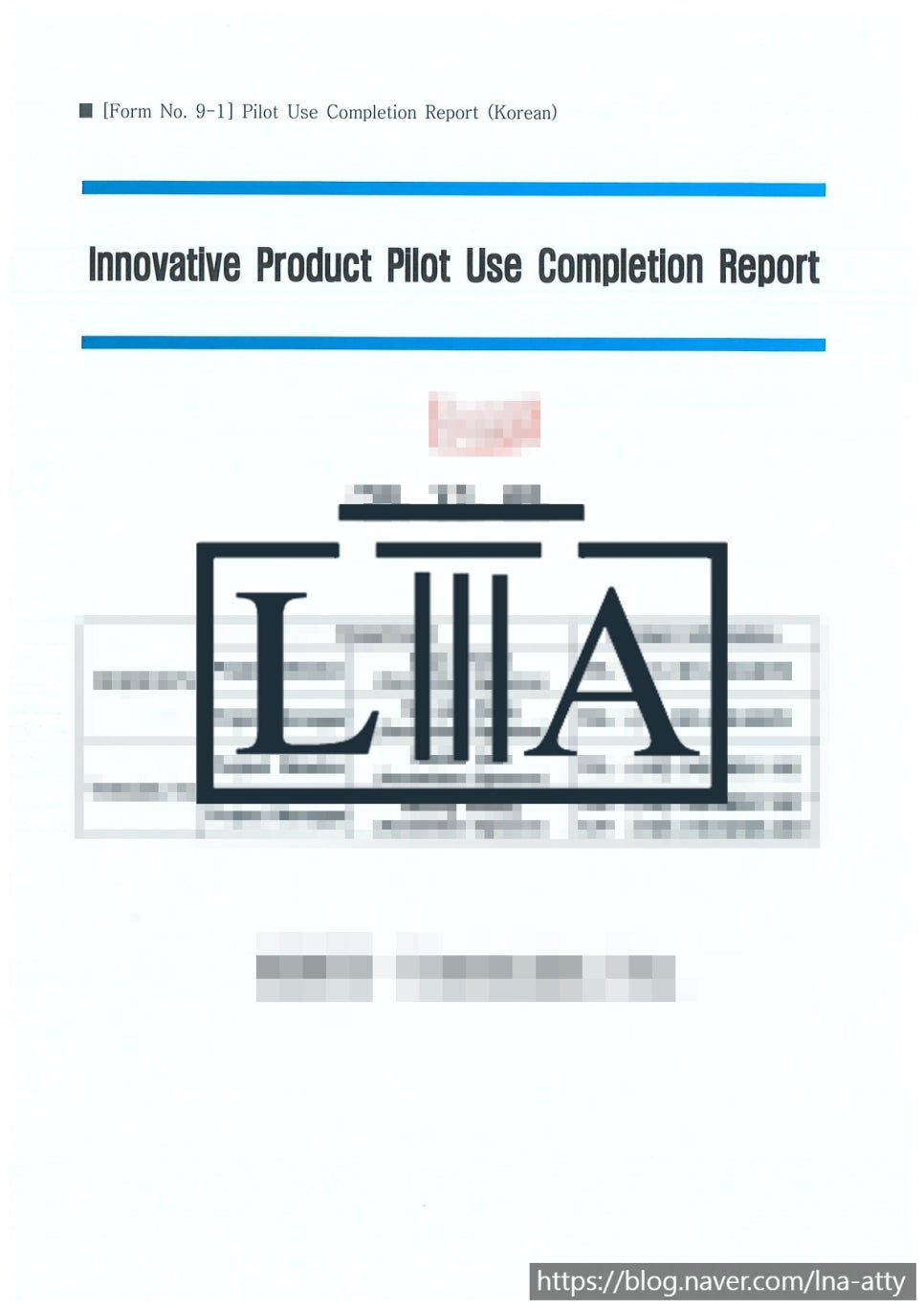
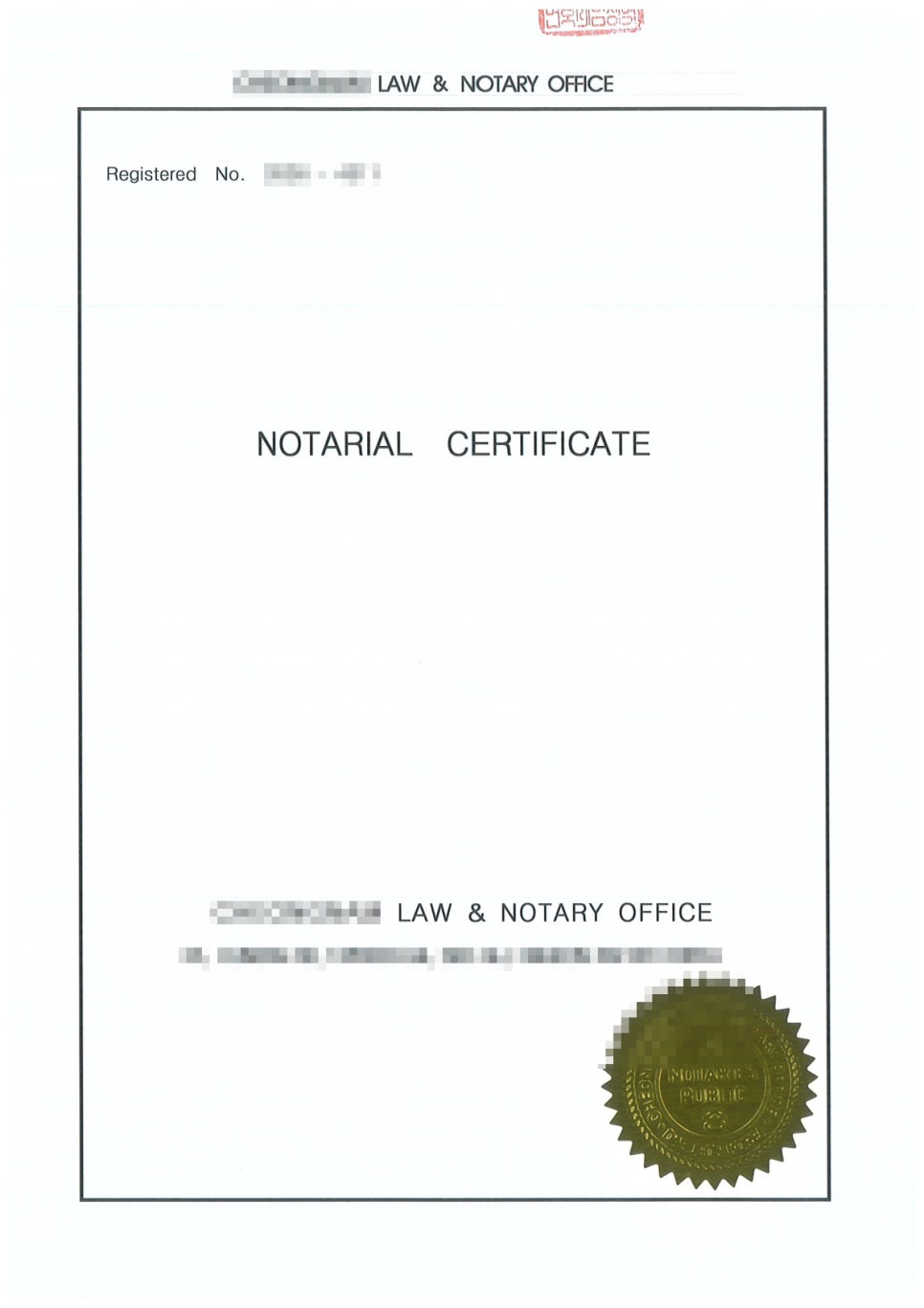
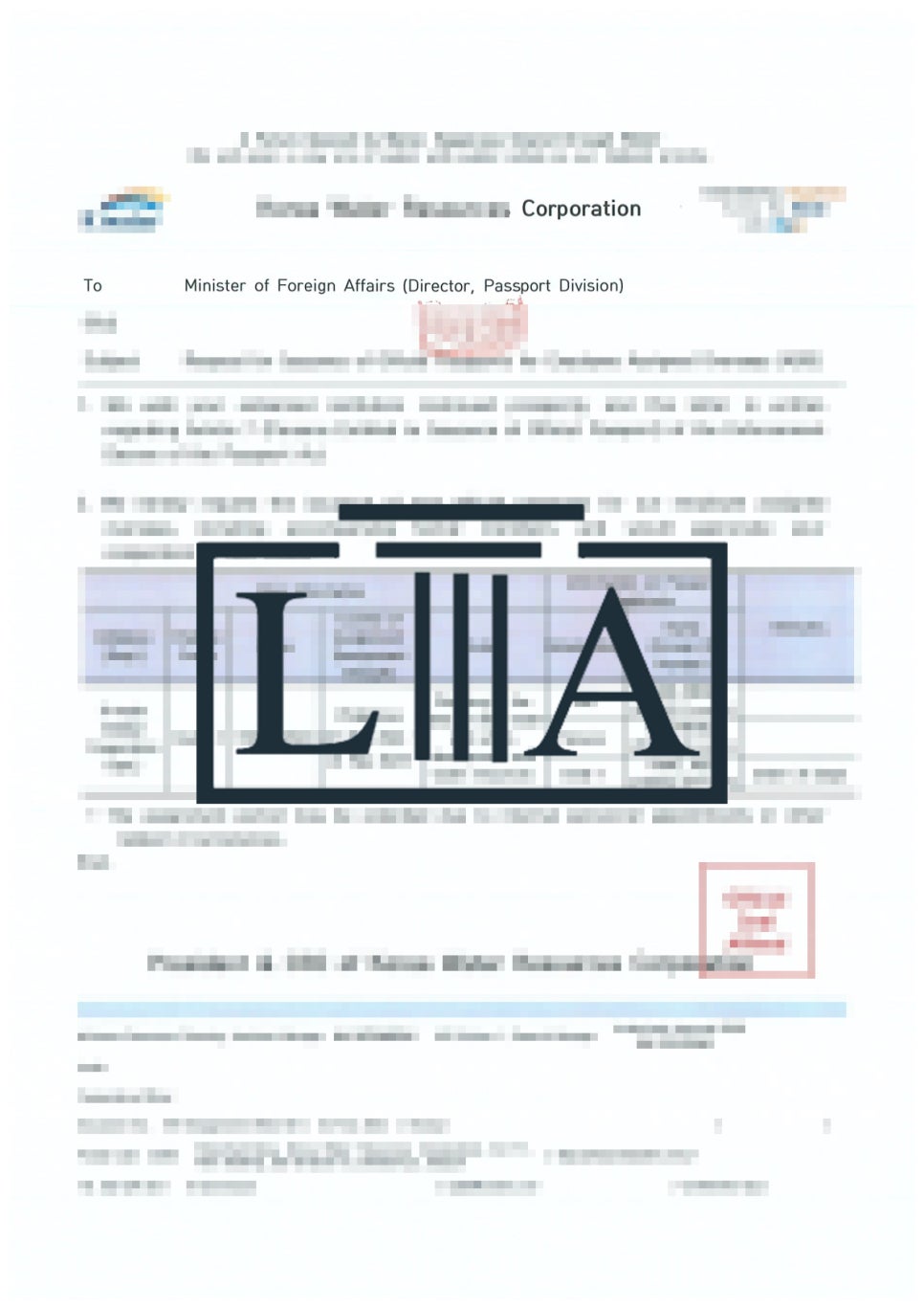
A Korean innovation company selected for the Public Procurement Service (조달청)'s Innovation Product Overseas Demonstration Program needed certified translation and notarization of its Trial Use Completion Report.
What the program actually does
PPS purchases a domestic innovation product on a trial basis and places it with an overseas public institution, which then field-tests the product and reports the real-world usage results back to both the company and PPS. This gives Korean innovation companies a genuine overseas track record — usable for further export opportunities or as a basis for product improvement aimed at overseas markets. The typical sequence: selection notification → contract execution and product preparation → on-site demonstration at the overseas public institution → results reporting and settlement → export linkage and overseas-expansion support. After the demonstration completes, the Trial Use Completion Report is written and submitted to PPS — which is where translation comes in.
Why this translation demands particular care
- Technical document + administrative document, combined — the report covers the product's technical performance, field results abroad, test/evaluation content, and review/meeting records all at once, meaning the translation has to simultaneously meet technical-translation standards and administrative-document standards.
- Large volume, tight deadline — beyond the main body, submissions typically include numerous attachments, meeting minutes, and evaluation reports, making both the volume and the timeline demanding; maintaining accuracy under that pressure takes disciplined attention to terminology consistency, document structure, and administrative phrasing throughout.
- Sharing technical reference material matters — for the technical sections, providing any English-language papers, patent specifications, product catalogs, or prior foreign-submission materials the company already has lets the translation reflect the company's own specific terminology and technical context far more precisely, meaningfully raising the translation's overall quality.
- Translation checklist: preserve the internal document's formatting structure; keep Korean-English title/item/numbering systems aligned; avoid over-interpretation or added meaning in technical terms; keep the eventual use as overseas investment/export material in mind; and finalize with certification from a qualified party — a 번역확인증명서 (행정사) or notarization (notary).
For this case, the deadline was tight enough that work continued through a holiday to meet the client's schedule — the finished notarized translation ran past 100 pages, completed on time without disrupting the client's submission timeline.

Proving fund source for a Dutch home purchase: an apartment sale contract
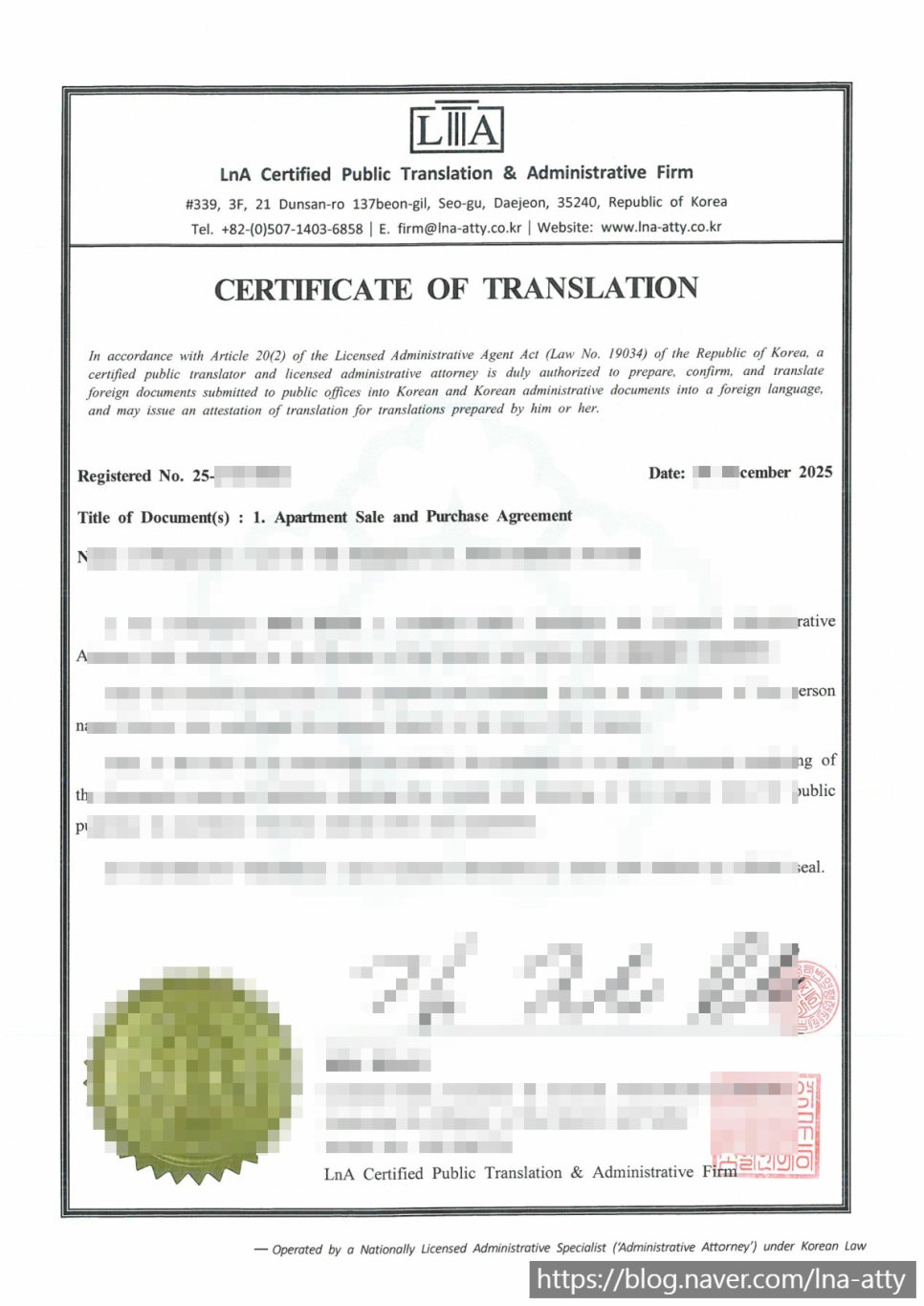
Ahead of a home purchase in the Netherlands, a client needed a Korean apartment sale contract translated and certified as proof of funds. Europe — the Netherlands especially — runs a comparatively strict source-of-funds verification process, and this case had to satisfy both a Dutch notary's and a Dutch bank's requirements.
Confirm the receiving side's exact translation requirement first
For any foreign-submission translation, confirming what kind of translation is actually needed matters more than anything else. Here, the client relayed the receiving side's own instruction directly:
"We would like to receive an English translation from the selling contract. Please let the contract translated by an official translator."
Who counts as an "Official Translator" in Europe
In European practice, "Official Translator" means someone granted translation authority under that country's own law — for a document originating in Korea, the only Korean qualification that fits this description is a 외국어번역행정사. That made "translation by a 외국어번역행정사 + 번역확인증명서 (Certified Translation)" the appropriate approach for this case.
Translating with the Dutch notary's review in mind
This sale contract was headed to a Dutch notary reviewing it specifically for source-of-funds verification, which shaped the translation approach:
- Avoiding overly Korean-style English phrasing
- Using administrative and real-estate terminology familiar in EU/Dutch practice
- Structuring the translation so fund flow and rights/ownership are clear at a glance
- Precisely distinguishing the deposit from the interim and final payments
- Making clear the relationship between the ownership-transfer date and the final payment date
- Keeping mortgage/lien-related language legally neutral
- Standardizing the address/building/unit format for international submission
The core standard: a local notary reading this translation should have zero room for legal misreading — which is why EU/Dutch-standard administrative and real-estate terminology was used throughout, for both readability and credibility.
The clause that needed the most care
One clause in particular demanded special attention:
"Article 5 (Contract Rescission) — Until the buyer pays the interim payment to the seller (or the final payment, if there is no interim payment), the seller may return double the deposit, and the buyer may forfeit the deposit, to rescind this contract."
This clause implements Korean Civil Code Art. 565 — the right of rescission before performance begins, available to both parties up until the interim payment is made. The critical translation risk: this clause could easily be misread as a breach-of-contract penalty or damages provision if translated carelessly. It's neither — it's the lawful exercise of a statutory rescission right, not a contract breach, and translating it in a way that raises unnecessary legal suspicion would misrepresent the clause entirely. The translation was structured to make clear the clause doesn't presuppose any default, keeping the legal structure of this civil-law rescission right intact and unambiguous.

The companion document: a Korean apartment registry certificate for the same Dutch home purchase
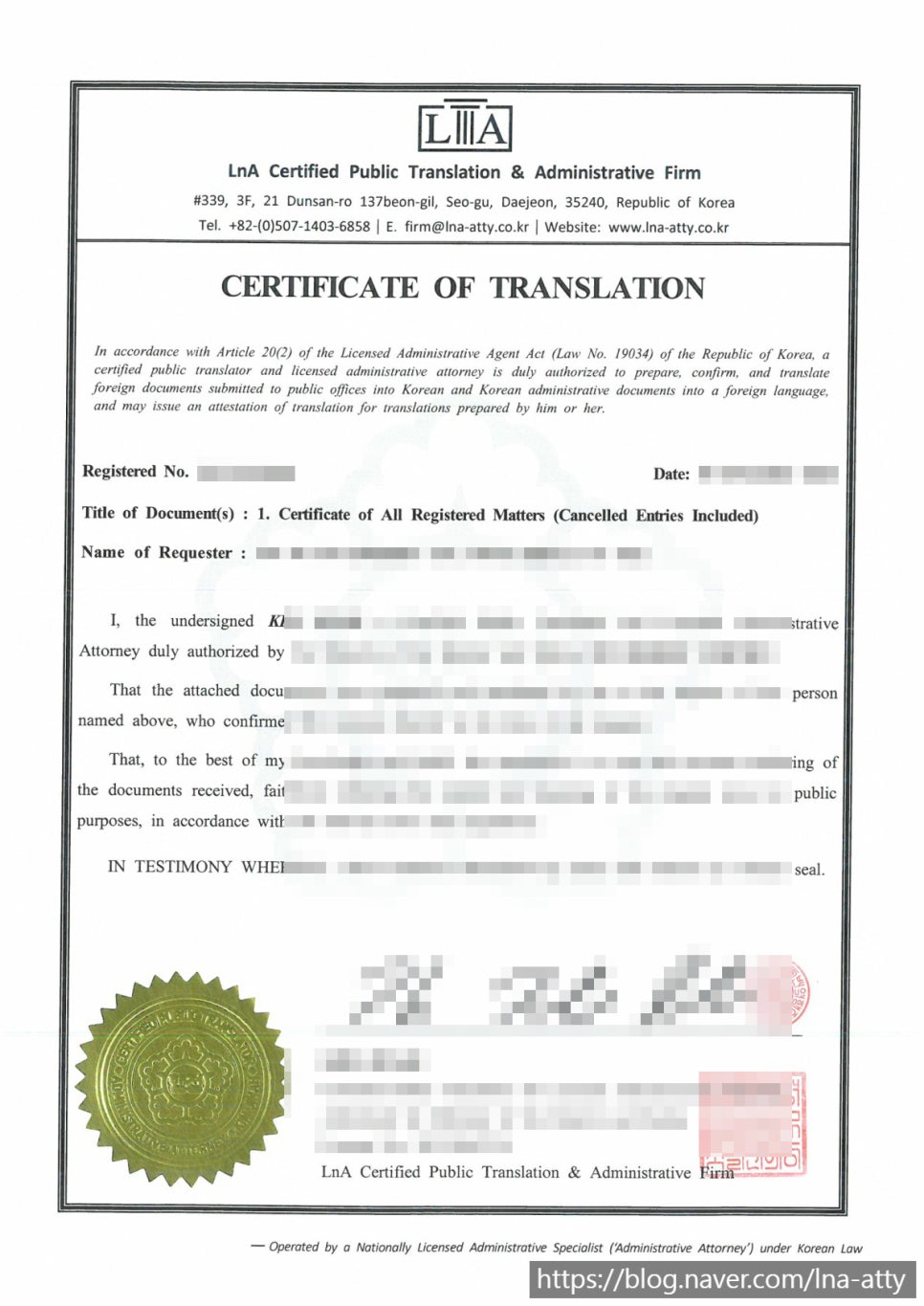
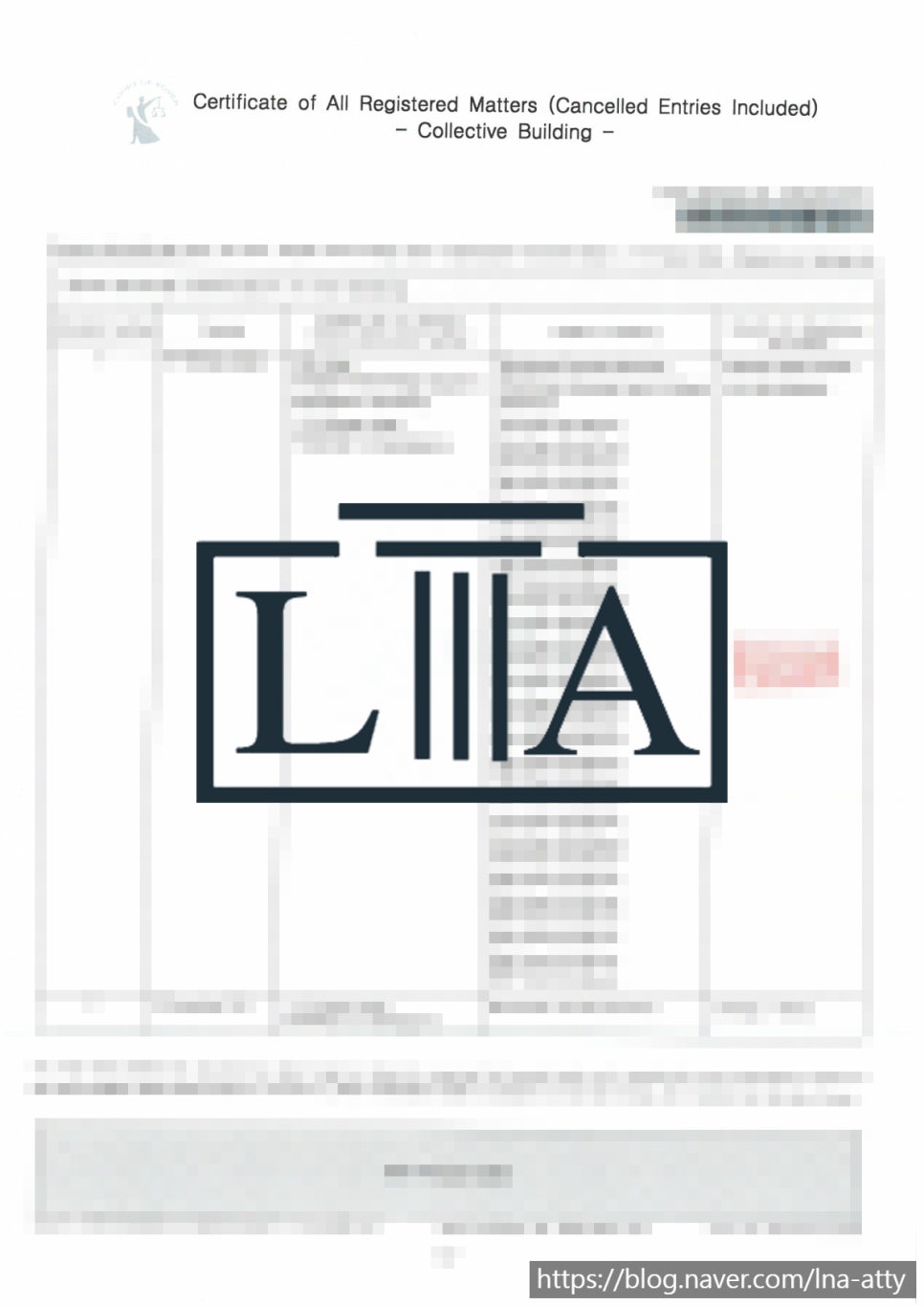
Following the sale contract translated for the same client's Dutch home purchase (above), this office translated and certified the companion document a Dutch notary reviews alongside it: the registry certificate (등기사항전부증명서) for the Korean apartment being sold.
Why the registry certificate gets scrutinized as closely as the contract
In a Dutch home purchase, the notary examines not just the source of funds but scrutinizes the seller's asset's rights structure in detail — the registry certificate is the core document answering three questions: who is the actual owner (including co-ownership), do any encumbrances (like a registered mortgage) exist, and is a clean title confirmed to be deliverable at closing. Since this registry certificate needed to logically connect to the previously translated sale contract, cross-document consistency was the priority: matching address/building name/unit number across both documents, matching the seller named in the contract to the registered owner in [갑구] (Section I), confirming the logical link between the original purchase date and the current sale, matching any mortgage scheduled for cancellation in the contract against the actual [을구] (Section II) entries, and precisely cross-checking date formats, currency units, and area figures. Even one apparent mismatch between the contract and the registry can prompt the notary or bank to demand additional explanation or verification.
Term choice: "집합건물" (multi-unit building) — Condominium Building vs. Collective Building
Korea's own official English statutes render 집합건물 as "Condominium Building." But "Condominium" carries a strong North American legal and residential connotation — a Dutch notary reading it might wonder whether the building presupposes US-style condo law, or whether it implies a luxury residential complex, raising unnecessary ambiguity. To convey the underlying legal fact — a building divided into individually owned units — without leaning on any single country's legal framework, and to let the notary grasp Korea's registry structure without preconception, this office chose the neutral term "Collective Building."
Precision on area and index numbers
The area figures on a registry certificate aren't just size information — they identify a specific parcel, a specific building, and a specific share ratio, and serve as the basis for mortgages, sales, inheritance, and tax calculations. Since this document was headed to a Dutch notary and bank, this office kept the metric "Area" figures as recorded rather than converting to an unfamiliar unit, matching the convention EU real estate document reviewers expect. The 도면번호 (drawing number) on the certificate is also not the building's own unique identifier — it functions as an index number referencing the building's floor plan/site plan drawings within the registry system. To let a reviewer immediately and intuitively grasp that it's a lookup reference rather than a building ID, this office fixed the term as "Drawing Index Number."
The underlying principle
Understanding the document's submission purpose and the reviewer's perspective (notary, bank officer) and designing the translation so they can grasp its content at a glance — that's the real work. This case completed both the sale contract and the registry certificate as one coordinated set, built specifically so the Dutch notary's review would proceed without friction.
A synthetic-nicotine e-cigarette OEM supply contract, for city/district government registration
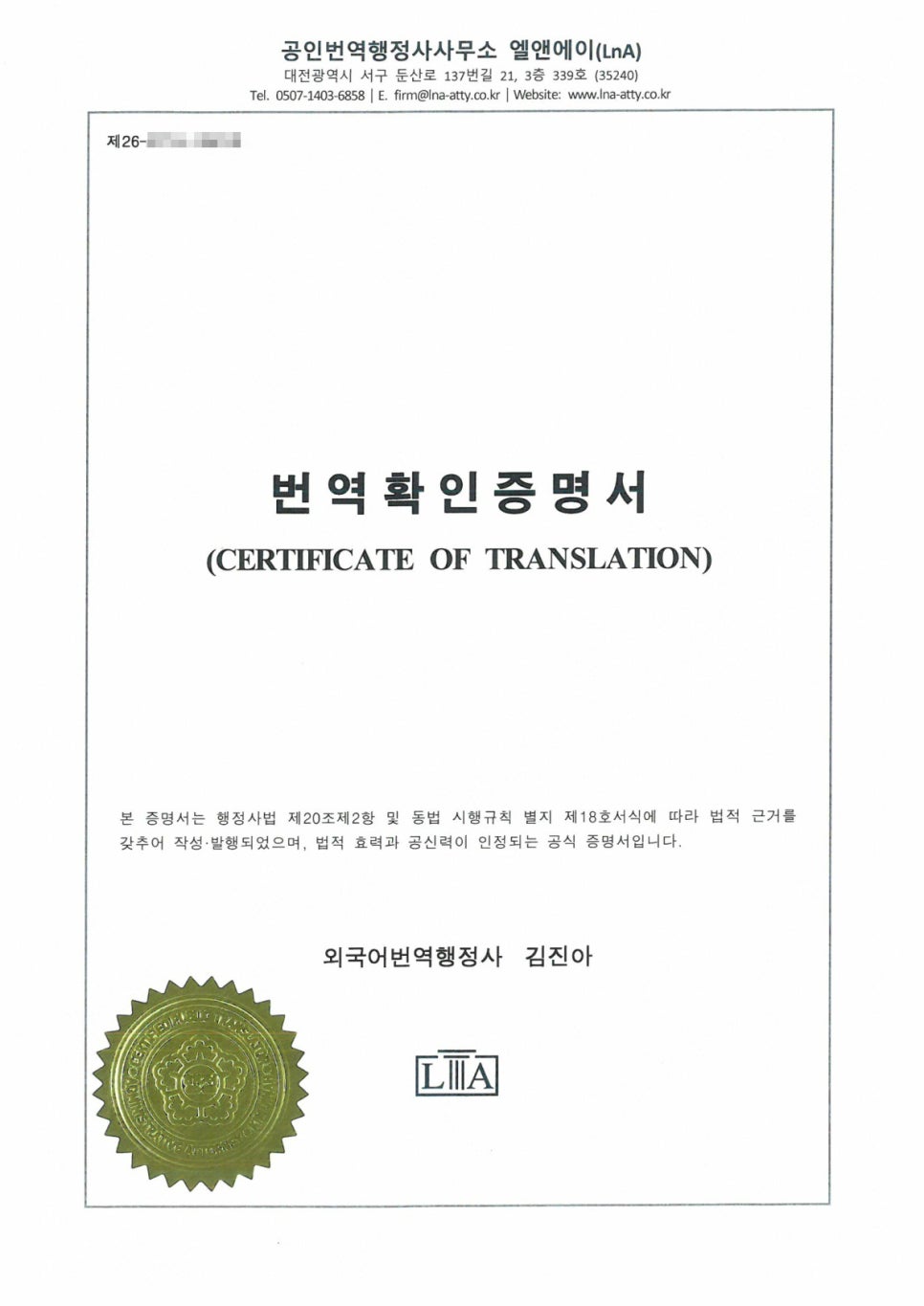
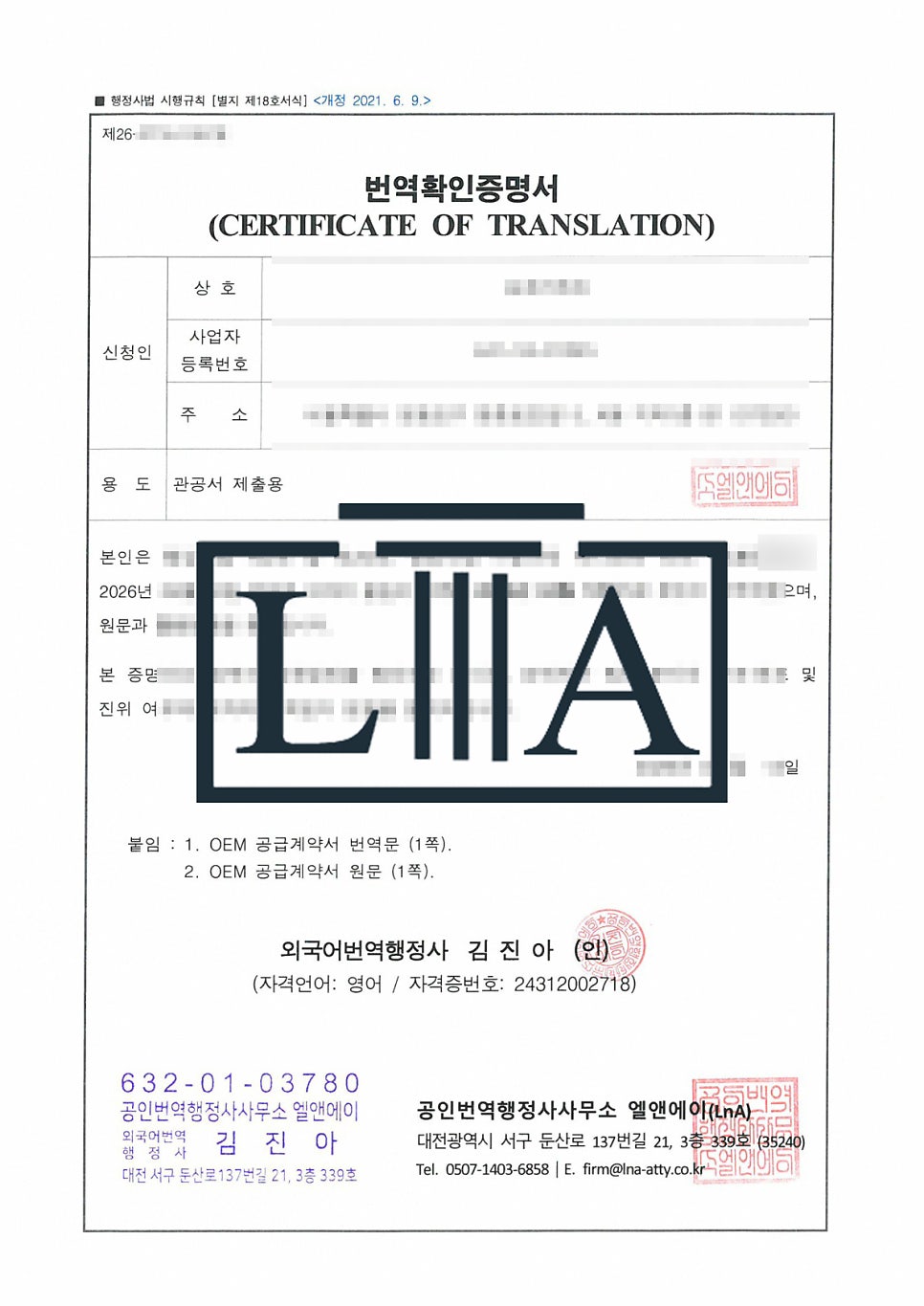
Korea's Tobacco Business Act amendment expanding the legal definition of "tobacco" to include synthetic-nicotine-based products has driven a wave of inquiries from e-cigarette businesses. This office translated and certified an OEM supply contract for a business bringing a synthetic-nicotine e-cigarette product to market — submitted for tobacco import/sales business registration.
What changed, in one line
The legal definition of "tobacco" now extends to products made from synthetic nicotine as the raw material. Businesses that previously sat entirely outside tobacco regulation — anyone importing, distributing, or selling synthetic-nicotine liquid — now have to go through the same registration process as traditional tobacco businesses.
Why the OEM supply contract is the document that matters most
Registering a tobacco import/sales business isn't just a matter of showing "we have a product" — the administrative agency examines who actually manufactures it, what the product specifically is, and what supply structure it moves through. The OEM supply contract is the single most important document proving all of that, which is why a certified translation (or translation notarization) of it becomes central to the registration filing.
What an administrative submission-grade translation needs to get exactly right
- Nicotine content by volume (%) — directly tied to the amended law and tax code, so this figure needs to be both faithful to the source and clearly expressed in Korean administrative terminology.
- Manufacturer vs. trademark/sales-rights holder — an OEM contract inherently separates "who manufactures" from "who holds the trademark/sales rights," and that distinction needs to stay crystal clear so the agency can assess the importer/seller's eligibility.
- Governing law and dispute-resolution clauses — in an international contract, these need to be unambiguous so the contract's structure and each party's responsibilities are accurately understood.
This office completed the translation and certification preserving the contract's original structure and maintaining consistent terminology throughout.
A Hungarian bank's compliance review — when translating exactly what was requested isn't enough
A corporate client reached out urgently needing an English translation of their shareholder registry and corporate registry certificate for a Hungarian bank. Before starting, this office asked two questions first: what is this document's ultimate submission purpose, and has the specific local certification requirement been confirmed?
What the bank was actually asking
The client's English company name had triggered an internal compliance review at the bank, requiring evidence establishing the company's actual substance and the nature of the transaction. In plain terms, the bank wanted to confirm the company's entity, ownership structure, and its non-connection to any specific risk — and the two documents the client initially asked to translate weren't going to be enough to fully resolve the bank's concern on their own.
Why understanding the review's real target mattered here
Drawing on roughly 16 years of collaboration with law firms across 40+ countries and experience with international remittance and cost-processing procedures across various countries' financial institutions, this office has developed a sense for how a compliance review actually evaluates a transaction's nature and a party's substance — not just checking formal requirements box by box. In compliance review specifically, how well the submitted documents connect and corroborate each other often matters more than any single document's individual completeness.
The evidence package this office proposed
- Certificate of Translation — credibility grounded in 행정사법.
- A National Tax Service-issued official document — proving the company's actual existence.
- A supplementary document connecting the company's English name and entity via its URL and full legal name.
- A document establishing the transaction's purpose and the legitimacy of the cost payment.
- A capping document tying all the above evidence together — a formal statement explaining the company has no connection to any sanctioned party.
Term and format choice: "Declaration," not "Confirmation"
For the capping document specifically, this office judged that a financial institution's compliance review cares about the document's format and manner of statement, not just its content. Instead of "Confirmation" — which implies a simple factual check — this office proposed a "Declaration" format, conveying that the company was formally stating a specific fact on the record and taking responsibility for it. This office also advised printing the document on the company's own official letterhead (rather than plain paper) and having it signed and sealed by the company's representative — giving it the visual and administrative credibility of a genuine company-issued document, clarifying its source and signaling the company's formal position.
The underlying principle
What this office prioritized above all in this case was the document set's actual likelihood of being accepted. Had this office simply translated the two documents originally requested without confirming the real submission purpose, the client likely would have faced additional document requests or supplementation procedures — costing more time and money. This office's real value lies in identifying the receiving institution's actual intent, designing the optimal document set to match it, and completing translation and certification with careful, repeated verification along the way.
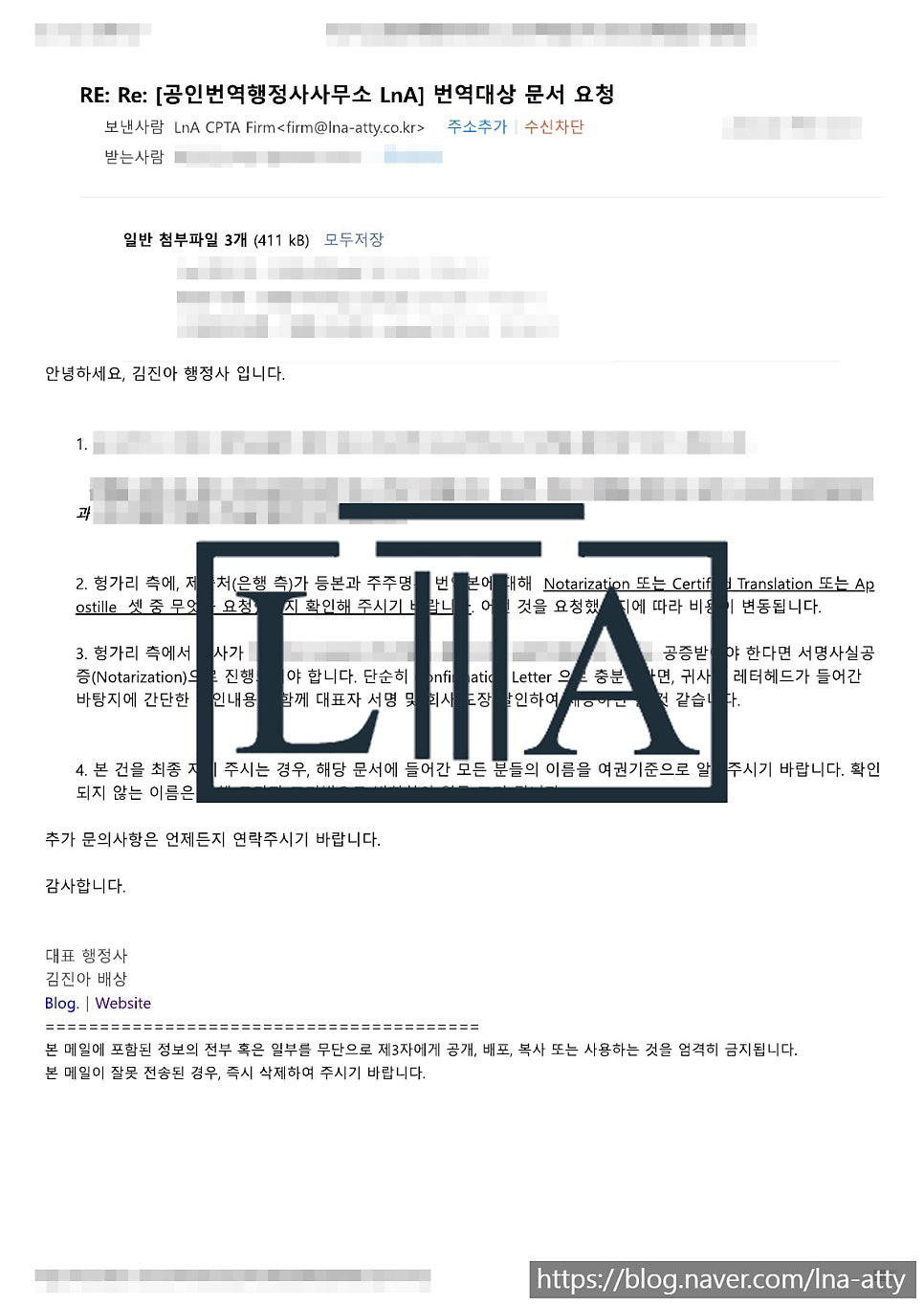
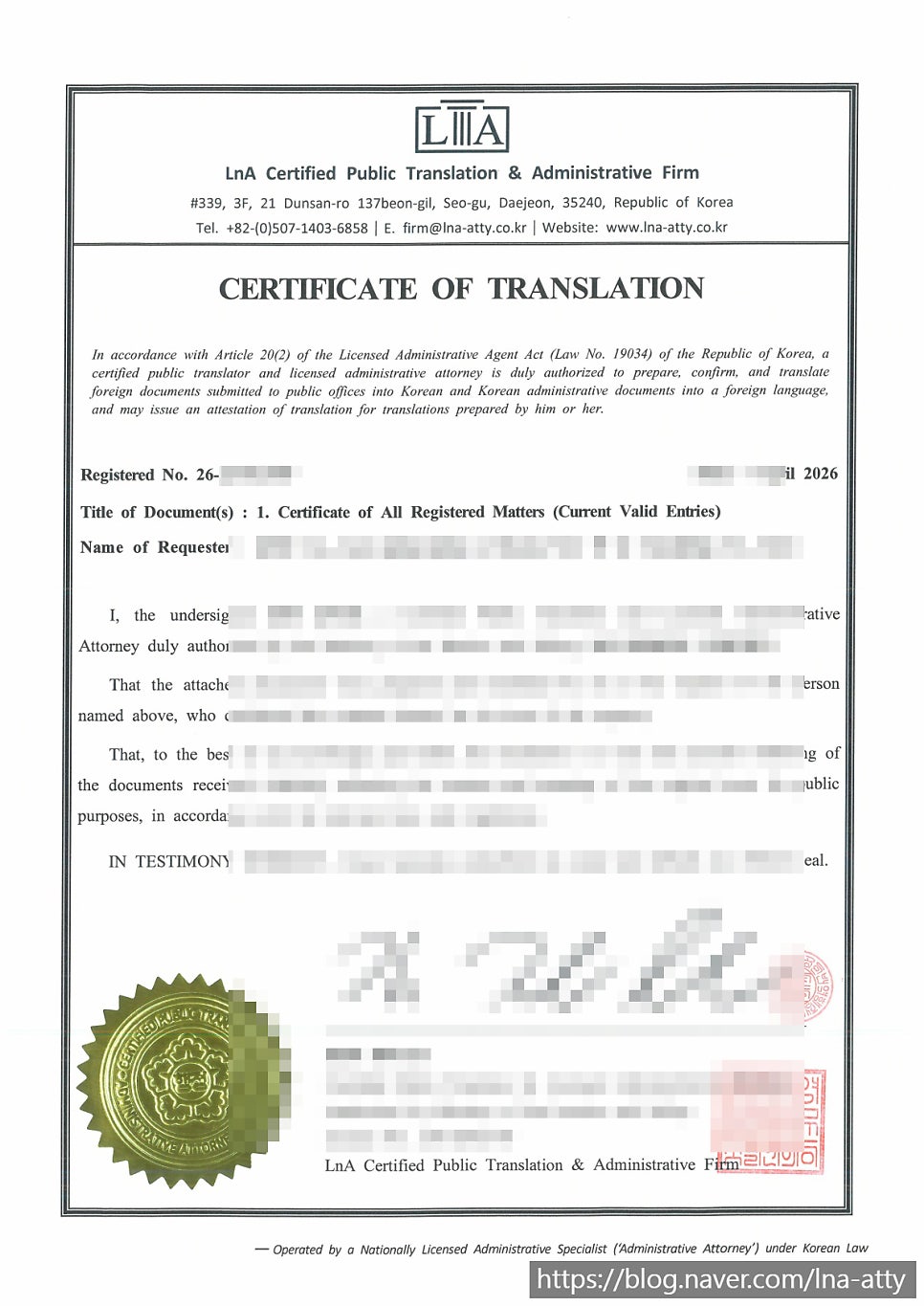
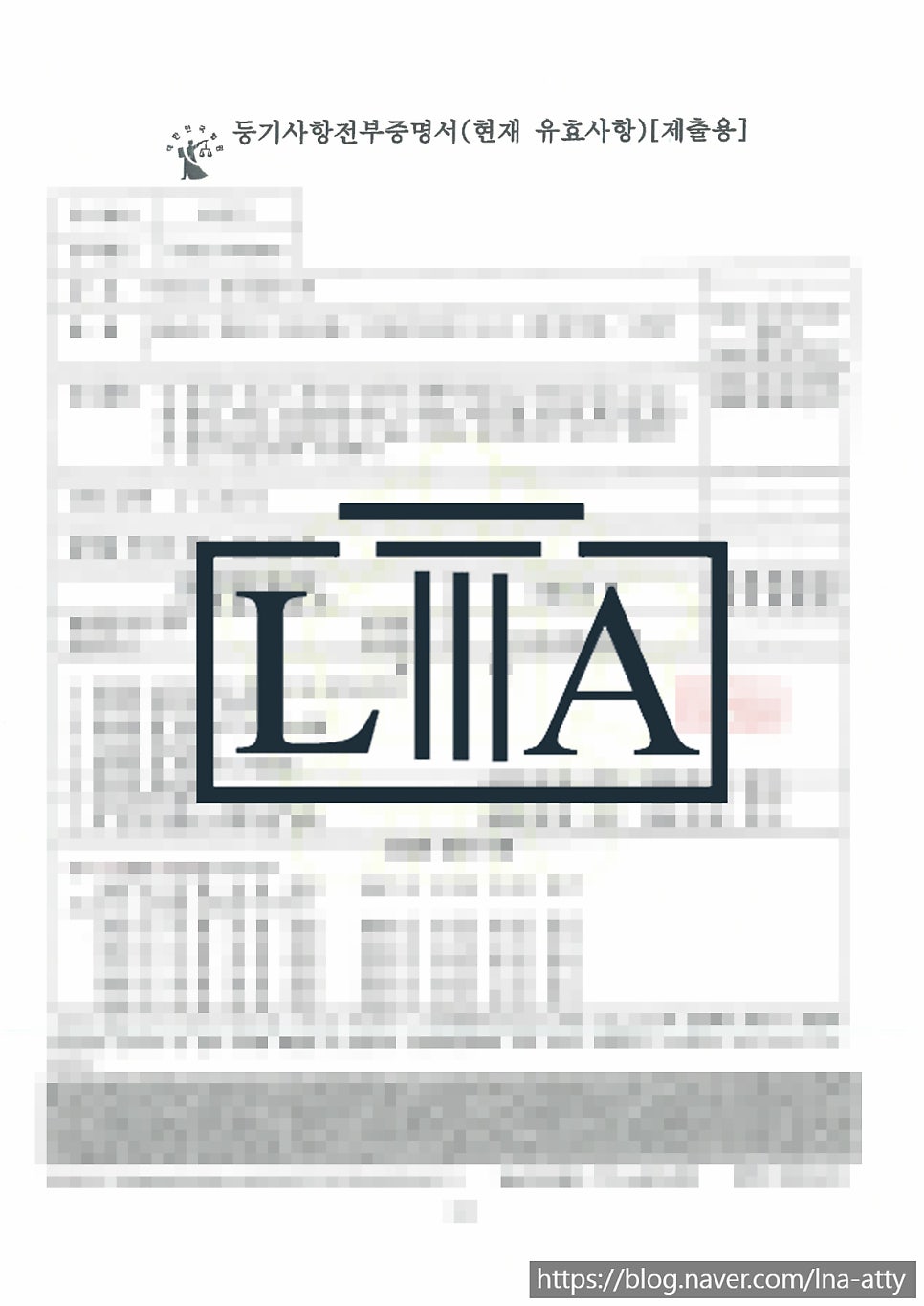
A company dispatch order, translated for Philippine customs clearance on an international move
An employee of a major public enterprise, preparing an overseas posting to the Philippines with their family, was told by the international moving company handling their relocation that Philippine customs required a translated and notarized copy of the company's dispatch order.
Why customs asks for more than a packing list
Clearing household goods through customs on an international move isn't just about the shipment itself — some receiving customs authorities require the company's dispatch order or overseas-posting document to confirm the move is backed by an official assignment (formal posting status). Depending on the specific receiving customs office or moving company, the required document set can also expand to include an employment certificate, a formal appointment letter, and family relation documents.
Why Philippine submissions in particular often need more than a plain translation
For documents headed to the Philippines specifically, a plain English translation alone often isn't enough — translation notarization or a certified translation certificate (번역확인증명서) is frequently requested as well. Since this case's document was specifically for submission to Philippine customs, this office processed it via notarial commission (공증촉탁), preserving the official document's original format throughout. The Philippines is a Hague Apostille Convention member, but actual requirements still vary by the specific receiving customs office or moving company — some ask for a plain certified translation, others want notarization or apostille on top. Given how much the required format varies specifically for overseas relocation, extended-stay, and family-accompaniment documents, confirming the moving company's or receiving institution's exact requirement before starting is worth doing every time.
How this office handled it
This office received the Korean-language dispatch order issued by the client's employer by email, translated the institution name, job title, and posting purpose into precise administrative/legal English so Philippine customs could read it without any risk of misunderstanding, and completed the notarized translation after the client's final review.
The underlying principle
International relocation already comes with plenty to manage — researching customs document procedures on top of that costs real time and money. Drawing on experience across public institutions, companies, and research organizations, this office reviews the translation and notarization procedure that actually fits the destination country and submission purpose — the entire process, including this case, can be handled fully remotely for clients who can't visit in person.
Overseas bank KYC: the Korean corporate documents a compliance review actually asks for
More Korean companies are running into a foreign bank's KYC (Know Your Customer) document request — while setting up an overseas subsidiary, opening an overseas account, taking on foreign investment, or contracting with an overseas counterparty. KYC is a standard compliance procedure foreign banks use to confirm a company genuinely exists, who owns and controls it, what its business actually is, where its funds come from, and that the transaction carries no money-laundering or illicit-activity risk.
The core document set a foreign bank's KYC review typically requests
- Certificate of Registered Matters (법인등기부등본) — company name, corporate registration number, registered address, representative director, capital, incorporation date.
- Business Registration Certificate (사업자등록증) — a National Tax Service-issued document confirming the business is currently active, not closed.
- Articles of Incorporation (정관) — the foundational document defining corporate purpose, share structure, representative authority, and decision-making structure; banks often examine it specifically to assess who is legally authorized to open an account or sign on the company's behalf.
- Shareholder Register (주주명부) — as foreign financial institutions tighten Ultimate Beneficial Owner (UBO) verification, this is the key document letting the receiving bank trace back to the company's actual controlling owner; a complex ownership structure can mean supplementary documents beyond the register are also requested.
- Signature verification for a Power of Attorney or Board Resolution — when these instruments are used to open the account or move funds.
- Passports of the representative director and any Authorized Signatory, along with a register of directors — confirming the identity of whoever actually holds authority to move money.
Why "just translate it into English" isn't the whole job
Depending on the specific bank, the required certification can be Certified Translation, a Certificate of Translation, notarization, apostille, or consular legalization — and the same Korean corporate document can need a different certification method depending on which bank and country it's headed to. That's exactly why this kind of KYC document set is more efficiently handled by an office that can manage both the translation and the correct certification method together, rather than a pure translation vendor.
The underlying principle
A foreign bank's KYC compliance package is really a structural translation of Korea's administrative and corporate-registration system into the terms a foreign financial institution's legal standards recognize — an inaccurate template pulled from the internet, or a process handled without real expertise, risks delaying a company's overseas expansion timeline by months. Confirming the receiving bank's specific certification requirement before translating, the same way this office does for every cross-border submission, is what keeps a KYC package from bouncing back.
International tender bids: the three document categories a foreign procurement review actually scores
For a Korean company bidding on international tenders — the UN, U.S. federal procurement, or a multinational's global vendor process — the most common cause of disqualification isn't weak technical capability or price. It's being ruled ineligible at the document-screening stage for an incomplete or improperly certified document package. A foreign procurement review board can't directly evaluate a Korean-language document issued by a Korean government agency — it needs a complete English translation, properly certified.
The document checklist, by what each category is actually verifying
- Corporate eligibility: Certificate of Registered Matters (verifies the company is validly incorporated and still operating), Business Registration Certificate (confirms official taxpayer status), Shareholder Register (verifies UBO and governance structure), Corporate Seal Certificate (verifies the authenticity of the company's signature/seal).
- Financial soundness: Standard Financial Statement Certificate (assesses financial capacity via assets, liabilities, and revenue scale), VAT Tax Base Certificate (proves actual recent quarterly/annual revenue), National/Local Tax Payment Certificate (confirms no outstanding tax delinquency), Credit Rating Confirmation (directly affects bid scoring).
- Technical capability and track record: Certificate of Performance / Career Certificate (verifies experience on similar projects and key personnel), Patent Certificate / Registration Certificate (proves IP ownership and technical standing), Factory Registration Certificate / relevant licenses (verifies manufacturing capacity for procurement requiring production facilities).
Why "English Translation Required" on the tender notice isn't the whole requirement
A tender notice often states only "English Translation Required" — but the actual submission package can also need the translator's identity and contact information stated on the document, a Certificate of Translation, notarization, apostille, or a specific document-set structure. Since a tender has a fixed submission deadline and any request for supplementation directly eats into that timeline, reviewing the exact submission requirement from the earliest stage matters more here than almost anywhere else.
Why experienced procurement teams go directly to a 외국어번역행정사, not a translation agency
- A Certificate of Translation with legal standing, issued on the spot: under 행정사법 제20조, a 외국어번역행정사 is a nationally licensed professional who can issue a Certificate of Translation the receiving foreign procurement board recognizes as an officially credentialed document.
- Legal accountability for precision: for a tender document — especially a patent specification, corporate registry, or financial statement — a single mistranslated article or figure can distort the scope of a right or trigger disqualification; a professional carrying legal responsibility for the translation's accuracy is what keeps procurement staff free to focus on the actual proposal (RFP).
- Guidance on what comes after translation: whether the receiving country is a Hague Apostille member (like the U.S.) or requires embassy consular confirmation instead (like Vietnam) changes everything downstream of translation — getting the full sequence right from the start is what makes a tight tender deadline manageable.

Right-Sized Translation, Filed Correctly the First Time
Get in touch about thisFrequently Asked Questions
What's the difference between an exclusive and non-exclusive patent license?
An exclusive license means only the licensee may use the patent — not even the patent holder. A non-exclusive license lets the licensee use the patent within agreed terms, without shutting out the patent holder or other licensees.
Does a US exclusive license need to be registered like it does in Korea?
No — the US doesn't require mandatory registration for an exclusive license to take effect, unlike Korea's 등록주의 system. The agreement can instead be recorded with the USPTO, which puts third parties on notice that the license exists.
Do I need to translate my entire corporate registry document?
Often not — confirming the actual required scope with the receiving US firm first can mean only a partial excerpt (e.g. the section showing a name change) needs translation, reducing both cost and turnaround.
How do I know if I need a Certification or just a Verification of Translation?
It depends on the receiving agency's requirement — courts, embassies, and government agencies generally require a formal Certification, while some private or lighter-weight filings accept a simple Verification. This office confirms which one your specific filing needs before translating.
What happens if I submit the wrong translation-statement type?
A Verification submitted where a formal Certification was required can get the filing rejected; over-certifying when a Verification would have sufficed just adds unnecessary cost — confirming the requirement upfront avoids both outcomes.