Applying to a Korean university with a foreign-curriculum transcript?
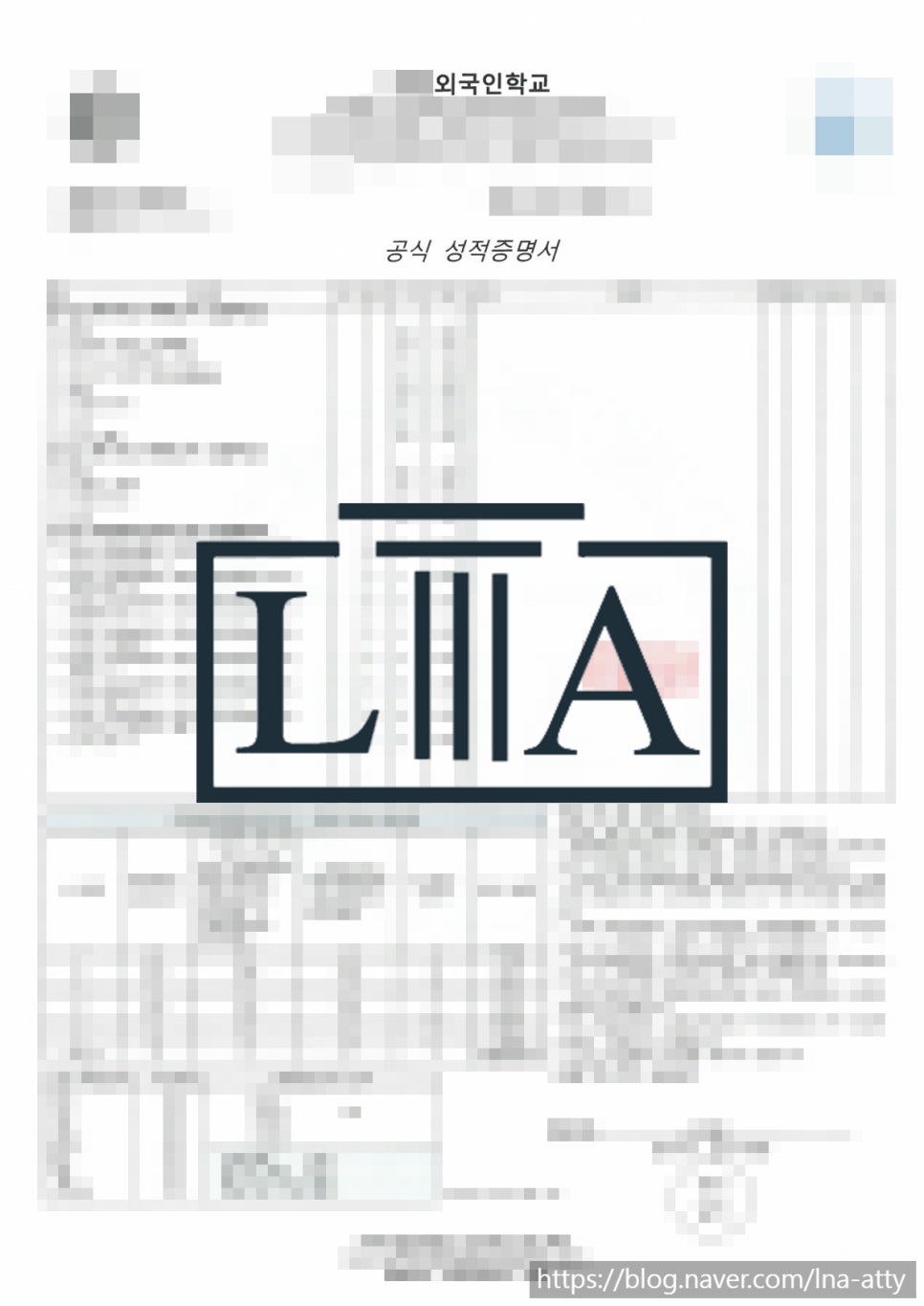
Certified English-to-Korean translation of a foreign school's transcript or diploma — including transcripts from a Korea-based foreign school (외국인학교), which are issued exactly like an overseas document.
Precise, Verifiable Translation for Admissions CommitteesA client preparing a Korean university application needed an English-to-Korean translation and certification of a transcript issued by a foreign school located in Korea (외국인학교).
Why a school located in Korea needs a foreign-document translation at all
A 외국인학교 sits physically in Korea, but its administration and curriculum are treated as functionally identical to an overseas school — so its transcripts, diplomas, and other administrative records are issued in the curriculum's language (usually English), exactly as if they came from abroad. When these documents go to a Korean university or government office, they need a credible Korean translation the same way any foreign document would.
외국인학교 vs. 국제학교 — a distinction worth knowing
These two are frequently confused, but they're governed by different laws with materially different consequences for university admission:
| 국제학교 (International School) | 외국인학교 (Foreign School) | |
|---|---|---|
| Legal basis | Special Act on the Establishment and Operation of Foreign Educational Institutions in Free Economic Zones and Jeju | 초·중등교육법 (Elementary and Secondary Education Act) Art. 60-2 |
| Who can enroll | Primarily Korean nationals (foreign nationals also eligible) | Foreign nationals or overseas Koreans; Korean nationals capped at under 30% |
| Korean credential recognition | Recognized alongside overseas credential (if Korean language, history, and geography are completed) | Not recognized by default — recognized only with Ministry of Education approval |
| University pathway | Can apply to both domestic and overseas universities directly | Overseas universities directly; domestic universities via special foreign-graduate admission tracks |
| In short | Korea-located, internationalized school open to Koreans too | Physically in Korea, functionally an overseas school |
The critical practical consequence: a 외국인학교 graduate applying to a domestic Korean university generally can't apply through the regular admissions track — they need to either sit the 검정고시 (GED-equivalent exam) or apply through a "foreign school graduate" or "overseas degree holder" special admission track. Knowing this distinction matters as much as the translation itself when planning a university application.
What the translation needs to hold up
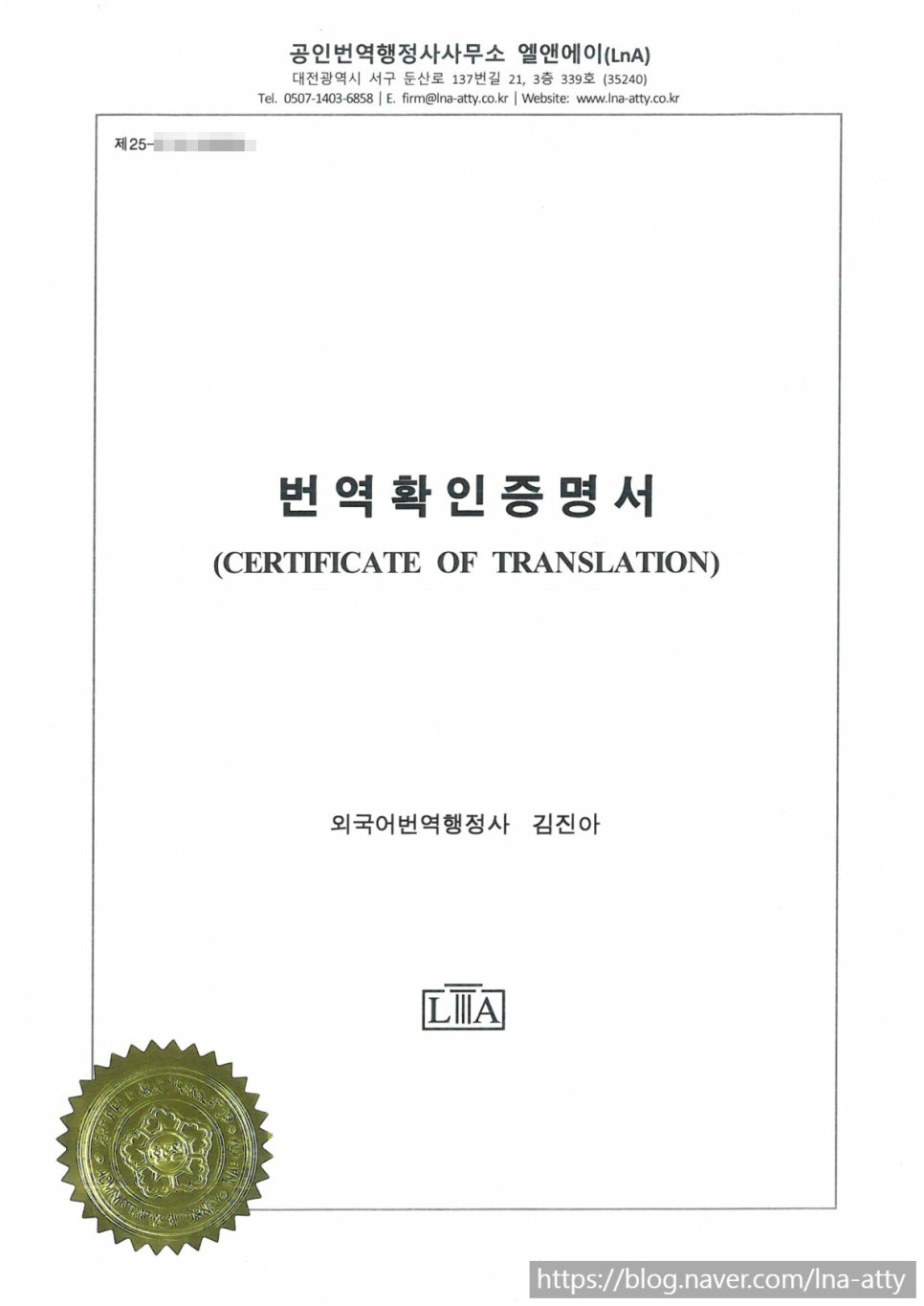
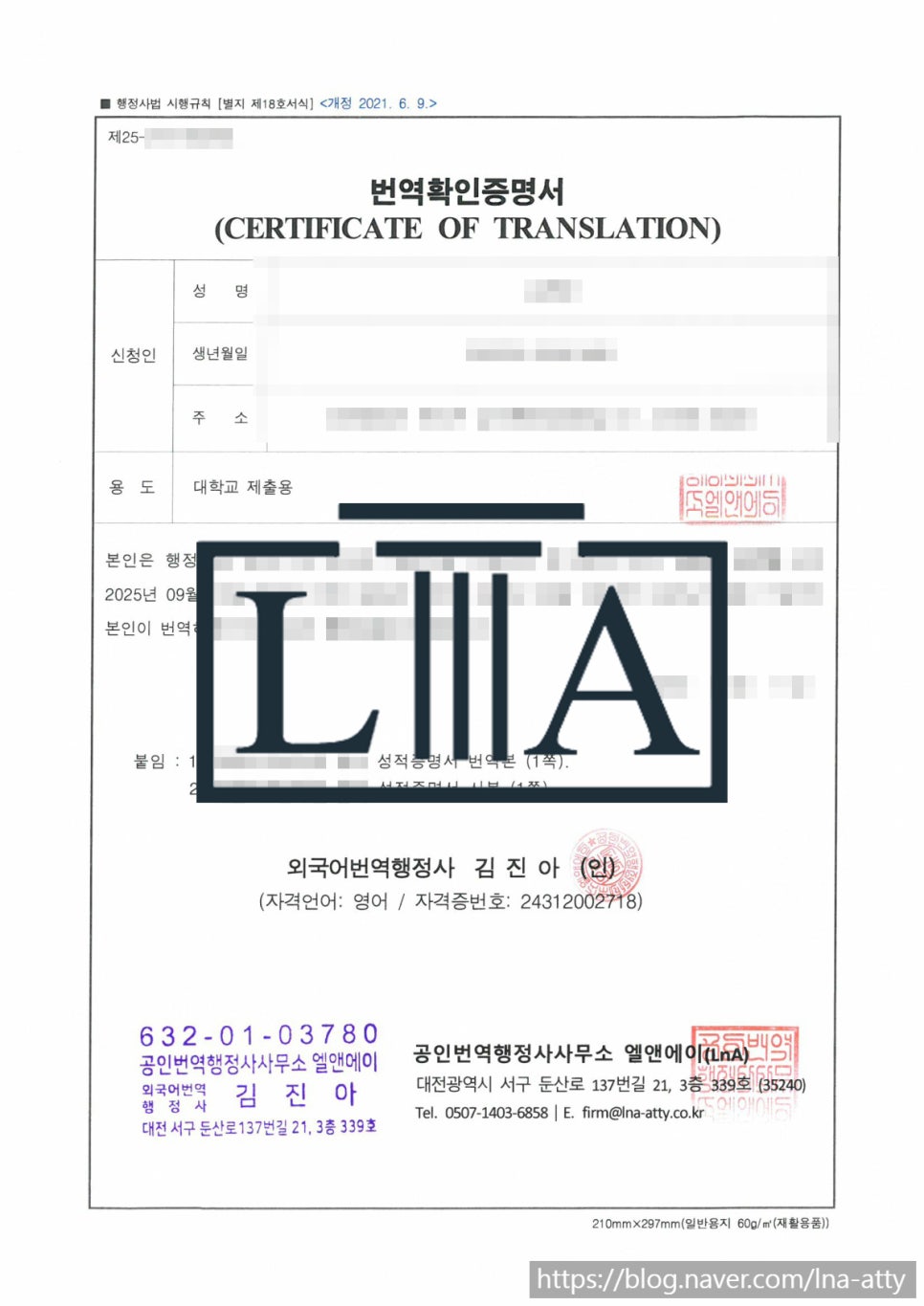
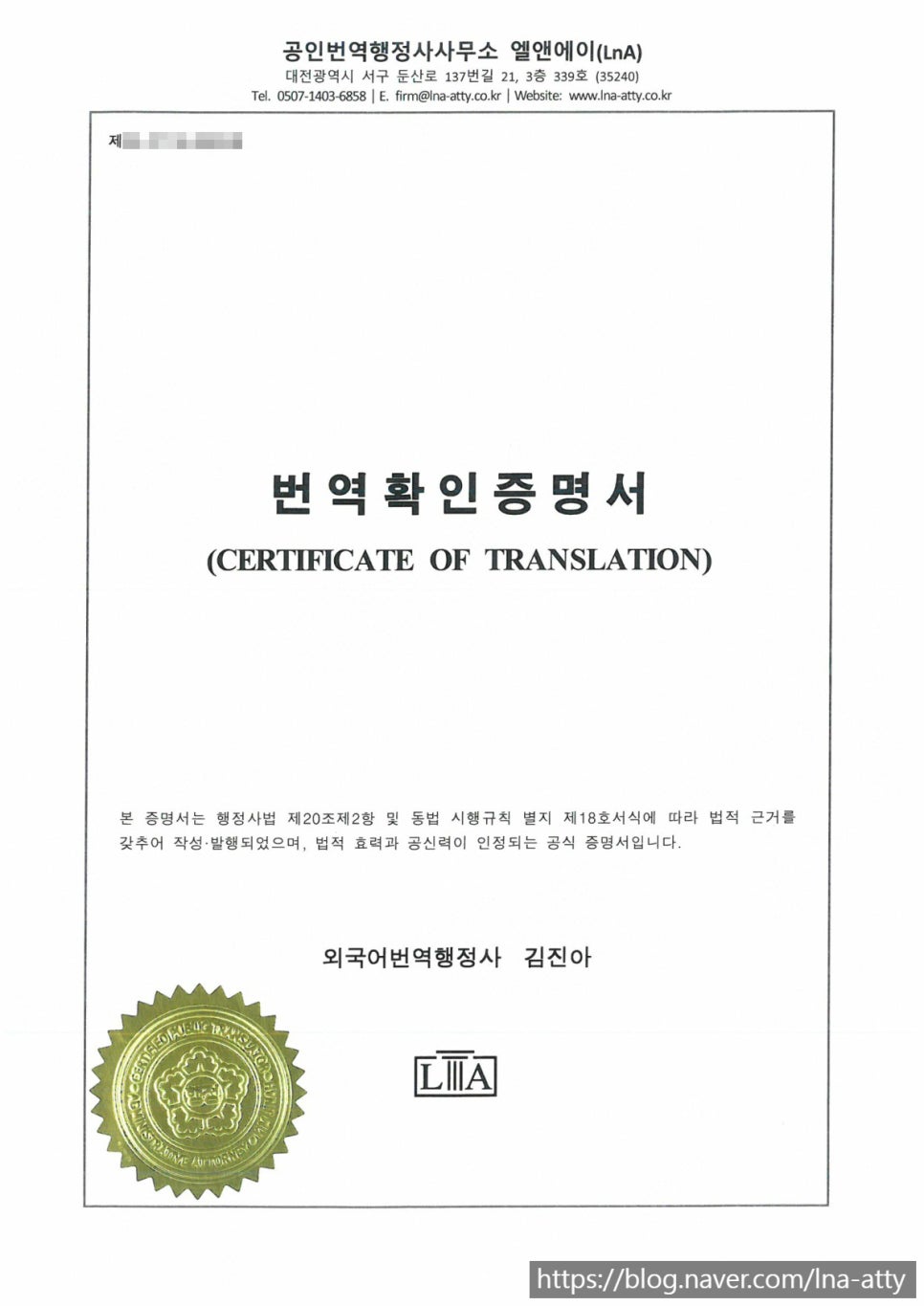
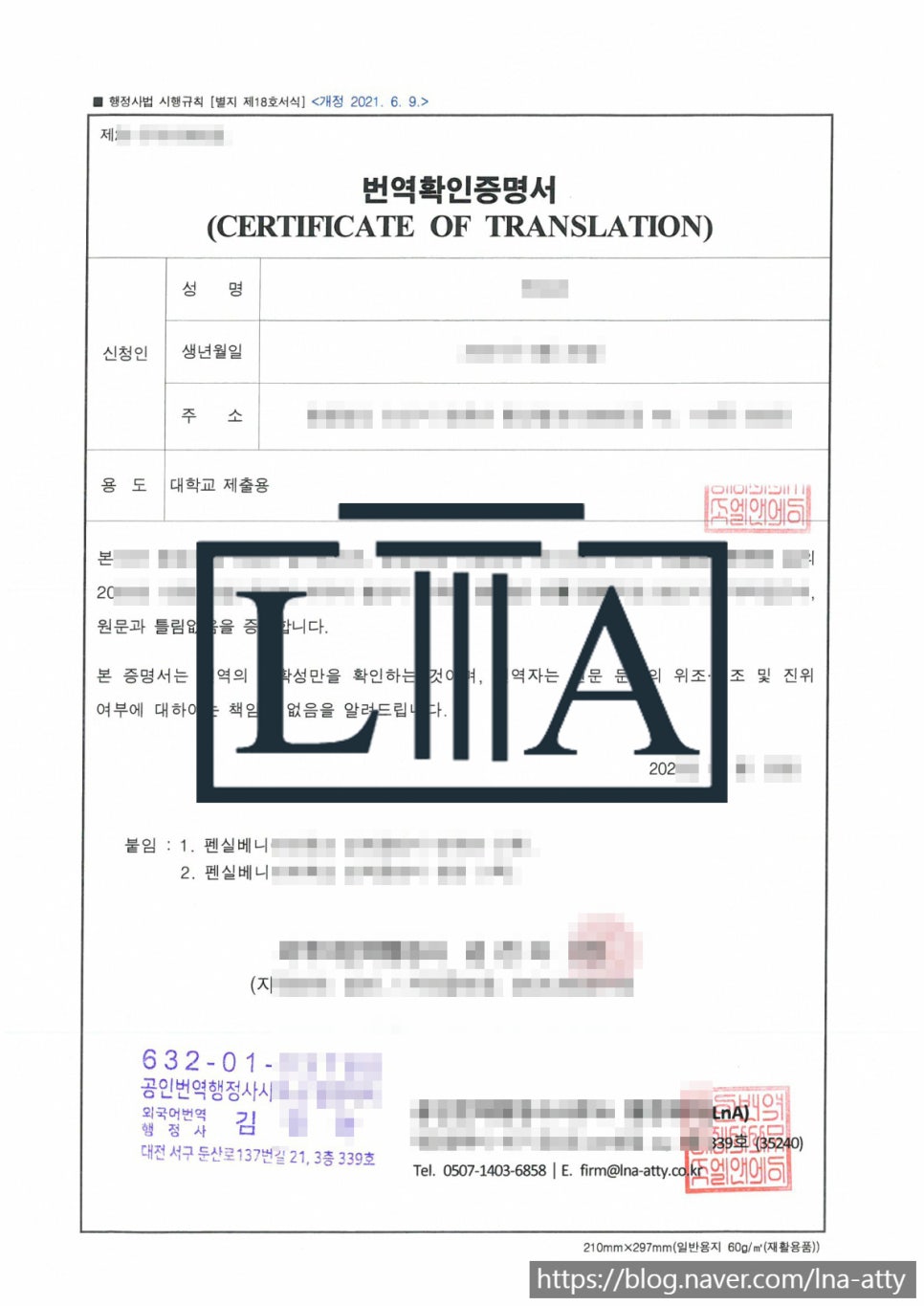
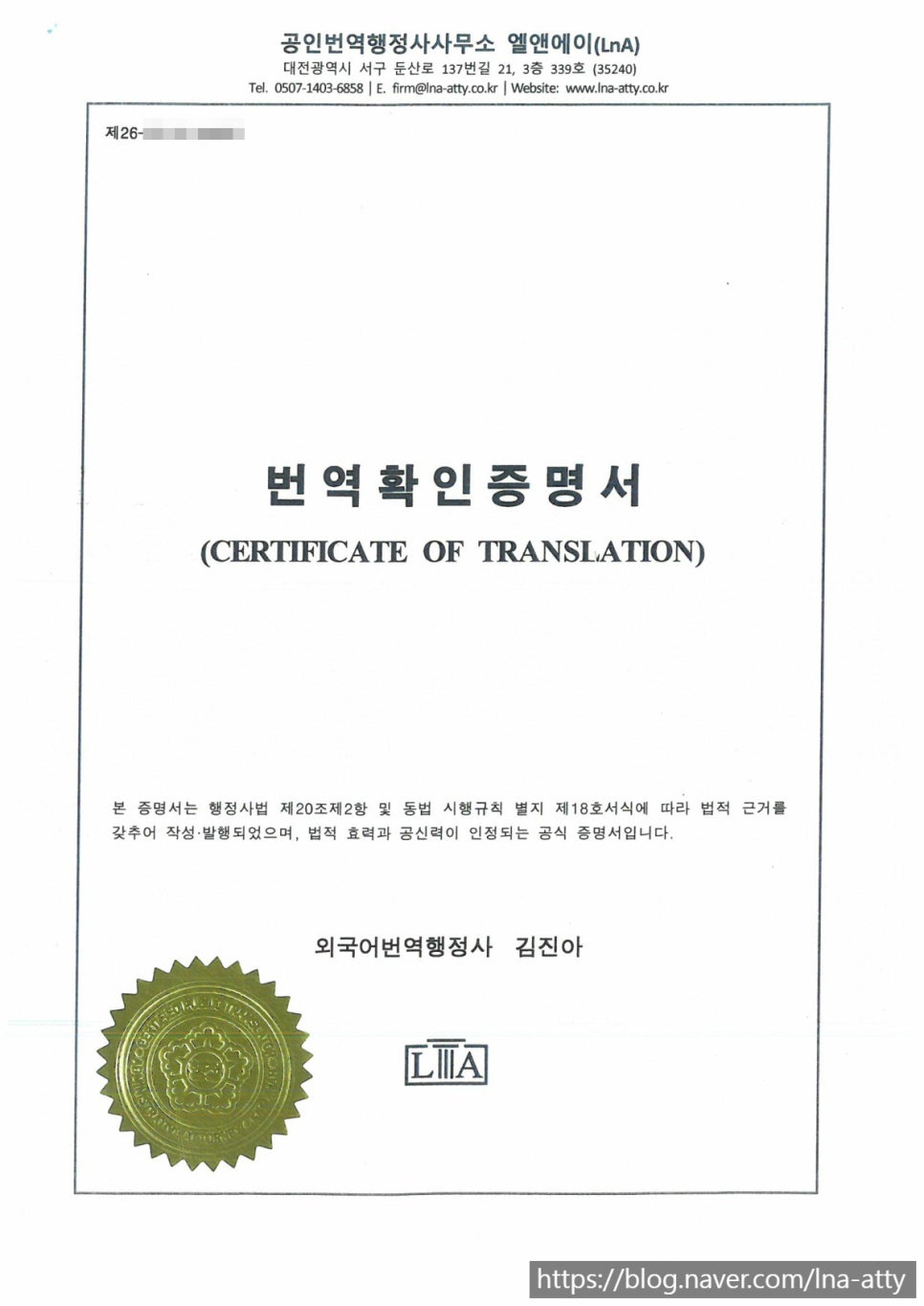
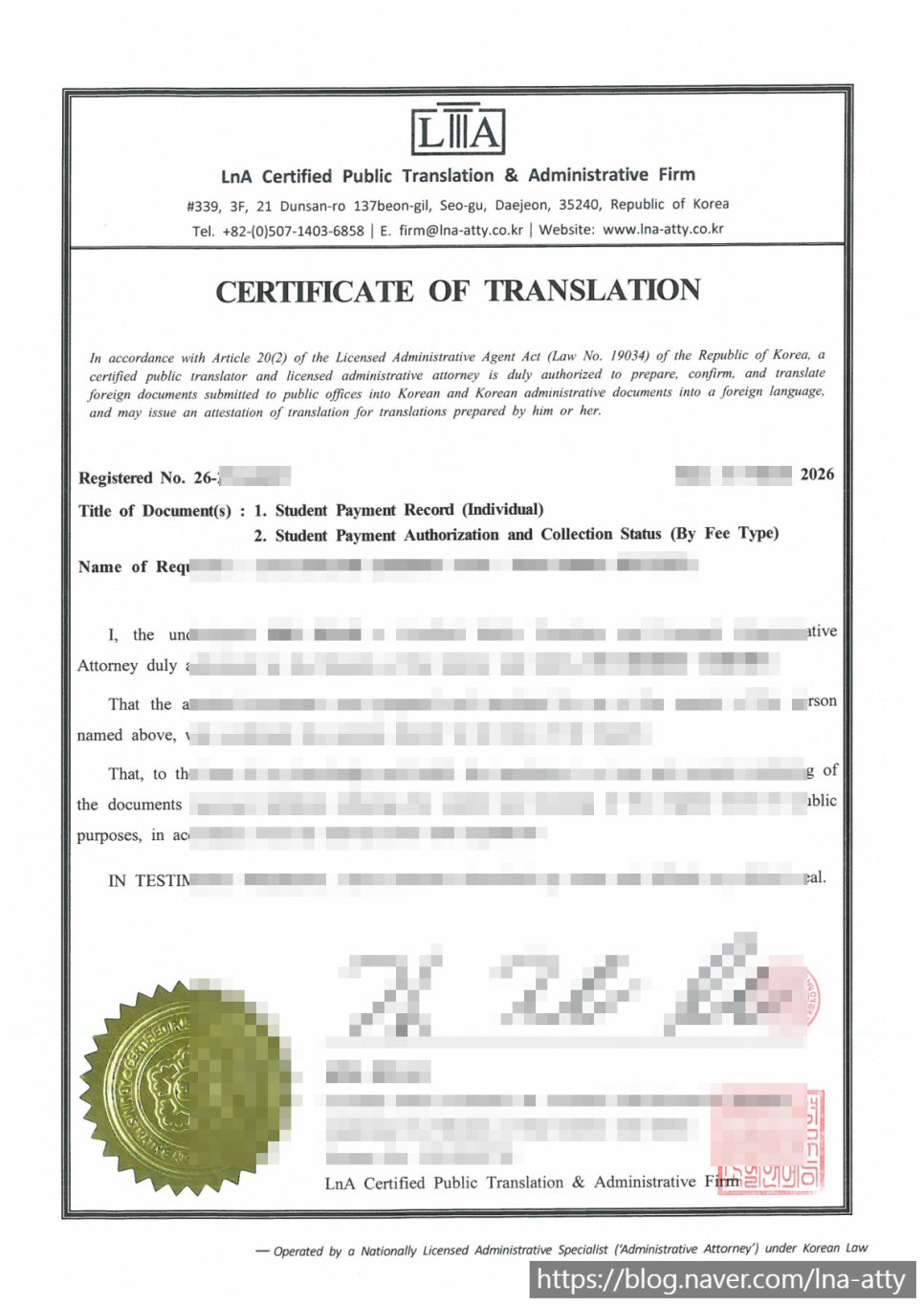
A transcript carries sensitive, high-stakes information — GPA, course names, credit hours — where translation accuracy directly affects how an admissions committee reads the applicant's record. A plain translation isn't enough for submission purposes; it needs to be backed by a qualified translator's 번역확인증명서 to be recognized as credible (a notary office's translation notarization is also accepted in some cases — confirm with the receiving university first).
Beyond transcripts: extracurricular activity certificates from a Canadian high school
Korean university admissions often require more than a transcript — this office recently translated and certified a set of club activity certificates issued by a Canadian high school on the school's official letterhead, submitted alongside the applicant's transcript for a domestic university application.
What makes foreign school documents different
Unlike the Korean system, foreign high schools rely on a wider range of official documents beyond the transcript:
- Official letterhead — establishes the document as a genuine, trustworthy school-issued record
- Activity certificates and credit-completion certificates — document a student's extracurricular and educational activities as supplementary evidence
Every one of these, when submitted to a Korean university, needs an accurate translation plus a 번역확인증명서 (certification requirements vary by university — some accept a 번역확인증명서 or notarized translation alone, others require an apostille or embassy legalization on top, so always confirm the specific university's requirement beforehand).
Why literal translation falls short for activity names
Translating activity descriptions demands more than word-for-word accuracy — the admissions officer needs to actually understand what the activity was, which sometimes means unpacking a name that means nothing literally translated:
- "Ice Cream Bridge" — translated literally, this reads as meaningless ("ice cream bridge"). It's actually a well-known hands-on STEM activity where students design and build a small bridge out of popsicle sticks — so the translation needs to spell that out (a bridge-building activity using popsicle sticks), not just transliterate the name.
- "Bake Sale" — this isn't a generic bakery sale; it's a specific, culturally recognized North American fundraising event format. The translation needs to convey that specific fundraising context, not just "selling baked goods."
Capturing the educational meaning and cultural context behind an activity's name is what lets a Korean admissions officer correctly understand the applicant's actual experience.
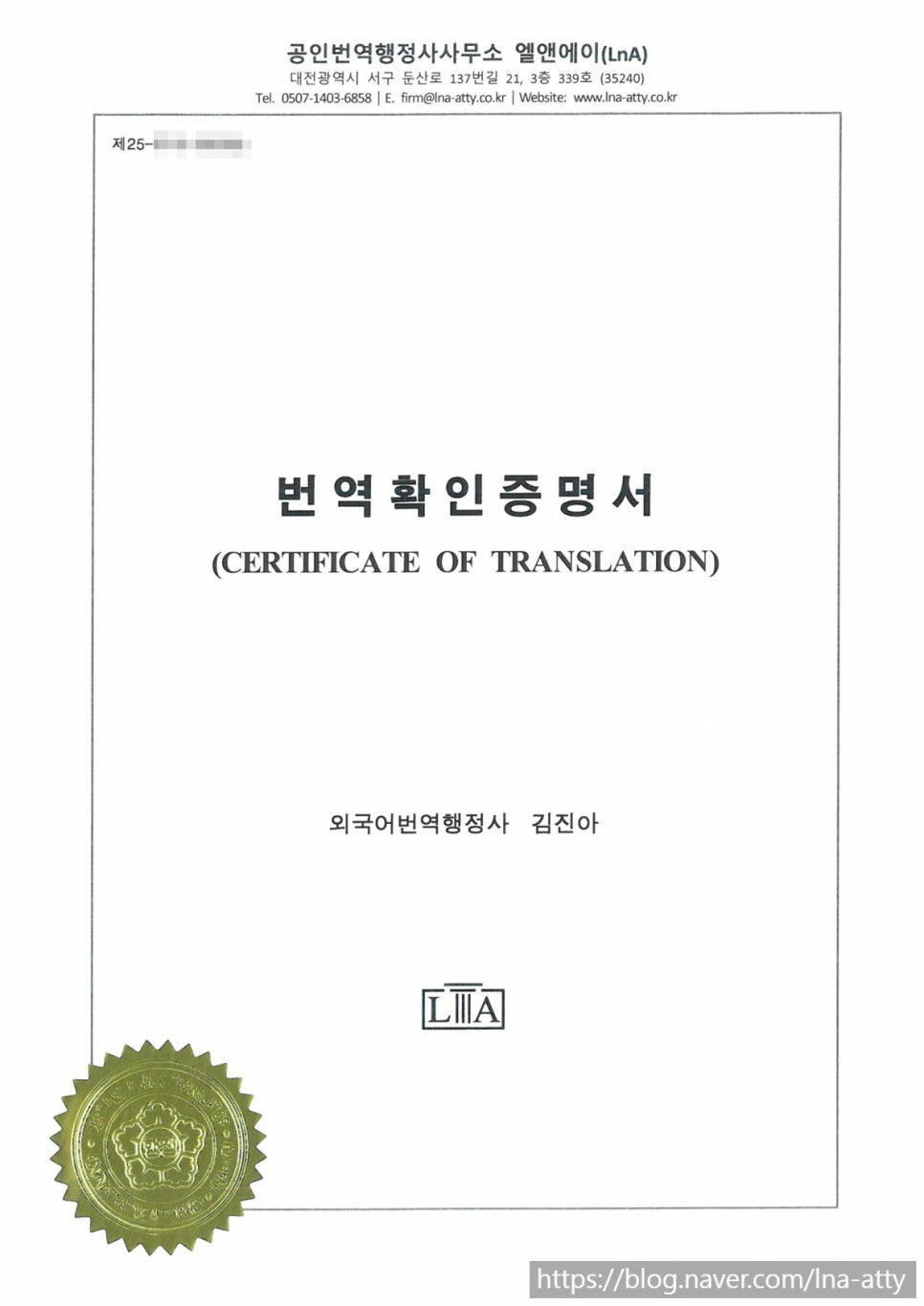
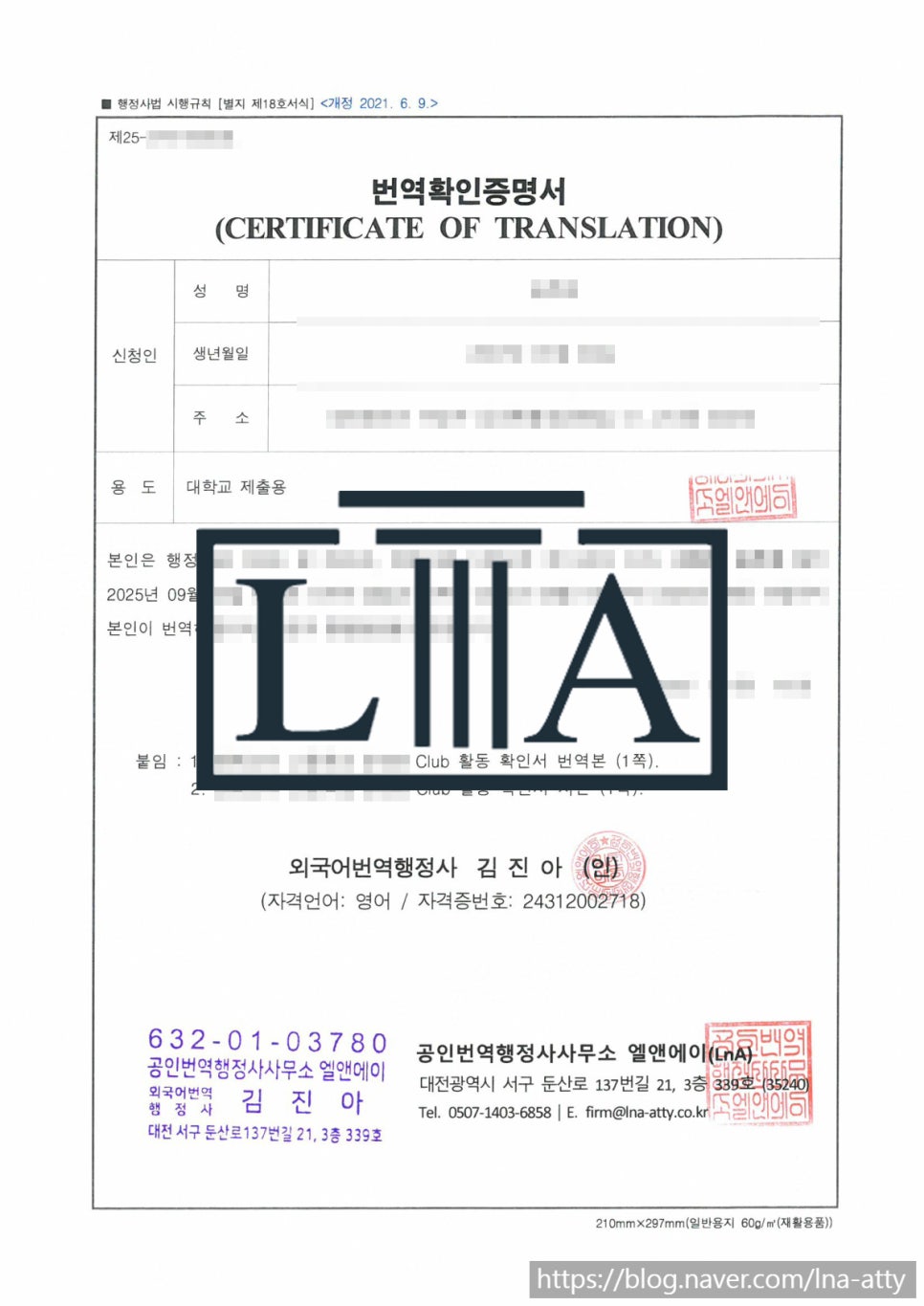
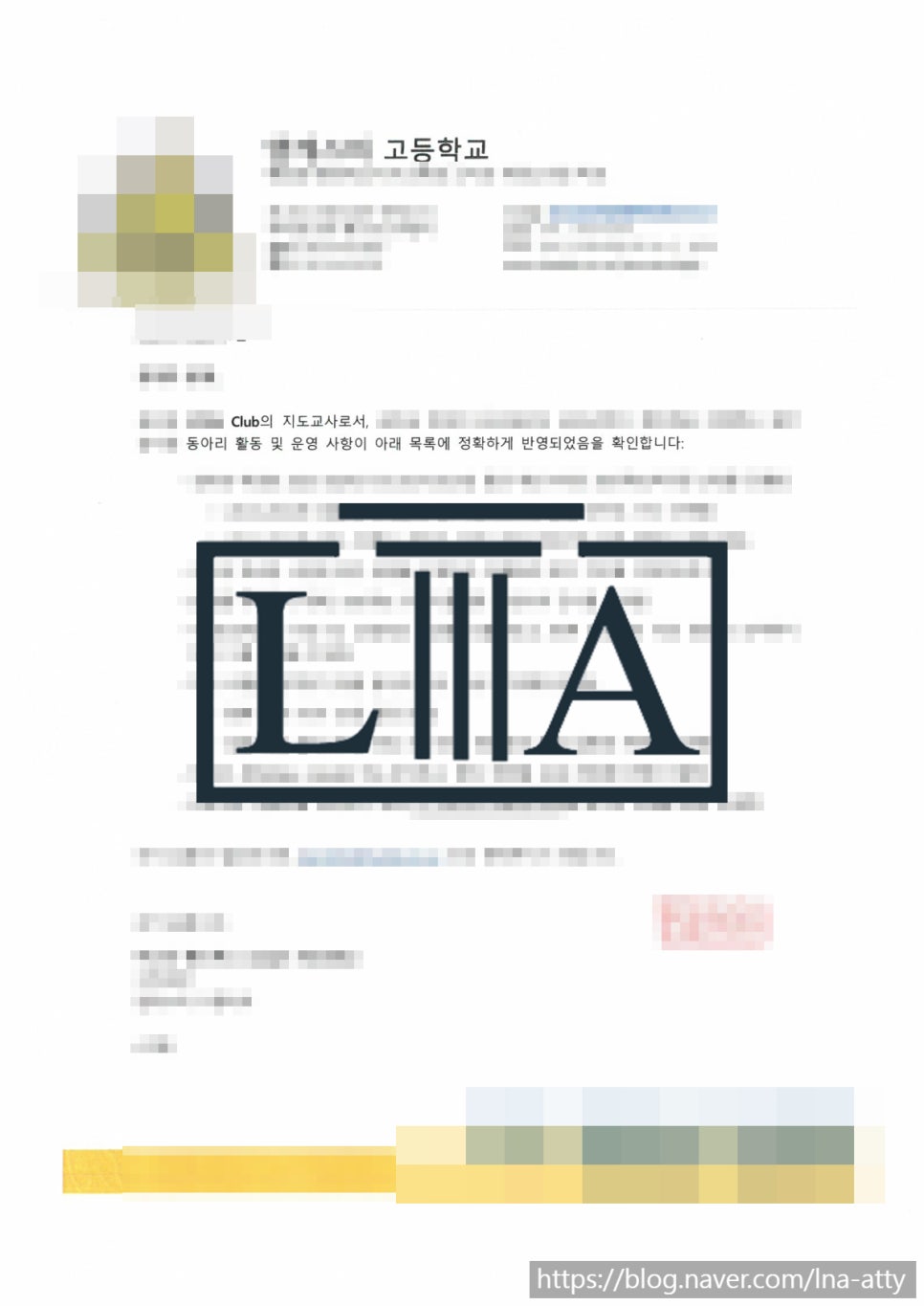
This particular case involved 7 separate letterhead documents translated and certified under a tight application deadline — scanned copies were sent ahead, with the certified originals following by express mail, so the submission schedule stayed on track.
Consular authentication and avoiding redundant translation costs
A Canadian high school transcript submitted for a Korean university application often needs an apostille or consular authentication from a Korean consulate abroad on top of the translation itself. In this case, the client's transcript required authentication from the Korean Consulate General in Toronto before submission.
Reproducing the original's exact format
This office's top priority for legal/administrative document translation is fidelity to the source — a transcript's grading system, course names, and layout all carry specific meaning:
- Format reproduction — the original transcript's tables and layout are reproduced as closely as possible, so the admissions office can easily cross-reference the translation against the original
- No arbitrary localization — course names and grading systems are never freely reworded to match Korean conventions; staying faithful to the original avoids any risk of misinterpretation
Don't pay to re-translate what's already bilingual
The client's document set included the Toronto Korean Consulate's authentication certificate, already issued bilingually in Korean and English. Translating that certificate again — into Korean it's already written in — would be a pointless duplicate translation and an unnecessary cost to the client.
This office's actual approach: only the Canadian high school transcript itself (English) was translated; the already-bilingual consular authentication certificate was attached to the 번역확인증명서 in its original form, untranslated.
Stating the translation's scope explicitly, so nothing reads as an omission
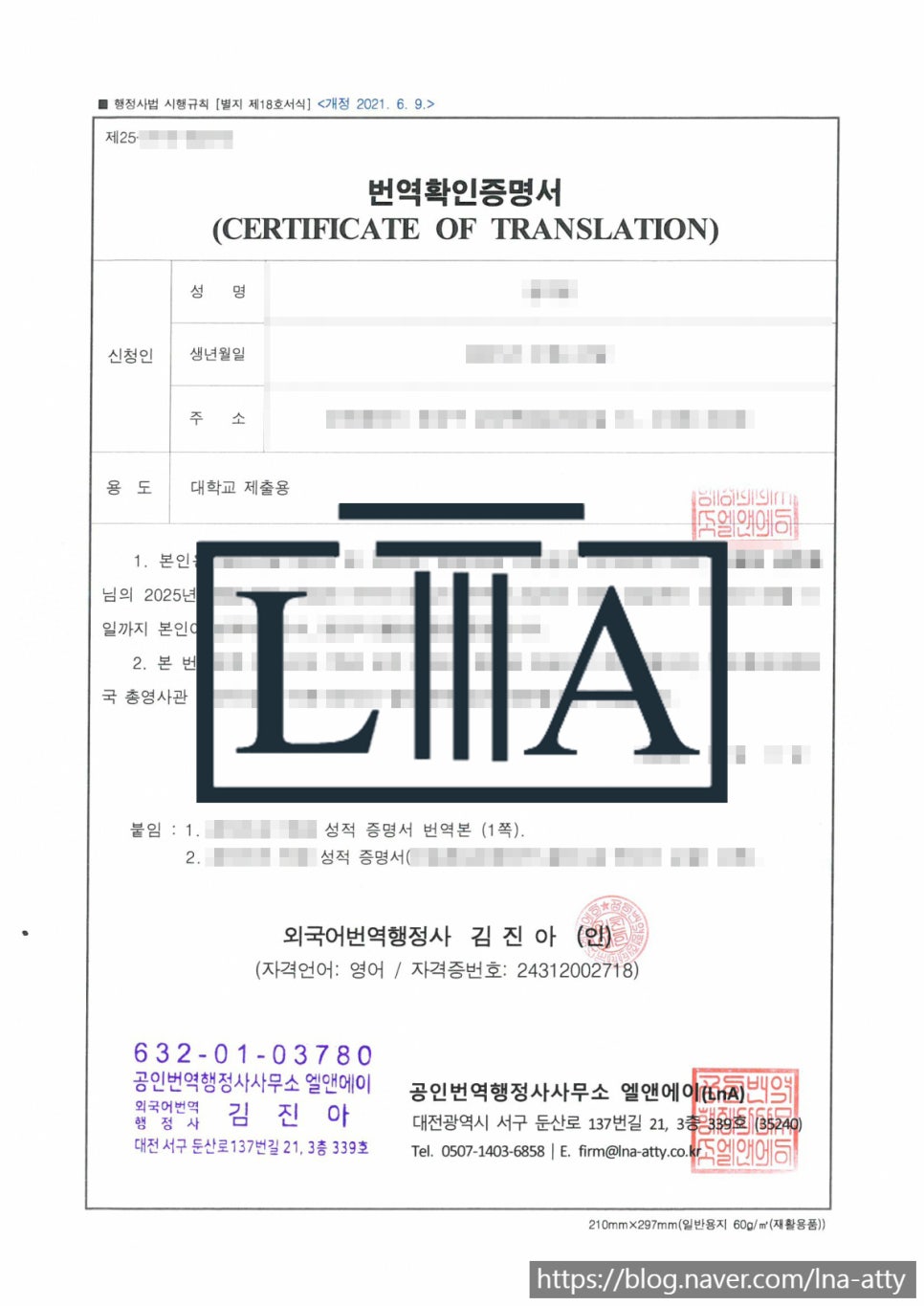
Submitting a partially-untranslated document set can confuse a reviewing institution if it isn't explained. To prevent that and keep the documentation transparent, this office's 번역확인증명서 explicitly stated:
"This translation covers the transcript original only; the Korean Consulate General in Toronto's authentication certificate (issued bilingually in Korean and English) is attached in its original form without separate translation."
Documenting the translation's exact scope — and why a section was intentionally excluded — directly on the official certificate prevents reviewer confusion and reinforces the document set's overall credibility.
Strategic term choice: a University of Pennsylvania transcript for a Korean university transfer
A client preparing to transfer into a Korean university needed a transcript from the University of Pennsylvania (an Ivy League school) translated and certified. The client was explicit about the goal: making their computer science coursework stand out clearly during transfer review.
Why term choice matters for a transfer application
A transfer reviewer works through a large volume of documents. If a transcript's course names or school/college names read as disconnected from Korea's own academic system, an applicant's actual strengths can fail to come through fully — even in a fully accurate translation. This case's translation was built around one goal: making it immediately clear to the reviewer that the applicant actually completed college-level computer science coursework and received a formal grade for it — preserving the original's structure and information while minimizing awkward leftover English, so the courses' subject-area relevance reads naturally within a Korean transfer-review context.
Three deliberate word choices, and why
1. "College of Arts & Sciences" — In the U.S. system, this typically means a broad, liberal-arts-style undergraduate college spanning humanities, social sciences, and natural sciences. Korean has several plausible renderings (문리과대학, 문리대학, 인문과학대학, 인문이학대학, 인문·자연과학대학). To support the STEM relevance of the client's computer science (CIS) coursework, this office chose "인문이학대학" — a rendering that intuitively signals the school's science-inclusive academic range, making the college's full academic spectrum clear.
2. "Computational Data Exploration" — Not a general data-usage course, but one grounded in computational methods, algorithms, and programming — exactly the kind of course a transfer reviewer would want to recognize as computer-science-relevant. This office translated it as the modern, immediately legible "컴퓨팅 데이터 탐색" so a reviewer would identify it as CS-relevant coursework on sight.
3. "Introduction to ~" — "Introduction" can translate as either 입문 (a more basic-level connotation) or 개론 (implying a more comprehensive theoretical treatment). After confirming with the client that the course in question went well beyond an introductory level and covered the subject's theoretical framework comprehensively, this office chose "개론" to convey that academic depth accurately.
The underlying principle
A translator has an obligation to stay faithful to the source — but also needs to correctly grasp the document's submission purpose and context. Converting the original's value into natural Korean administrative phrasing, without distorting it, so the applicant's actual academic achievement stands out clearly — that's the value a nationally licensed certified translation actually provides.
A Korean elementary school report card, translated for a domestic international school transfer
A student currently enrolled at a regular Korean elementary school was preparing to transfer to a domestic international school (US-style curriculum, elementary level) and needed their school report card (생활통지표) translated as part of the transfer document package.
Why a report card needs more judgment than most documents
Korea's elementary report card combines subject-by-subject achievement ratings (e.g. "Excellent," "Good"), narrative evaluations, attendance records, and behavioral/comprehensive comments in one document — the international school's admissions staff have no deep familiarity with the Korean curriculum reading it. With that in mind, this office prioritized four principles: not a literal transcription, but a review of every term and phrase against what the document actually needs to functionally communicate to the receiving school.
Three terminology precision case studies
1. 결과(缺課) — not "Results" or "Outcome." The attendance section of a Korean report card is typically split into categories including 결과, an administrative term meaning a student missed part of a regular class period — i.e., a partial-class absence. In practice, this office has seen this mistranslated as "Results" or "Outcome" in other translations — a careless, form-over-substance literal rendering with no review of actual meaning. This office translated it precisely as "Class Absences," the term in common use within the US school system, avoiding administrative confusion.
2. 질병 (as an attendance-reason category) — not the pathological "Disease." When an attendance absence reason is categorized as 질병/미인정/기타, "질병" here isn't a diagnosed medical condition — it's the everyday administrative category "being sick." Rather than the pathological term "disease," this office chose the natural US-school-context term "Ill"/"Sickness," improving the record's credibility.
3. 통합교과 (1st-2nd grade integrated subjects) — Korea's own official terms, with an explanatory gloss. Korea's 1st-2nd grade curriculum includes integrated subjects with no direct foreign equivalent. Korea's Ministry of Education's own official English curriculum materials render them as Moral Life, Inquiring Life (or Intelligent Life), and Pleasant Life — but handed over as-is, a foreign admissions officer would struggle to grasp what the subject actually covers. This office appended a brief explanatory gloss alongside each official term, so the reader could see at a glance that these are distinctly Korean subjects using the Ministry's own official English terminology, while still understanding the subject's actual content — serving both accuracy and the receiving school's need to understand.
4. "다빛" career-exploration program — preserved as a proper noun, translated for substance. The report card's career-activity section listed a program called "다빛" — a coined term referring to discovering or inventing a new occupation using a student's own talents and ideas. This office preserved "Dabit" as the proper name while translating the activity's substance as "Dabit Creative Career Exploration Journey" (or "...program"), so the student's creative-activity record wasn't undervalued and the international school's admissions staff could grasp exactly what the program involved.
The underlying principle
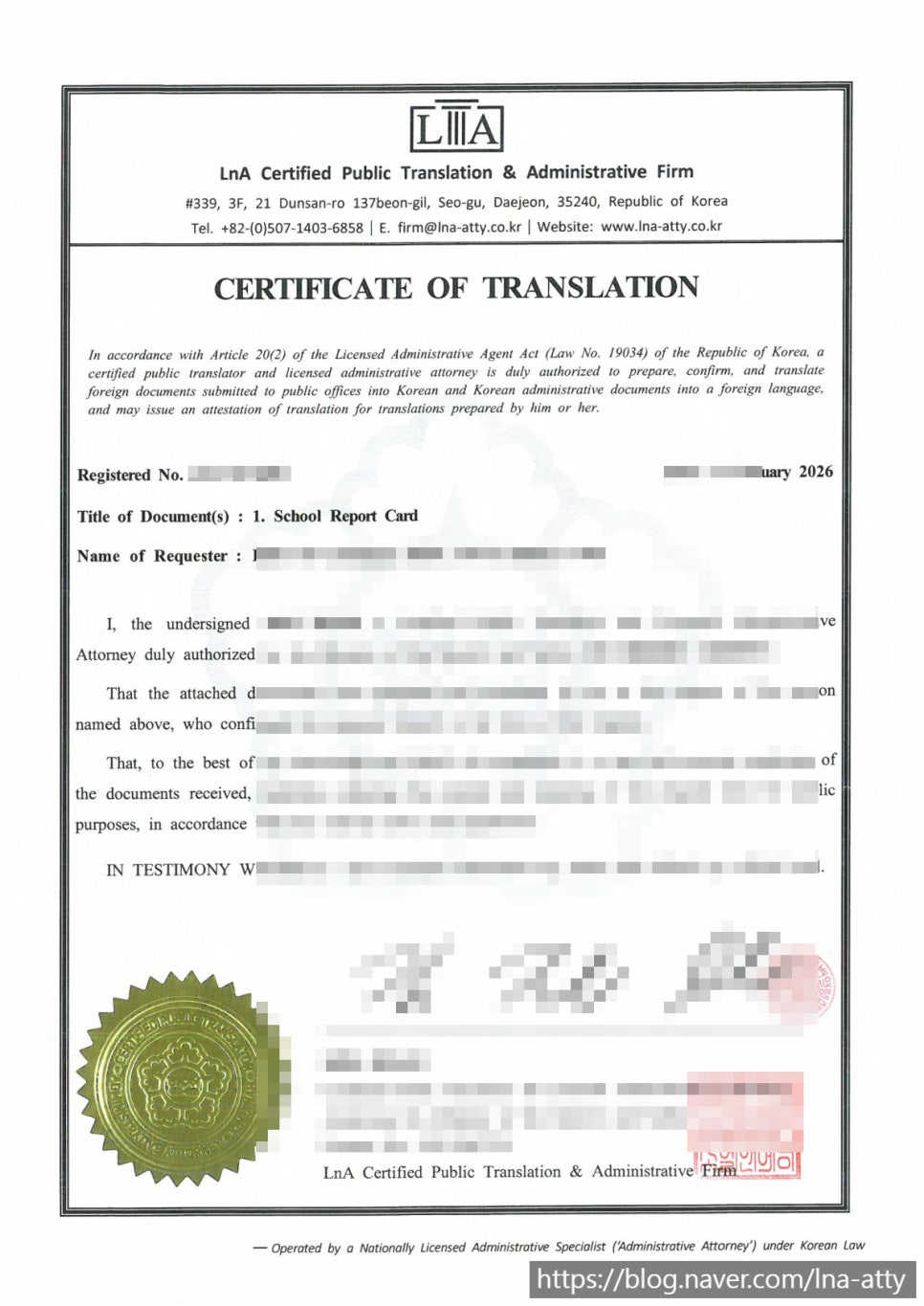
Even a single elementary school report card carries entirely different administrative weight depending on how the receiving institution reads it. This office aims for translations where the document actually functions as intended for its recipient — not a "translation that just moves words across," but one that accounts for differences in education systems, a term's functional meaning, and how the receiving institution is likely to interpret it. After translation, the client reviewed and confirmed the final draft before the certified translation certificate (번역확인증명서) was issued.
A Canadian university's own catalog page, translated to prove degree requirements for a Korean transfer application
A recurring question from clients who studied at a foreign university applying to transfer into a Korean university: how do you prove the foreign school's own academic rules and degree requirements, not just the grades on the transcript?
Why a transcript alone isn't enough
A foreign transcript usually lists only course names, credits earned, and grades. Korean universities reviewing a transfer application need more structural detail: the total credits required for graduation/degree, the grading and credit-hour system, how academic year/standing is calculated, how major/elective/general-education requirements are divided, and the overall structure of the degree program. None of that shows up on a transcript, which is why Korean transfer requirements often separately ask for proof of the school's academic system.
How this proof is usually prepared
Typically by searching the foreign university's own public materials — its official website, academic catalog/calendar, or degree/program guide pages — confirming graduation credit and degree requirements there, and submitting that material. Some schools do issue a separate confirmation letter on request, but in practice, submitting the public catalog material itself, without a separately issued letter, is the more common route.
Can a website excerpt actually be submitted for this?
Yes. Korean university transfer review weighs a document's substantive reliability over its format — if the material comes from an official university source (its own website or catalog), translating and certifying an excerpted portion of that page is a widely used, accepted approach in practice. It has conditions, though: the excerpted scope must be clearly defined, the source and translation must correspond precisely, and the excerpt needs to be properly certified.
Certification method: matching the receiving institution's own stated requirement
In this case, the receiving university's own guidance specified accepting either a notary's translation notarization or a fact-verification certificate (사실확인증명서/번역확인증명서) — not a free choice, but the institution's own explicit requirement. This office's standing principle is precise 1:1 correspondence between every translated document and its source — for this web-excerpt case specifically, the source text and the translated text were laid out matched line-for-line, so the transfer reviewer could compare and verify at a glance. After careful translation and the client's final review, the certified translation certificate was issued.
The underlying principle
Foreign academic systems vary widely school to school. Preparing material that clearly maps a foreign school's own degree structure onto Korean transfer review standards is the first real step toward a successful application — this office's role goes beyond moving sentences from one language to another, toward making sure the receiving institution can actually verify what it needs to see.

A Mexican international school transfer — report card and individual grade summary
A client preparing to transfer their children to a private international school in Mexico needed a certified translation of the school report card (생활통지표) and individual grade summary sheet (개인별 성적일람표). The receiving school ran a US-style curriculum, so this office translated with the receiving school's own educational system and administrative terminology in mind.
Avoiding literal translation, matching US administrative usage
Rather than a word-for-word rendering, this office used the administrative terms already standard in the US school system to keep the document readable and credible to the receiving school. For the teacher's comments section specifically, this office carefully analyzed context and — without distorting the original's meaning — chose active verbs that let the student's strengths read naturally as a positive evaluation. Since foreign schools often check the document's title first, this office also cross-checked the specific document name given in the school's own admissions guide and adjusted the translated title to match.
Term precision: avoiding "cutting class" for 결과(缺課)
Korean school attendance records use 결과(缺課) to mean a partial absence from a class period. Some online translations render "결과" as "cutting class" — but "cutting class" carries a strong negative, rule-violation connotation in English (deliberately skipping class), which isn't appropriate for a formal academic record. Since this is an official academic document that includes the student's attendance record, this office used a neutral, formal term matching US school administrative usage instead.
국어 (Korean-language subject) as "Language Arts"
In the US public education system, the subject covering reading, writing, and literature is called "Language Arts." To convey clearly that Korea's 국어 education is likewise a comprehensive native-language subject (not narrowly "reading" or "grammar"), this office adopted the same term, "Language Arts."
Math unit precision: "Geometry and Measurement," not "Shapes and Measurement"
For the elementary math unit '도형과 측정,' this office weighed two options: "Shapes and Measurement" and "Geometry and Measurement." "Shapes" might read as more familiar at the early-elementary level, but this office confirmed that both Korea's Ministry of Education curriculum and the US elementary curriculum use the term "Geometry" for this unit — so, for consistency with official curriculum terminology, "Geometry and Measurement" was used.
Preserving Korean cultural terms: "대문놀이" as "Daemun Nori"
The grade summary included an activity record for "대문놀이" (Daemun Nori), a traditional Korean folk game. This office checked the Academy of Korean Studies' own official romanization for the activity name and confirmed "Daemun Nori" as the established Romanized form. It was translated as "Playing traditional Korean 'Daemun Nori' games with classmates" — preserving the term's Korean cultural identity while explaining that it's a traditional game.
The underlying principle
Translating documents for a foreign school admission or transfer requires weighing the destination country's administrative terminology, the receiving institution's educational system, the document's actual submission purpose, and how the reviewing staff will read and process it — all at once. Because Korean sentences often carry indirect or softened phrasing that can read ambiguously in translation, careful attention to individual word choice and sentence structure is what lets a foreign school's staff naturally see the student's actual attitude and ability.
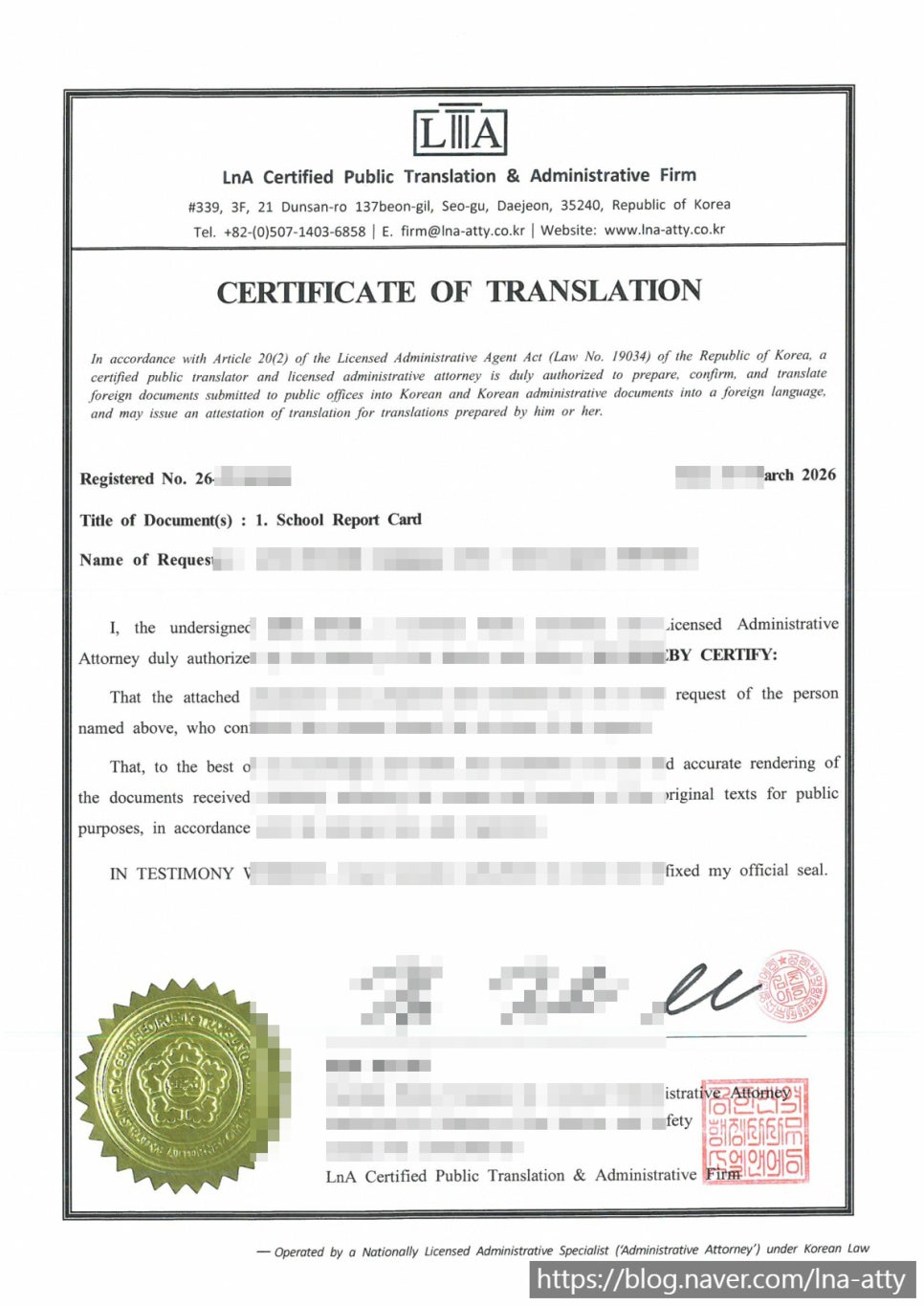
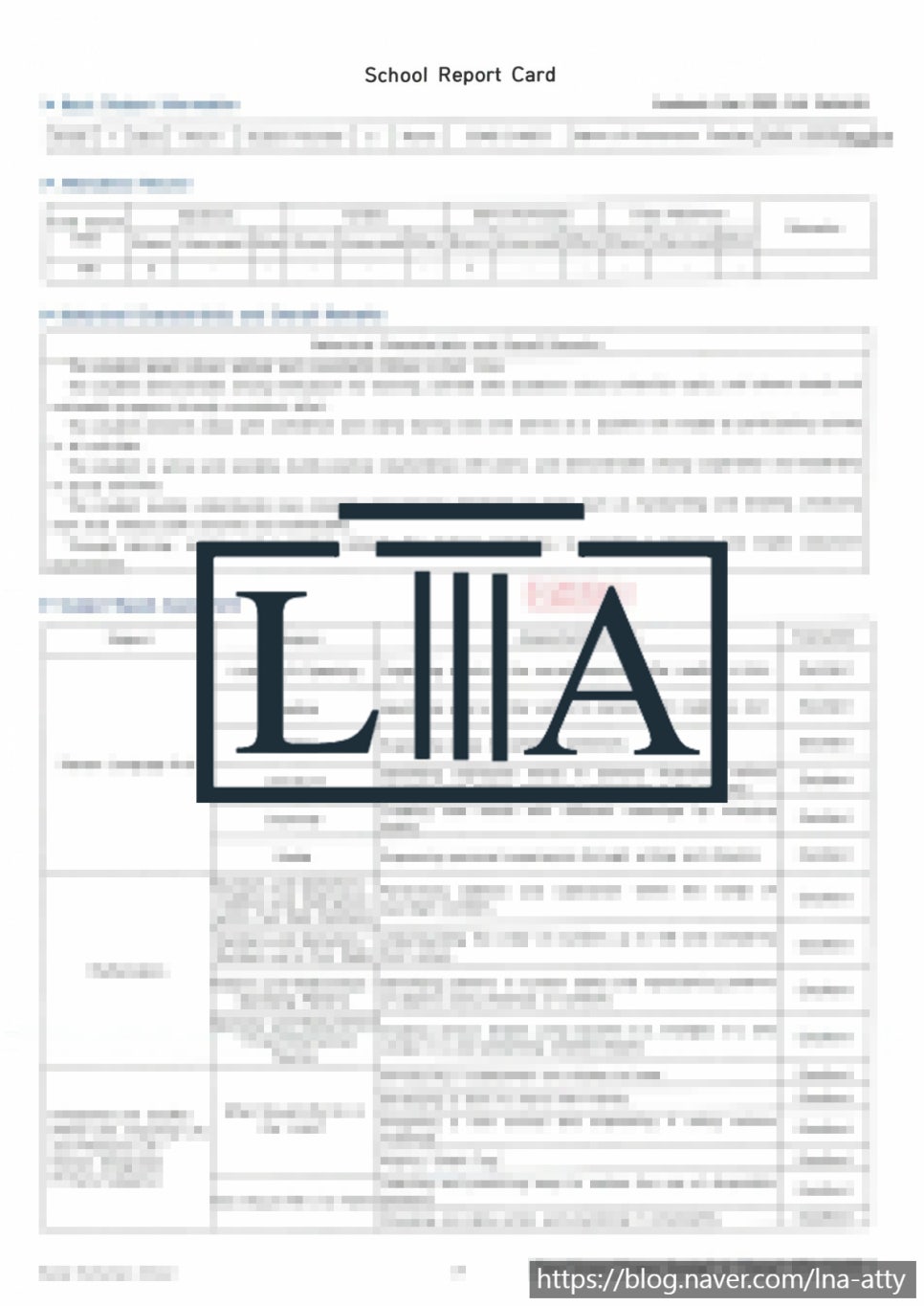
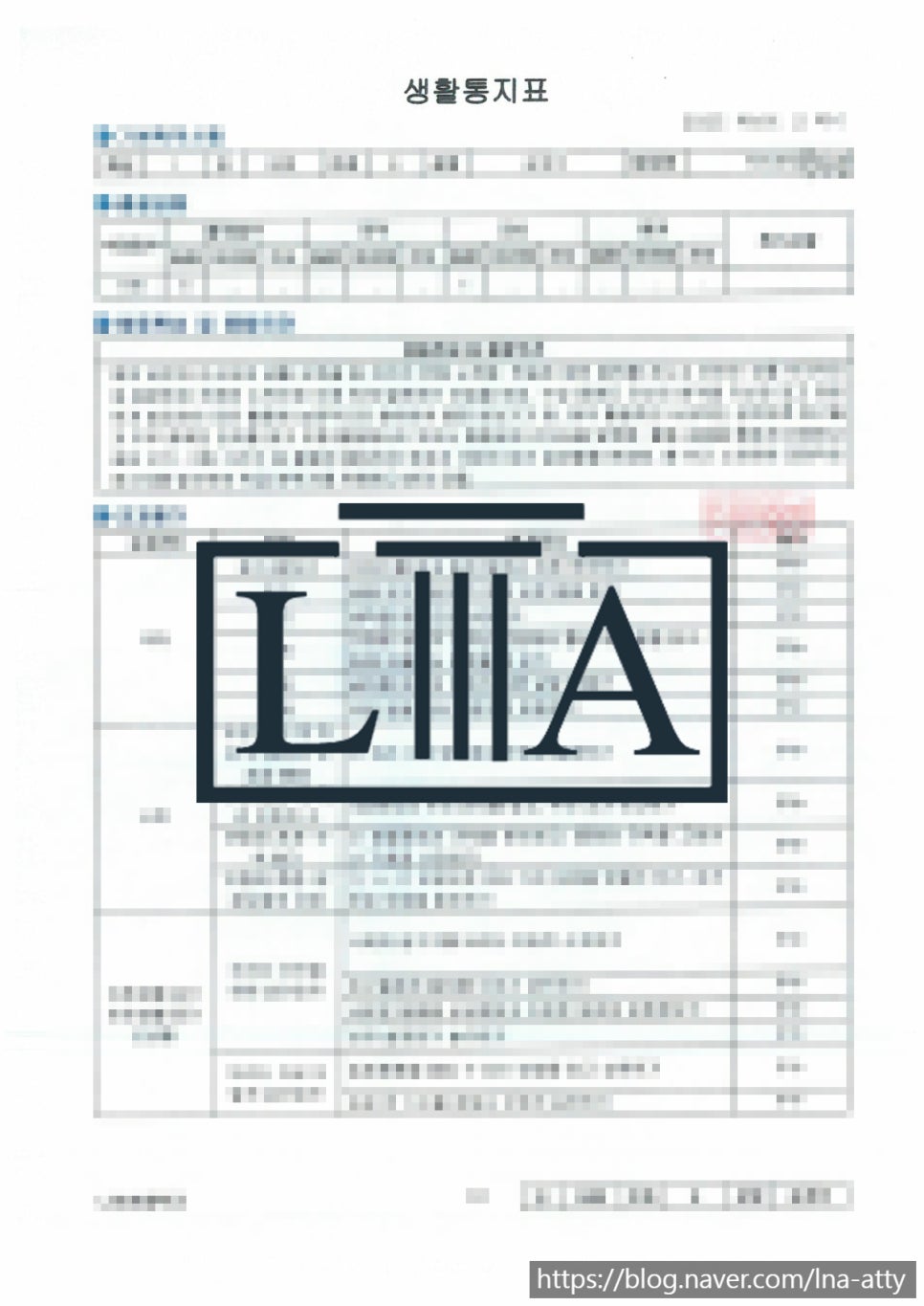
A Philippine international school's own admissions guideline named the exact certification required
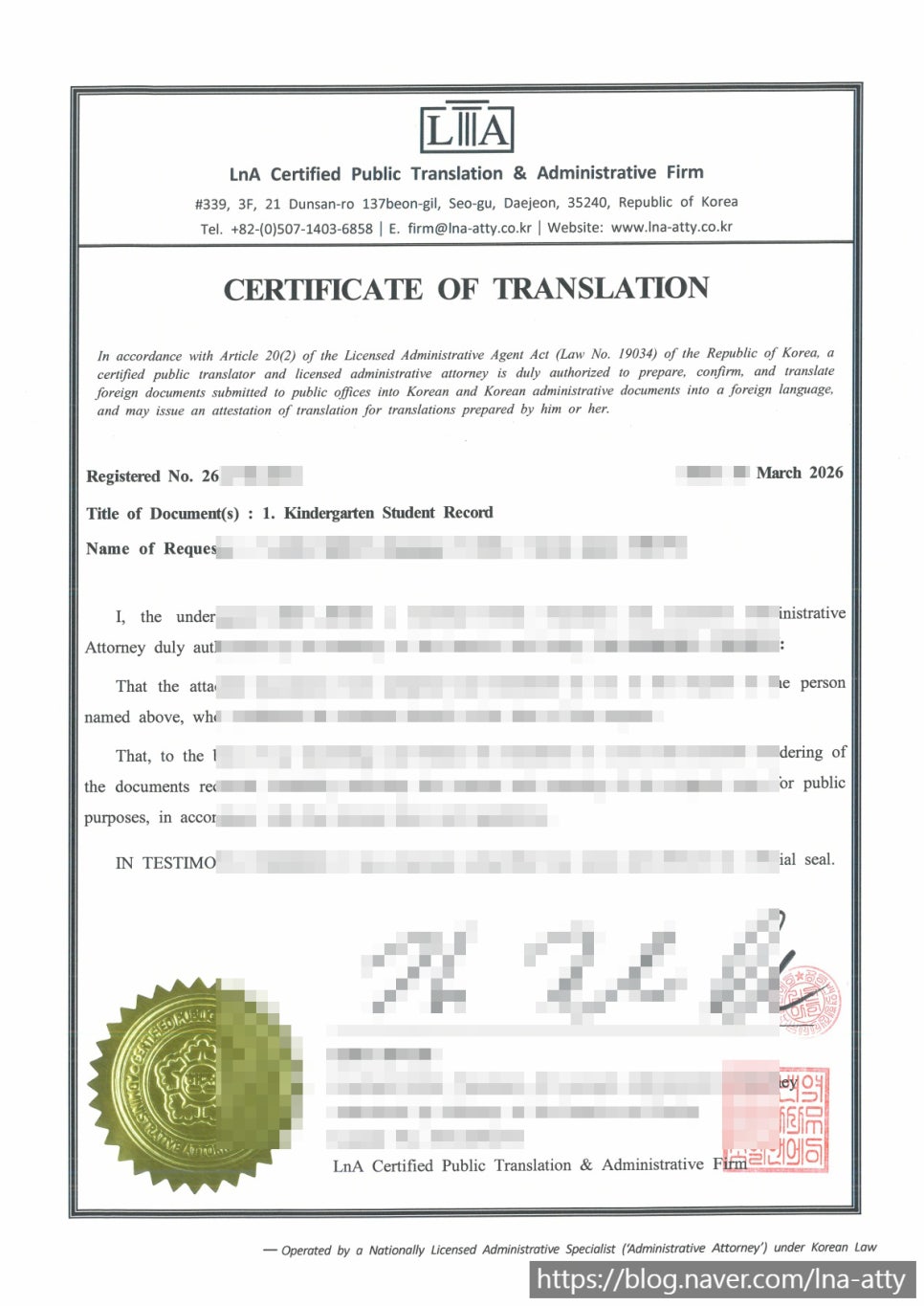
A client preparing their child's admission to a Philippine international school needed the child's Korean kindergarten records and enrollment certificate translated and certified. Because overseas school admission requirements vary widely school to school, this office's first step was analyzing exactly what the receiving school's own guideline specified.
The key phrase: "Licensed translation agent"
This particular school's admissions guideline explicitly required a "Licensed translation agent" — not simply someone fluent in English, but a translator holding a genuine government license. Holding a private language certification (like TCT, ITT, or a HUFS translation credential) doesn't by itself satisfy this requirement, and a submission relying on one risks rejection depending on the receiving school. In Korea, the only nationally licensed professional authorized under 행정사법 to translate documents and bear the resulting legal responsibility is a 외국어번역행정사 — making it the credential that most completely and safely satisfies exactly what "Licensed translation agent" is asking for.
Untangling the Philippines' three common certification types
One of the most common points of confusion for documents submitted to the Philippines is exactly which certification type is required. Depending on the receiving institution and purpose, it generally falls into one of three categories:
① Certificate of Translation (번역확인증명서) — issued and signed/sealed by a 외국어번역행정사 confirming translation accuracy under the relevant statute. This case's receiving school specifically required translation performed by a licensed professional, which this certificate alone satisfies without any separate notarization.
② Notary (공증 변호사) notarization — some receiving institutions/agencies specifically require a Korean notary's notarization on top of the translation, which involves a separate notarization procedure where the translator personally swears an oath before a notary attorney.
③ Apostille — the Philippines is a Hague Apostille Convention member, and some receiving institutions additionally require Korean government apostille confirmation on the translation. Getting a translation apostilled requires translating first, then applying for the apostille on the translation — in that order.
Since the administrative level required varies so widely by receiving institution, confirming exactly what's needed before starting translation is essential — skipping that step risks wasting real time and money.
Why the translation followed US-style educational administrative language
The Philippines is a country that uses American-style English as an official language. So when translating the Korean kindergarten's records and enrollment certificate, this office translated using the terminology and writing style actually used within the US educational administrative system — so the Philippine international school's admissions staff could grasp the content intuitively. This kind of detail is exactly what shapes the quality of an admissions document that forms a child's first impression.
Careful handling of proper nouns
Kindergarten records and enrollment certificates include a number of proper nouns, including the kindergarten's own name — this office finalized the translation only after the client's own review of those details, then issued the certified translation certificate, sending the scanned copy first and the physical original by next-day courier.
A returning client's next set of documents — keeping terminology consistent across submissions
The same client from an earlier Mexican school transfer case (above) came back for additional documents: a tuition/education-expense payment certificate, a student accounting ledger (학생수납부), and a student collections/receipts status report. This office's focus for this round was maintaining exact consistency with the terminology already established in the earlier translation, while correctly reflecting each new document's own administrative character.
Term choice: "Certificate of Education Expense Payment," not a plain tuition receipt
A "교육비 납입 증명서" in the generic sense — a simple confirmation that tuition was paid — would normally translate as "Certificate of Tuition Payment." But this particular document had a different character: it was issued specifically for submission to Korea's National Tax Service, formatted for an education-expense tax credit, and included total education cost, scholarship amount, and the deductible amount — reflecting the accounting structure of Korea's Income Tax Act education-expense deduction (subtracting the scholarship from total cost to arrive at the final deductible figure). To make clear this wasn't a simple tuition receipt but a tax-credit-structured education-expense proof document, this office used "Certificate of Education Expense Payment" — so the receiving institution would recognize it correctly, not as a basic payment confirmation.
Localizing '학생수납부' — a Korean school accounting term with no direct foreign equivalent
'학생수납부,' an internal Korean school administrative-system document, contains a number of terms that would leave foreign school staff confused if translated literally. As a 외국어번역행정사, this office balanced preserving the source structure with local readability, choosing terminology that conveys both the literal meaning and its functional purpose together — including handling line items like 늘봄학교 (kept as the proper noun "Neulbom" while conveying its character as an after-school care program), 우유급식비 (translated plainly and intuitively, without unnecessary embellishment), and 현장체험학습비 (translated with a widely-recognized term that signals it's part of the curriculum).
Accounting terminology, kept functional rather than overly formal
The 학생징수/수납현황 document is an internal school accounting-aggregation report, with a somewhat unfamiliar structure even to most Korean readers — including formal accounting-approval terminology that needs at least minimal clarification in translation. This office handled the core terms as follows: 징수 ("Collection," the act of collecting funds), 징수결정 ("Collection Authorized," meaning the collection has been administratively approved and finalized), and 징수결의번호 ("Collection Authorization No.," the unique accounting identifier for the resolution approving the student's payment). The guiding principle was keeping these terms functional rather than inflating them formally.
The underlying principle
This term-choice approach is offered as one reference standard — but this office always works with the mindset that "if I miss what the client already caught, that's a real problem." A single article, a singular/plural distinction — these small details are what determine the credibility of the entire document. This case's translation certification was completed holding to that same standard.
Precise, Verifiable Translation for Admissions Committees
Get in touch about thisFrequently Asked Questions
Why does a school located in Korea need its transcript translated like a foreign document?
A 외국인학교's administration and curriculum are treated as functionally overseas, even though it's physically located in Korea — its transcripts and diplomas are issued in the curriculum language (usually English), so they need the same certified translation any foreign document would.
What's the difference between 외국인학교 and 국제학교?
국제학교 is open primarily to Korean nationals and its credential is recognized alongside overseas credential (with conditions); 외국인학교 is aimed at foreign nationals with Korean enrollment capped under 30%, and its credential generally isn't recognized domestically without Ministry of Education approval.
Can a 외국인학교 graduate apply to a regular Korean university admissions track?
Generally not directly — they typically need to pass the 검정고시 or apply through a special 'foreign school graduate' or 'overseas degree holder' admission track instead.
Does a plain translation work for a transcript submission?
No — for submission purposes, the translation needs to be backed by a qualified translator's 번역확인증명서 (or in some cases a notary office's translation notarization) to be recognized as credible by the receiving institution.
Why is translation accuracy especially important for a transcript?
A transcript holds sensitive, high-stakes details like GPA, course names, and credit hours — inaccuracies can directly affect how an admissions committee reads the applicant's academic record.